
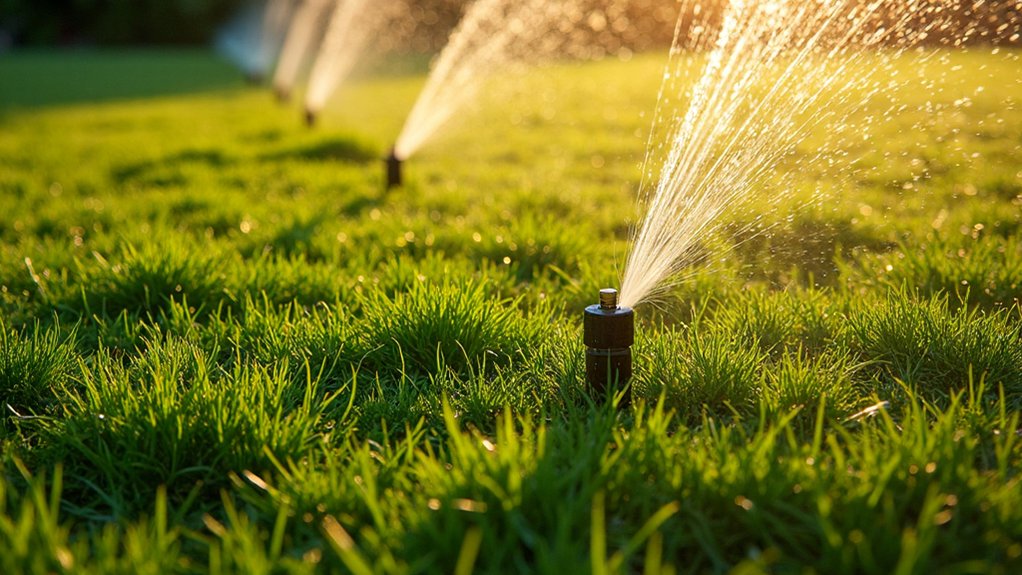
You’re probably being a bit generous with water usage across your lawn, applying the same amount everywhere regardless of what’s actually growing there. Your landscape isn’t uniform—it’s a patchwork of sun-loving roses, shade-dwelling hostas, and thirsty vegetable gardens all competing for your attention. Each area has distinct watering needs that you’re currently ignoring. There’s a smarter approach that’ll slash your water bills while keeping every plant thriving, and it starts with understanding zones.
Key Takeaways
- Divide your lawn into zones based on sun exposure, slope, soil type, and grass variety to optimize water distribution for each area’s unique needs.
- Install different sprinkler types per zone – rotary heads for large turf areas and spray heads for smaller sections requiring precise coverage.
- Program separate watering schedules for each zone, with frequent shallow watering for active grass areas and reduced schedules for drought-tolerant sections.
- Use smart controllers with weather sensors to automatically adjust watering based on rainfall, temperature, and soil moisture levels across different zones.
- Group similar water-requirement areas together to prevent overwatering drought-resistant zones while ensuring high-demand grass areas receive adequate moisture.
Understanding the Fundamentals of Irrigation Zones
While traditional irrigation systems often treat entire landscapes uniformly, zoned irrigation systems divide your property into distinct areas that receive water independently based on their unique requirements. Each irrigation zone operates through individual valves that you can program with specific watering schedules tailored to different water requirements throughout your landscape.
You’ll group plants with similar needs together, ensuring targeted water application that prevents overwatering and promotes healthier growth. The system considers your soil type and drainage patterns, adjusting duration and frequency accordingly. Modern zoned systems incorporate smart controllers and moisture sensors that automatically optimize performance based on weather conditions and soil moisture levels. You can select appropriate sprinkler heads for each zone’s specific needs, maximizing water efficiency while reducing waste and lowering your water bills considerably.
Assessing Your Landscape for Optimal Zone Design
Before you install a zoned irrigation system, you’ll need to conduct a thorough landscape assessment that identifies the distinct watering requirements across your property. Start by mapping different areas of your landscape and cataloging plants with similar water needs. Examine your soil composition, as sandy areas drain faster than clay regions, creating varying water requirements. Note sun exposure patterns throughout the day, since full-sun locations need more frequent watering than shaded spots. Document slope variations that affect water retention and runoff. Group zones based on plant types—vegetables, perennials, and lawns each demand different irrigation schedules. This thorough assessment enables proper zoning tailored to the specific needs of each landscape section, ensuring efficient water distribution.
Strategic Plant Grouping Based on Water Requirements
Once you’ve completed your landscape assessment, you’ll organize plants into logical groups that share similar water requirements. This strategic plant grouping forms the foundation of an efficient zoning system that maximizes irrigation delivery while promoting conservation.
You’ll separate high-demand areas like turf from drought-tolerant zones, enabling precise scheduling for each area’s specific needs. This targeted approach prevents wasteful over-watering and harmful under-watering, supporting ideal plant health across your entire landscape.
- Turf zones: Group grass areas separately for frequent, shallow watering schedules
- Drought-tolerant zones: Combine native plants and succulents requiring minimal irrigation
- Shade zones: Cluster moisture-loving plants in low-light areas with different water needs
- Slope zones: Group plants on inclines requiring specialized irrigation delivery methods
- Seasonal zones: Separate annuals from perennials for flexible system management
Selecting Appropriate Equipment for Each Zone
Three critical factors determine your equipment selection success: plant type, soil conditions, and water delivery requirements for each zone. Zoning allows you to choose the right type of sprinkler head that matches each area’s specific needs. For flower beds and vegetable gardens, drip irrigation systems excel at delivering water directly to root zones while minimizing evaporation. Lawn areas benefit from rotary or spray heads within sprinkler systems that guarantee even coverage across wider spaces.
You’ll need pressure regulators and filters to maintain consistent performance and prevent clogging. This equipment enables efficient water use by eliminating the need for frequent manual adjustments. Smart controllers let you adjust watering schedules based on weather conditions and seasonal changes, maintaining a healthy landscape while conserving water resources effectively.
Smart Technology Integration for Automated Efficiency
Smart irrigation controllers transform your zoned system into an intelligent network that responds automatically to environmental changes. You’ll maximize water efficiency by integrating sensors that detect rainfall, soil moisture, and flow rates across each zone. Weather-based controllers utilize local forecasts to suspend watering during rainy periods, preventing overwatering while maintaining ideal lawn health.
Remote monitoring capabilities let you control your zoned irrigation system from anywhere via Wi-Fi connectivity. You’ll receive detailed analytics showing water usage patterns and conservation opportunities for each zone.
- Real-time sensors automatically adjust watering based on current soil moisture and weather conditions
- Weather integration suspends irrigation during forecasted rain events
- Usage analytics identify inefficient zones requiring enhancement
- Remote access enables immediate automated adjustments from any location
- Zone-specific data provides targeted water conservation insights
Soil Type Considerations in Zone Planning
While automated controllers maximize your system’s responsiveness, your soil’s unique characteristics determine how effectively each zone receives and retains water. Understanding your soil type directly impacts your irrigation needs and zone design decisions.
Clay soils possess high water-holding capacity but slow water absorption rates. You’ll need longer, less frequent watering cycles to prevent runoff while guaranteeing deep penetration. Sandy soils drain quickly, requiring shorter, more frequent irrigation to maintain adequate moisture levels.
Loamy soils offer ideal water distribution and absorption characteristics, supporting robust plant growth with moderate watering schedules. Proper zoning based on these soil variations ensures targeted water application across your landscape.
Maintenance Practices for Long-Term System Performance
Your zoned irrigation system’s longevity depends on consistent maintenance practices that address both seasonal demands and component wear. Regular maintenance schedules help you fix any leaks quickly and prevent water waste throughout your landscape. When your system operates at peak efficiency, you’re guaranteeing efficient water delivery that reaches the areas needing irrigation most.
Monitor moisture levels regularly to determine ideal watering frequencies. Avoid watering during peak heat hours, and adjust your watering schedules seasonally to conserve water while meeting plant requirements.
Essential maintenance practices include:
- Inspect sprinkler heads monthly – Clean debris and replace damaged components
- Service drip system filters quarterly – Remove clogs for consistent flow rates
- Check valve operations seasonally – Guarantee proper zone isolation and pressure control
- Test soil moisture sensors regularly – Calibrate for accurate readings across zones
- Schedule professional system audits annually – Identify efficiency improvements and necessary upgrades
Frequently Asked Questions
Which Irrigation Method Is the Most Efficient for Uneven Land?
You’ll find drip irrigation design most efficient for uneven terrain. It reduces runoff through precise valve location placement and flow rate optimization. You can incorporate soil moisture sensors and evapotranspiration tracking for maximum water conservation.
Which Irrigation System Has the Highest Efficiency?
You’ll find drip irrigation efficiency surpasses all other methods, delivering 90% water savings. Subsurface irrigation performance and micro irrigation system effectiveness, combined with smart irrigation controllers and soil moisture sensors, maximize precision irrigation technology for ideal water conservation strategies.
How Much Is a 3-Zone Sprinkler System?
You’ll absolutely love knowing that irrigation system installation cost for a 3-zone system ranges $1,500-$3,500! Professional installation averages $2,000-$2,500, while DIY saves money. Lawn zoning considerations and underground piping requirements affect pricing considerably.
How Many Zones for an Irrigation System?
You’ll need 3-8 zones for most residential properties, depending on your landscape’s complexity. Proper zone sizing with adjustable sprinkler heads, automated timers, and moisture sensors guarantees ideal sprinkler coverage and efficient water distribution.
Conclusion
You’ve discovered how zoned irrigation transforms water waste into precision watering. While traditional systems drench every area equally, you’re now equipped to deliver targeted hydration where it’s needed most. Your drought-stressed roses can receive deep, infrequent watering while your shallow-rooted annuals get light, frequent sprinkling. You’ll watch your water bills shrink as your landscape flourishes, proving that less really can be more when you’re watering smarter, not harder.