
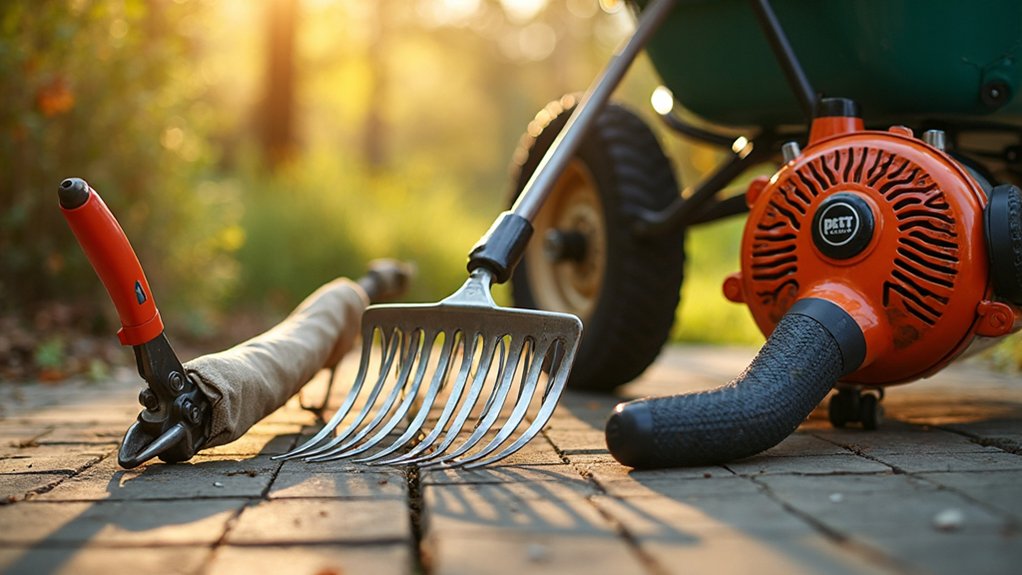
You’ll spend roughly 70 hours each year maintaining your yard, according to recent homeowner surveys. That’s nearly two full work weeks dedicated to keeping your property looking pristine. Yet most property owners make the same costly mistake—they don’t invest in the right equipment from the start. This oversight leads to wasted time, physical strain, and subpar results that could easily be avoided. The difference between struggling through yard work and enjoying efficient maintenance comes down to having the proper tools at your disposal.
Key Takeaways
- Lawn mowers form the foundation of yard maintenance, with gas, electric, and battery options suited to different yard sizes and environmental preferences.
- String trimmers excel at reaching tight spaces and creating crisp edges along walkways where mowers cannot access effectively.
- Leaf blowers transform hours of manual raking into quick cleanup work, with battery models offering quieter operation than gas-powered versions.
- Garden gloves provide essential hand protection from cuts and irritants, costing only $5-$19 for maximum safety during outdoor work.
- Wheelbarrows enable efficient transportation of heavy materials like soil and debris, with plastic offering maneuverability and steel providing durability.
Lawn Mower: The Foundation of Yard Maintenance
When you’re establishing the foundation of effective yard maintenance, your lawn mower becomes the most critical tool in your arsenal. This essential power equipment transforms yard cleanup from an overwhelming task into manageable lawn maintenance. You’ll choose between gas-powered, electric, or battery options based on your yard size and environmental preferences.
A mulching lawn mower offers dual benefits—efficient grass clippings management while returning nutrients to your soil for healthier growth. Whether you select a basic push mower or riding model, proper maintenance guarantees optimal performance. Regular blade sharpening maintains clean cuts that promote lawn health, while routine oil changes prolong your mower’s lifespan.
Consider cutting width, engine power, and maneuverability when selecting lawn care tools that match your property’s specific needs.
String Trimmer: Precision Cutting for Hard-to-Reach Areas
While your lawn mower handles the bulk of grass cutting, certain areas around your property remain stubbornly out of reach. That’s where a string trimmer becomes indispensable for your yard work arsenal. Also called a weed whacker, this tool uses fast-spinning nylon string to tackle grass and weeds around fence lines, tree bases, and garden beds where your mower can’t venture.
You’ll find three power source options: gas-powered models offer maximum strength for extensive properties, corded electric versions provide consistent power for smaller yards, and battery-powered units deliver cordless convenience. Each excels at edging along walkways and creating crisp lawn borders.
Choosing the right string trimmer depends on your property size, runtime requirements, and mobility needs for effective maintenance.
Leaf Blower: Efficient Debris Management Made Simple
Nothing beats the efficiency of a leaf blower when autumn arrives and debris accumulates across your property. This essential tool transforms tedious cleanup tasks into quick work, saving you hours compared to manual raking. Whether you’re clearing leaves after using your mower or managing garden debris, a leaf blower streamlines your lawn care routine.
When selecting lawn care equipment, consider these three key factors:
- Power Type: Battery-powered models offer quiet operation, while gas versions provide maximum strength
- Airflow Capacity: Higher CFM ratings move larger debris piles more effectively
- Design Style: Handheld units excel in tight spaces, backpack models handle extensive yard cleanup
Your leaf blower becomes indispensable for maintaining a pristine lawn and garden, making debris management simple and efficient throughout every season.
Garden Gloves: Essential Hand Protection for Safe Work
Your hands face constant exposure to sharp tools, thorny plants, and harsh chemicals during yard cleanup, making quality garden gloves your most important safety investment. These protective barriers shield you from cuts, scrapes, and irritants during demanding gardening tasks and general maintenance work.
Leather gloves offer superior durability and protection, while nylon and polyurethane-coated options provide excellent grip and flexibility. The thick layer between your skin and potential hazards greatly reduces injury risk during prolonged outdoor work.
Quality garden gloves range from $5 to $19, representing minimal cost for maximum protection. They’ll prevent painful blisters, calluses, and hand irritations that commonly develop from extended tool use. Don’t compromise your safety – invest in durable garden gloves to protect your hands throughout every cleanup project.
Wheelbarrow: Heavy-Duty Transportation for Large Projects
Large-scale yard projects demand efficient material transport, making a reliable wheelbarrow your strongest ally for moving heavy loads of soil, mulch, rocks, and debris. As a property owner, choosing between plastic and steel models depends on your specific needs—plastic offers lightweight maneuverability for smaller tasks, while steel provides heavy-duty stability for demanding transportation requirements.
Key features to ponder when choosing your wheelbarrow:
- Weight capacity – Match the load limit to your largest projects
- Wheel design – Pneumatic tires handle rough terrain better than solid wheels
- Handle ergonomics – Comfortable grips reduce strain during extended use
A durable, well-designed wheelbarrow transforms outdoor landscaping and cleaning tasks by greatly reducing physical strain while boosting efficiency across large projects.
Pruners: Professional Plant Care and Shaping Tools
When maintaining your garden’s health and appearance, precision pruning tools become indispensable for achieving professional results on woody plants, shrubs, and delicate flowering branches. Quality pruners serve as your primary cutting instruments for shaping and maintaining plant growth throughout your landscape.
Bypass blades deliver clean, precise cuts that protect live plant material from damage, making them superior to anvil-style alternatives. Leading brands like Felco and ARS manufacture pruners with exceptionally sharp, durable blades paired with comfortable ergonomic designs that reduce hand fatigue during extended use.
For larger branches exceeding your pruners’ capacity, pruning saws effectively handle cuts up to three inches in diameter. Remember that proper pruning technique and regularly sharpened blades are essential for maintaining both your plants’ health and your tools’ performance.
Sprinkler System: Automated Lawn Watering Solutions
While manual watering methods can work for small gardens, automated sprinkler systems transform lawn maintenance by delivering consistent, targeted irrigation that saves you hours of weekly labor. These irrigation systems rank among the essential tools every homeowner needs, working alongside lawn mowers as fundamental lawn equipment for proper yard care.
Modern sprinkler systems offer three primary advantages:
- Time efficiency – Programmable timers water your lawn during ideal morning hours
- Coverage consistency – Even distribution prevents dry spots and overwatering
- Seasonal adaptability – Adjustable settings accommodate changing growing season demands
From stationary units to sophisticated in-ground networks, having the right tools guarantees your lawn receives optimal hydration. During dry periods, these systems become particularly valuable, maintaining vibrant grass while you focus on other property maintenance tasks.
Shovels: Versatile Digging and Planting Implements
Beyond automated irrigation systems, shovels represent the backbone of hands-on yard work, enabling you to tackle everything from planting new trees to creating precise lawn edges. You’ll need different shovel types for specific tasks: spade shovels excel at edging lawns and transplanting plants with their straight-edge design, while round-point shovels power through hard soil and handle loose materials like mulch effectively.
For detailed work around flower beds, trowels serve as miniature shovels perfect for weeding and small planting jobs. Whether you’re digging up stubborn weeds, creating defined holes for new shrubs, or transporting soil across your property, these versatile implements guarantee you’re equipped for thorough yard maintenance. Choose the right shovel type to maximize efficiency and achieve professional-quality results.
Leaf Rake: Seasonal Cleanup and Debris Collection
After establishing your digging and planting foundation with quality shovels, you’ll need effective tools for collecting the debris that accumulates throughout the seasons. Leaf rakes are essential equipment every property owner should have for fall cleanup tasks. These tools typically cost $25-$48 and excel at gathering leaves, small branches, and yard debris that can smother your grass if left unattended.
- Width matters – Broader rakes grab larger loads more efficiently than narrow options
- Professional choice – The Ames 26-inch Dual Poly Tine Rake offers lightweight, durable construction
- Surface compatibility – Use outdoor brooms on paved areas where rakes struggle
Proper care and timely debris removal prevents pest infestations. While a leaf blower makes quick work of dispersing leaves, rakes provide precise collection control. String together regular cleanup sessions for ideal yard maintenance.
Edger: Creating Clean Landscape Boundaries
The difference between a maintained yard and a professionally manicured landscape often comes down to crisp, defined boundaries. Edgers create these sharp lines between your lawn and flower beds, sidewalks, or driveways, transforming your lawn appearance from amateur to professional.
You’ll find two main types: manual edgers and motorized edgers. Manual options include spade-based tools and hand shears, while motorized versions run on gas, electric, or battery power. Though motorized edgers require more maintenance, they deliver superior precision and efficiency for lawn edging tasks.
Regular landscape edging, typically 1-2 times monthly during growing season, prevents overgrowth and simplifies mowing. This essential yard care practice enhances your landscape design while maintaining clean, uniform boundaries that define quality lawn maintenance.
Frequently Asked Questions
How Often Should I Replace or Sharpen My Yard Tool Blades?
You’ll want to sharpen blades twice yearly, checking for blade wear indicators like nicks or dullness. Following blade maintenance best practices and regular blade condition inspection tips helps maximize blade lifespan expectations before replacement’s needed.
What’s the Best Way to Store Outdoor Equipment During Winter Months?
Like hibernating bears, your tools need winter shelter. Store equipment in covered storage units, outdoor tool sheds, or climate controlled garages. Use waterproof tarpaulin covers and elevated tool racks to prevent rust and damage.
How Do I Properly Maintain Gas-Powered Tools Versus Electric Alternatives?
You’ll find gas tools need regular fuel, oil changes, and spark plug replacements, while electric alternatives require battery maintenance and charging. Consider fuel efficiency, emissions, noise levels, weight considerations, and environmental impact when choosing between them.
What Safety Gear Is Recommended When Operating Power Yard Equipment?
You’ll want complete “battle gear” when taming your landscape: proper eye protection, sturdy work gloves, thick soled boots, and ear protection devices. Maintain correct operating posture in ventilated work areas, and always perform regular safety inspections.
How Much Should I Budget Annually for Yard Tool Maintenance and Repairs?
You’ll typically budget 10-15% of your equipment’s value annually for maintenance. Professional tune-up services, preventative maintenance, and common repair costs vary by tool depreciation timelines. Monitor wear indicators and allocate funds following budget allocation guidelines.
Conclusion
You’ll transform your property with the right equipment arsenal. Consider this: homeowners who maintain well-equipped tool sheds spend 40% less time on yard work compared to those using inadequate tools. That’s hours you’ll reclaim each weekend for family barbecues instead of struggling with dull blades and broken handles. Your investment in quality lawn mowers, trimmers, and essential accessories doesn’t just create a beautiful landscape—it’s buying back your precious time.