
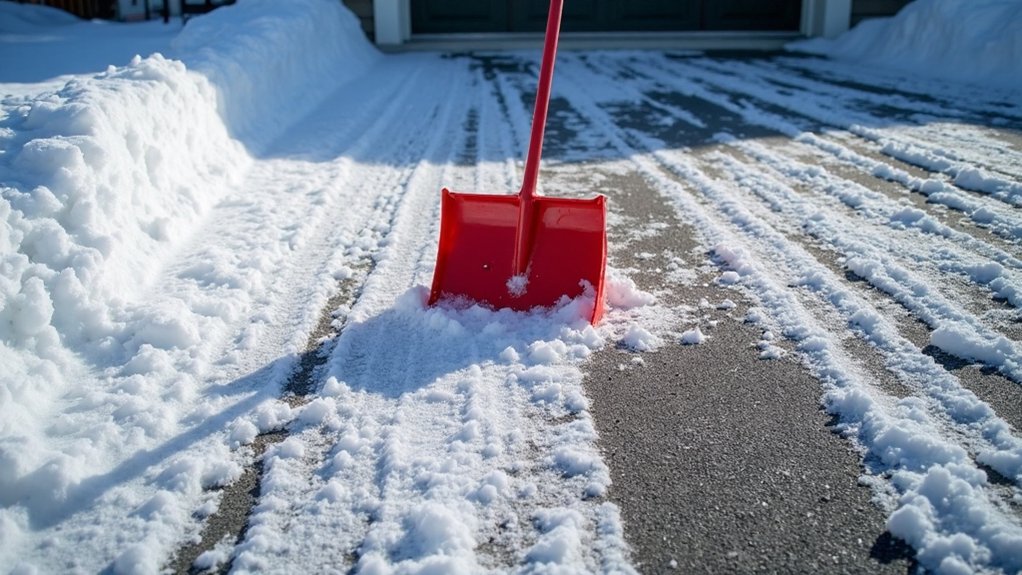
When winter’s first snowfall blankets your driveway, you’ll quickly realize that proper preparation makes all the difference between a manageable morning and a backbreaking ordeal. You can’t control the weather, but you can control how ready you are to tackle it. The right tools, techniques, and timing will transform your approach to snow and ice removal from reactive scrambling to confident action. Here’s what separates the prepared homeowner from the one left struggling in the storm.
Key Takeaways
- Stock essential tools like snow shovels, ice scrapers, snow blowers, and deicing agents before winter storms hit.
- Mark driveway edges with reflective stakes and clear gutters to prevent ice dams and ensure safe navigation.
- Use pusher-style shovels for light snow and maintain snow blowers with adequate fuel for heavy accumulations.
- Place snow piles 3-6 feet from your house foundation and away from vents, meters, and drainage systems.
- Apply rock salt above 15°F or calcium chloride in colder temperatures using spreaders for even coverage.
Essential Tools and Equipment for Snow and Ice Removal
When winter storms hit, having the right snow and ice removal tools can mean the difference between safely traversing your property and struggling with dangerous conditions. Your essential snow removal tools should include a quality snow shovel with a C-shaped blade for light, fluffy snow, while a snow blower handles heavy accumulations more efficiently. Don’t forget an ice scraper for managing ice buildup and a roof rake to prevent dangerous roof loads. Stock up on deicer like magnesium chloride, which can melt up to two inches of snow. Consider your property’s snowfall intensity, surface area, and accessibility when selecting equipment. Proper equipment maintenance—including cleaning, drying, and applying rust-preventative coatings—will extend your tools’ lifespan and guarantee they’re ready when you need them most.
Pre-Storm Preparation Strategies for Effective Snow Management
Before winter storms arrive, strategic preparation transforms chaotic snow removal into a manageable routine. You’ll want to stock up on ice melt and rock salt before heavy snow forecasts hit your area. Create clear pathways by marking your driveway edges with reflective stakes, making snow removal easier during blizzard conditions.
Prepare an emergency kit containing flashlights, batteries, and backup heating sources to guard your home during extended power outages. Check your snow blower‘s fuel levels and test all equipment beforehand. Clear gutters and downspouts to prevent ice formation that can damage your roof structure.
Monitor winter weather forecasts closely and start these preparedness tips early. Position shovels near multiple exits and keep extra supplies accessible. This proactive approach guarantees you’re ready when winter storms strike unexpectedly.
Safe and Efficient Snow Removal Techniques
Once winter storms dump snow on your property, choosing the right removal technique makes all the difference between back-breaking labor and efficient clearing. You’ll want a pusher-style shovel with a C-shaped blade for light, fluffy snow that won’t strain your back. For heavy-duty clearing, keep your snowblower running smoothly with regular maintenance to guarantee reliable power when cold weather strikes.
Strategic placement prevents future headaches. Avoid piling snow against your home’s foundation walls or near storm drains, as this can cause drainage problems and structural damage. Choose open areas away from buildings for snow piles.
When applying deicing agents to combat snow and ice, wear gloves and use a spreader for even coverage. This approach keeps your walkways safe while protecting your property from winter’s harsh effects in warm, efficient clearing sessions.
Proper Snow Pile Placement and Drainage Considerations
Strategic snow placement becomes critical as winter storms accumulate multiple feet of snow throughout the season. You’ll prevent water damage by positioning piles away from your home’s foundation, ensuring proper drainage when snow melts. Keep pipes from freezing by avoiding snow buildup against exterior walls where plumbing runs.
Consider these essential placement guidelines:
- Foundation Protection – Maintain 3-6 feet clearance from your house to prevent ice dams and structural damage from snow loads
- Drainage Planning – Direct piles toward natural slopes or storm drains to channel meltwater away from vulnerable areas
- Utility Access – Keep heating vents, gas meters, and electrical panels clear to prevent frozen pipes and maintain emergency access
Smart snow placement today prevents costly repairs tomorrow, protecting your property from both immediate hazards and long-term water damage.
Deicing Products: Options, Applications, and Best Practices
When temperatures drop and ice begins forming on your walkways and driveway, you’ll need effective deicing products to maintain safe passage and prevent dangerous slips. Rock salt works effectively above 15°F but can damage concrete and vegetation. Calcium chloride performs better in freezing temperatures, melting ice down to -25°F. Sand doesn’t melt ice but provides traction on slippery surfaces.
Apply deicing products before storms when possible, as prevention works better than removal. Make sure you spread evenly using a broadcast spreader rather than dumping in piles. Too much product can cause water runoff issues and environmental damage. Periodically check treated areas and reapply as needed. Take steps to prevent overuse by following package directions. Winter safety depends on choosing the right product for current conditions and proper application techniques.
Protecting Your Property During Snow and Ice Removal
While clearing snow and ice keeps your property safe and accessible, improper removal techniques can cause significant damage to surfaces, landscaping, and structures. Storms can cause power outages, making backup power essential to keep your home warm and functional.
Essential Protection Strategies:
- Equipment Safety – Consult your owner’s manual before operating snow blowers or generators. Maintain proper ventilation and fuel storage to prevent fire hazards.
- Infrastructure Awareness – Stay clear of power lines when removing ice from roofs or trees. Use plastic shovels near delicate surfaces like wooden decks.
- Surface Protection – Mark sprinkler heads, garden borders, and decorative elements before snowfall. Apply gentle pressure when scraping to avoid gouging driveways or walkways.
Proper technique protects your investment while maintaining winter safety.
Equipment Maintenance and Off-Season Storage Tips
Proper maintenance extends your snow removal equipment‘s lifespan and verifies it’s ready when the next storm hits. Take time to consult your owner’s manual for specific maintenance tasks like oil changes and spark plug replacements on gas-powered equipment. Clean and dry all tools before storage to prevent cold air and moisture from causing rust and corrosion. Apply a light oil coat to metal shovel parts to stay protected during off-season storage.
Run snowblowers briefly to dry internal components, then store in covered areas. For gas equipment, run engines dry or use fuel stabilizer to prevent fuel-related issues. Keep the exhaust pipe clear and confirm carbon monoxide detectors work properly when operating gas-powered tools indoors. Always have first aid supplies accessible during equipment maintenance and operation.
Winter Weather Safety Precautions for Homeowners
Although maintaining your snow removal equipment is critical, protecting your family and property requires extensive winter weather safety measures. Stay informed about approaching storms and avoid unnecessary travel during severe conditions. Test smoke and carbon monoxide detectors before winter arrives, as heating equipment poses serious risks.
Your heating systems need immediate attention:
- Inspect space heaters and fireplaces – Guarantee proper ventilation and clear debris before you use the heater
- Check warm air circulation – Confirm vents aren’t blocked and systems distribute heat effectively
- Prepare backup heating – Have safe alternatives ready if primary systems fail
Create emergency kits with several days’ worth of supplies. Educate children about extreme cold dangers and supervise outdoor activities. Move pets to sheltered areas with extra bedding and food. These precautions help you stay warm while maintaining safety throughout winter storms.
Frequently Asked Questions
What Are the 5 P’s of Winter Weather?
The 5 P’s of winter weather are People, Pets, Pipes, Plants, and Preparedness. You’ll need proper clothing preparation, pet safety precautions, pipe protection procedures, personal safety practices, and power outage prevention for thorough, extensive, or detailed winter readiness.
What Are the 4 P’s in Freezing Weather?
Can you really prepare for freezing weather with just four steps? You’ll need preparation of vehicles, protection of pipes, protection of pets, and preservation of power to truly safeguard your home and family.
What’s Your Best Tip for Preparing a Home for Winter Weather?
You’ll want to insulate pipes and seal drafty windows first. Next, inspect your roof, trim tree branches, and protect outdoor faucets. Don’t forget to clear walkways, stack firewood, and cover outdoor furniture.
What Are Four Items That Should Be in Your Winter Storm Survival Kit?
When winter’s icy grip tightens, you’ll need these four survival essentials: flashlights for power outages, blankets to stay warm, non-perishable food for sustenance, and emergency communication devices to reach help when you’re snowed in.
Conclusion
You’ve mastered the methods for managing winter’s wrath through proper preparation and proven practices. Remember to regularly maintain your equipment, strategically store your supplies, and consistently check your cleanup techniques. Winter weather won’t wait, so you’ll want to stay vigilant and ready. By following these fundamental guidelines, you’ll face future freezing conditions with confidence, keeping your property protected and your pathways pristine throughout the challenging cold season ahead.