
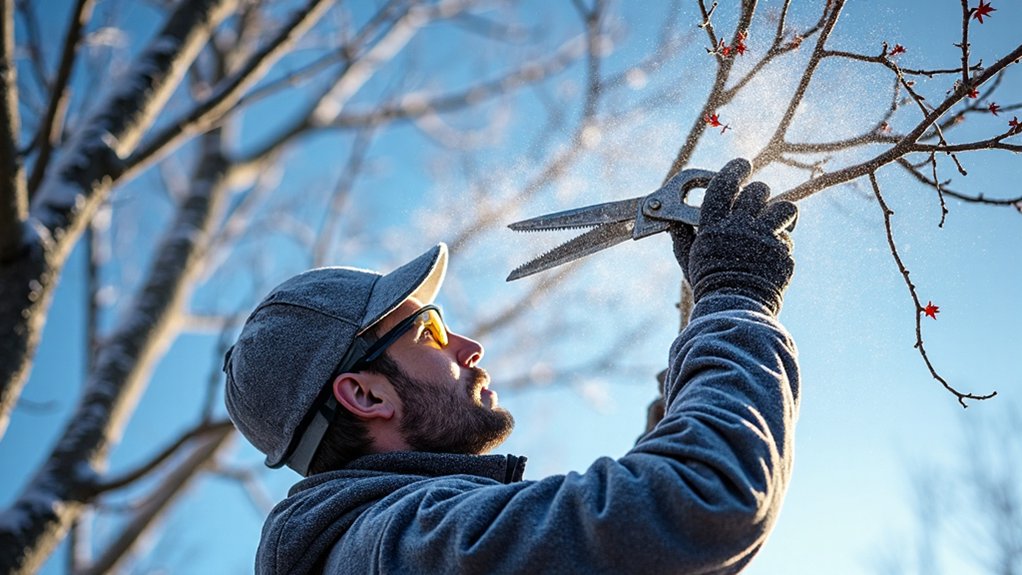
You’ve probably walked past bare winter trees and dismissed them as dormant and unremarkable, but you’re missing the perfect maintenance opportunity right in front of you. Winter’s harsh conditions actually create ideal circumstances for tree pruning that you can’t replicate during any other season. While most homeowners avoid outdoor tree work in cold weather, savvy property owners understand there’s compelling science behind why winter pruning delivers superior results that’ll surprise you.
Key Takeaways
- Bare branches during dormancy provide clear visibility to identify dead, diseased, or structurally problematic wood requiring removal.
- Dormant trees experience minimal stress from pruning cuts, allowing for effective wound closure and healing before spring growth.
- Cold weather reduces disease transmission and pest activity, creating a safer pruning window with lower infection risks.
- Frozen ground conditions allow heavy equipment access without damaging lawns while enabling faster, more efficient pruning operations.
- Trees prioritize wound healing over growth during dormancy, resulting in stronger recovery and healthier specimens for growing season.
Enhanced Visibility Reveals Tree Structure and Health Issues
One of winter’s greatest advantages for tree pruning lies in the enhanced visibility it provides. When trees enter their dormant phase, bare branches reveal the complete tree structure without leafy obstructions blocking your view. This clarity allows you to identify dead, damaged, or diseased wood that’s typically hidden during growing seasons. You’ll spot hazardous branches that pose risks to property or people, making winter weather the ideal time for thorough tree care assessments.
The leafless canopy enables you to evaluate the tree’s overall architecture and identify structural problems like crossing branches, weak crotches, or unbalanced growth patterns. This enhanced visibility during the dormant season helps you develop strategic pruning plans that improve both tree health and safety while maximizing the effectiveness of your winter maintenance efforts.
Dormant Trees Experience Minimal Stress During Pruning
Winter’s clear view of tree structure pairs perfectly with another compelling advantage: dormant trees handle pruning cuts with remarkable resilience. During tree dormancy, your trees aren’t actively growing, which means winter pruning creates tremendously less stress than cuts made during growing seasons. This reduced stress allows dormant trees to heal from pruning more effectively since they’re directing energy toward wound closure rather than new growth.
Winter weather provides the perfect conditions for tree maintenance because:
- Reduced sap flow minimizes bleeding and creates cleaner healing at pruning cuts
- Lower pathogen activity during cold months enhances disease prevention efforts
- Extended healing time before spring allows trees to recover completely from tree care procedures
Your winter pruning strategy maximizes tree health while minimizing trauma, making cold-weather tree maintenance the wisest approach for long-term tree vitality.
Reduced Disease Transmission and Pest Activity
Beyond minimizing stress to your trees, winter pruning delivers another pivotal protective benefit: drastically reduced exposure to disease transmission and pest activity. During dormancy, your trees aren’t actively growing, which makes them naturally less susceptible to harmful pathogens like Dutch elm disease and oak wilt that typically spread through fresh pruning cuts. Cold weather renders disease-causing organisms inactive, enormously lowering transmission risks during tree care operations.
Winter’s freezing temperatures also eliminate the threat from destructive insects and borers that commonly infest freshly pruned trees during warmer months. Without active sap flow, your dormant trees won’t attract these harmful pests to open wounds. This protective dormancy period creates the ideal window for safe pruning, allowing you to maintain your trees without introducing dangerous diseases or pest infestations.
Frozen Ground Conditions Enable More Efficient Work
When ground temperatures drop below freezing, winter creates ideal working conditions that dramatically improve pruning efficiency and reduce project costs. Frozen ground lets us bring heavy equipment directly to your trees without damaging lawns, gardens, or landscaping. This makes it easy for tree service professionals to complete major pruning work and tree removal projects with precision and speed.
Winter’s the perfect time to prune because solid ground conditions offer three key advantages:
- Equipment Access – Heavy machinery reaches previously inaccessible areas without soil damage
- Faster Operations – Stable surfaces enable quicker, more efficient pruning jobs
- Cost Savings – Reduced setup time and landscape protection needs lower overall expenses
You’re less likely to experience delays or complications, ensuring your trees healthy maintenance stays on schedule while minimizing property disruption.
Optimal Wound Healing and Recovery Time
One of winter’s most significant advantages for tree pruning lies in how dormant trees heal from cuts. When you prune during winter, your tree directs all its energy toward wound closure instead of new growth, creating ideal recovery conditions. This efficient resource allocation leads to faster healing compared to growing season cuts.
Winter pruning produces superior wound care outcomes because dormant trees aren’t competing between healing and leaf production. Your cuts face reduced disease and pest risks, promoting healthier recovery. Research confirms that dormant season pruning achieves “optimal wound closure,” preventing long-term structural damage.
The slower metabolic rate during winter allows trees to allocate resources more strategically toward repairing wounds. You’ll notice better healing results when you prune dormant trees, ensuring stronger, healthier specimens for the upcoming growing season.
Proactive Prevention of Winter Storm Damage
Winter storms pose serious threats to unprepared trees, but strategic pruning eliminates many risks before they escalate into costly damage. When you prune trees during winter, you’re removing weak, dead branches and dangerous branches that can’t withstand snow and ice loads. Winter tree pruning focuses on structural integrity, targeting larger branches with poor attachments or decay.
Pruning in winter protects your property through three critical actions:
- Risk Assessment – Certified Arborists identify hazardous limbs before storms strike
- Strategic Removal – Eliminate branches positioned over structures, vehicles, or power lines
- Load Reduction – Reduce canopy density to minimize wind resistance and ice accumulation
Caring for your trees proactively prevents emergency situations. Dead branches become projectiles during storms, while structurally compromised limbs fail under winter weather stress, potentially causing thousands in property damage.
Frequently Asked Questions
Why Is Winter the Best Time to Prune Trees?
You’ll find winter’s dormant tree growth means reduced sap flow and less tree stress. There’s minimal disease risk, fewer pest issues, and quicker wound healing. You’ll have easier access with no leaf obstructions and increased visibility.
What Is the 123 Rule of Pruning?
Picture your pruning shears slicing through branches at precise angles. The 1-2-3 rule encompasses proper pruning techniques: remove only 1/3 of branches, cuts shouldn’t exceed 1/4 branch diameter, and maintain that perfect 12-3 o’clock cutting angle for ideal tree health.
Why Shouldn’t You Cut a Tree Down in Winter?
You shouldn’t cut trees down in winter because they’re dormant and vulnerable. Despite minimal sap flow reducing disease risk, removal causes severe stress, poor wound healing, and resource allocation problems that pruning during ideal cutting conditions would avoid.
Is It Too Cold to Prune Trees?
You shouldn’t worry about cold temperatures for pruning. Winter’s excellent pruning temperatures during dormant season benefits tree health. Proper pruning tools work fine, suitable pruning timing promotes wound healing, and frozen ground concerns are minimal with appropriate pruning techniques.
Conclusion
You’ve now discovered that winter’s your tree’s favorite spa season – who knew frozen branches loved a good haircut? While you’re bundled up like a burrito complaining about the cold, your trees are practically begging for their winter makeover. So grab those pruning shears and embrace your inner lumberjack fashionista. Your trees will thank you come spring, and you’ll look absolutely ridiculous doing yard work in a snowsuit. Win-win!