
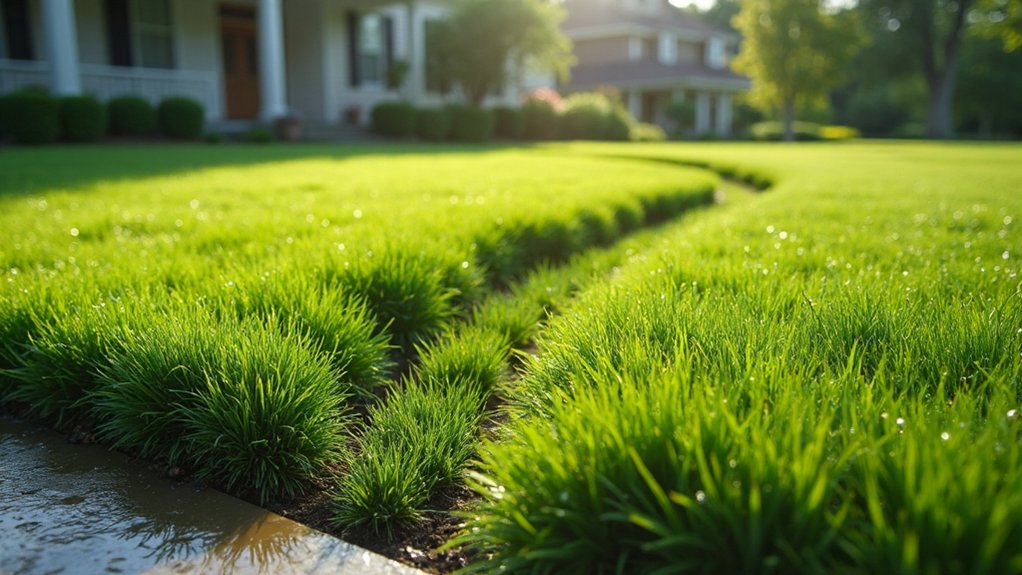
You’ve probably noticed your yard’s “moisture management challenges” after heavy rainfall, but here’s what’s really happening beneath the surface. Without proper slope grading, you’re fundamentally creating a water trap that’ll compromise your home’s foundation and turn your landscape into a soggy mess. The solution isn’t just about moving dirt around—it’s about understanding how strategic elevation changes can transform your property’s drainage system. There’s a specific science to getting this right, and the consequences of ignoring it might surprise you.
Key Takeaways
- Slope grading creates a 1-2% incline that directs water away from your home’s foundation, preventing costly structural damage.
- Proper grading eliminates standing water and pooling issues that create mosquito breeding grounds and threaten landscape health.
- Strategic grading prevents basement flooding and foundation cracks by establishing controlled drainage pathways for water runoff.
- Graded lawns reduce waterlogged soil conditions that suffocate grass roots and cause vegetation to die or deteriorate.
- Professional slope grading works with natural physics to guide moisture toward appropriate outlets, protecting your property investment.
What Is Slope Grading and How Does It Work?
Every homeowner faces the challenge of managing water runoff around their property, and slope grading offers a proven solution to safeguard your home’s foundation. This process involves strategically shaping the ground around your yard to create a gradual incline that diverts water away from your home.
The grading process works by establishing a gentle slope across your lawn that encourages proper drainage. When rainwater hits your grass and yard, the slope guarantees it flows away from your foundation rather than pooling near your home. This prevents serious issues like soil erosion, basement flooding, and structural damage.
Effective slope grading creates a controlled path for water movement, transforming potential drainage problems into a manageable system that protects your property investment.
The Science Behind Proper Water Flow and Drainage
When water meets your graded lawn, it follows predictable physical principles that determine whether it protects or damages your property. Proper grading creates a controlled pathway where gravity pulls water flow away from your foundation at the desirable 1-2% slope. This gentle incline guarantees water runoff moves steadily downhill without gaining destructive velocity that causes erosion.
Without proper drainage systems, water seeks the path of least resistance, often pooling around your home’s base. The slope of your yard acts as nature’s highway, guiding moisture toward appropriate outlets. A well-executed yard grading project eliminates drainage issues by working with physics rather than against it. When you improve drainage through strategic grading, you’re directing water away from your home using fundamental laws of gravity and fluid dynamics.
Foundation Protection Through Strategic Grading
Your home’s foundation faces constant threat from water infiltration, making strategic grading your most effective defense against costly structural damage. Proper grading is essential because it creates a new high point that guarantees water flows away from your foundation’s perimeter. You’ll need to establish a minimum 1% slope away from your home within ten feet to effectively move water and prevent erosion around vulnerable areas.
When you maintain appropriate grades, you’ll eliminate standing water that causes foundation cracks, leaks, and deterioration. Strategic positioning helps move water away from basements and crawl spaces, preventing moisture accumulation that leads to mold and mildew. Without proper slope away techniques, drainage problems develop that compromise your home’s structural integrity and result in expensive repairs you could have easily secured.
Preventing Water Damage and Pooling Issues
Since standing water creates the perfect breeding ground for mosquitoes and threatens your property’s structural integrity, implementing proper slope grading becomes critical for eliminating these pooling issues before they escalate into expensive problems. Lawn grading addresses low spots where stagnant water accumulates, creating effective water drainage pathways that redirect moisture away from vulnerable areas.
Without proper drainage, you’ll face costly water damage to your foundation, basement flooding, and saturated soil conditions. Professional lawn grading establishes ideal slopes that prevent water from pooling near your home’s structure. In severe cases, combining strategic grading with French drains provides thorough water problems solutions. By preventing water accumulation through precise slope adjustments, you’re protecting your investment while maintaining healthy landscaping that won’t harbor standing water or pest breeding sites.
Health Benefits for Your Lawn and Landscape
Beyond protecting your property’s structural integrity, proper slope grading delivers remarkable health benefits that transform your lawn and landscape into a thriving ecosystem. When you eliminate standing water or puddles through proper grading, you’re reducing the risk of creating a breeding ground for mosquitoes and other harmful pests that plague poorly drained areas.
A graded lawn prevents waterlogged soil problems that suffocate grass roots and kill vegetation. Your trees and shrubs won’t suffer from root rot when excess moisture drains efficiently away from sensitive root systems. Whether you’re tackling an Old House restoration or new construction, partnering with an experienced LANDSCAPING COMPANY guarantees they’ll grade your property to create ideal drainage. This eliminates water issues while delivering precise hydration levels that produce lush, vibrant landscaping throughout every season.
DIY Slope Grading Techniques and Best Practices
While professional grading services deliver expert results, many homeowners can tackle basic slope grading projects themselves with the right techniques and preparation. Grading is the process of reshaping your yard’s surface to eliminate problem areas where excess water collects. Though your yard may seem level, identifying high and low spots helps direct water away from your house effectively.
Essential DIY grading steps include:
- Measure existing grade using stakes and string to identify problem areas
- Calculate slope percentage and mark desired grade levels with stakes
- Use shovels, rakes, or rented equipment to create 3-5% slopes
- Ensure smooth blending between graded and existing terrain
- Reseed or resod affected sections following step-by-step instructions
Check your local PRIVACY POLICY regarding permits before starting DIY projects.
Professional Grading Services Vs Self-Installation
When deciding between professional grading services and DIY installation, you’ll need to weigh several critical factors that directly impact your project’s success and long-term effectiveness.
The first step involves evaluating your project’s complexity. Simple slopes work well for DIY, but extensive retaining walls and complex drainage systems probably need professional expertise. The process of reshaping large areas requires specialized equipment that professionals already own.
Your next step is evaluating costs. DIY saves money initially, but mistakes prove expensive. You’ll use basic tools like two stakes, a rake to smooth surfaces, and a sheet of plywood for leveling freshly graded soil.
Check with your local building department about permits and regulations. Professionals handle permits automatically, while DIY projects require you to navigate these requirements independently.
Cost Factors and Investment Considerations
Understanding the financial scope of your slope grading project helps you make informed decisions about materials, labor, and timing. Several factors affect your investment when correcting existing slopes around your house.
- Drainage complexity: Installing a French drain or retaining wall drastically increases costs compared to basic regrading of low areas
- Soil conditions: Rocky terrain or clay-heavy soil requires specialized equipment, while removing away topsoil for preservation adds expenses
- Project scale: Reshaping the entire slope of the yard costs more than targeting specific problem zones near your home’s foundation
- Weather timing: Scheduling during dry seasons prevents delays from heavy rain and reduces equipment damage risks
- Finishing touches: New grass seeding and soil amendments represent additional but essential final investments
Long-Term Maintenance and Monitoring Requirements
After completing your slope grading project, you’ll need to establish a routine maintenance schedule to protect your investment and ascertain ongoing drainage effectiveness. Regular inspections help you identify high spots and low points that develop as soil settles or erodes. Check the distance from the ground to your home’s foundation, guaranteeing water flows away from your homes rather than pooling near structures. Use the back of a rake to smooth problem areas before they worsen.
Monitor for washout signs and changes in water flow patterns that could redirect drainage toward your house. Water can cause serious foundation issues and cause cracks in your home’s structure. Maintain ground cover like grass or mulch to prevent soil loss. Clean debris from French drains and swales regularly to verify proper water diversion.
Frequently Asked Questions
What Is the Slope for Drainage in a Lawn?
You’ll need a 1-2% slope for proper lawn drainage, considering soil composition and water absorption rates. This ground elevation guarantees effective surface runoff, foundation protection, and supports your drainage system design while accommodating downspout placement and planting selection.
Why Is It Important to Properly Slope Drain Pipes?
You’ll prevent water pooling and foundation damage through proper pipe installation with optimized pipe slope. Effective drainage systems require correct water flow direction, while slope maintenance tips guarantee you’re managing surface runoff and preventing costly structural issues.
What Is the Main Purpose of Slope Grading and Regrading?
Picture water cascading away from your home like a protective shield. You’ll achieve surface runoff control and water pooling prevention through proper grading specifications adherence, ensuring erosion minimization while optimizing landscape design for enhanced landscaping sustainability.
What Is the Proper Grade for Yard Drainage?
You’ll need a suitable grade for runoff between 1-2% (1-2 inches per 10 feet) for effective surface water removal. This precise downslope angle calculation guarantees proper drainage system maintenance while preventing the impact of inadequate grading.
Conclusion
You’ll find it ironic that while you’re desperately trying to keep water *in* your lawn with sprinklers and irrigation, you’re simultaneously fighting to keep it *out* through proper slope grading. Visualize this: you’re watering your grass on Tuesday while Wednesday’s rain creates a miniature lake in your yard. Fundamentally, without strategic grading, you’re participating in a losing game of water management roulette with your home’s foundation.