
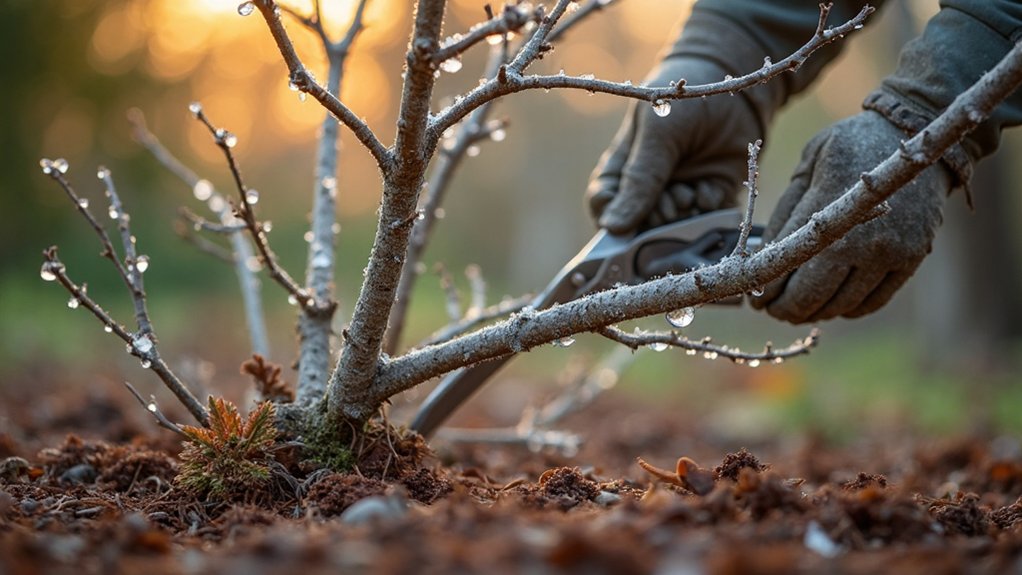
You’ve likely stood in your garden with pruning shears in hand, wondering if you’re about to help or harm your shrubs. The truth is, timing can make the difference between a spectacular bloom season and a disappointing display of bare branches. Most gardeners don’t realize they’re unknowingly sabotaging next year’s flowers with well-intentioned cuts made at the wrong time. Understanding when each type of shrub needs attention isn’t as straightforward as you might think.
Key Takeaways
- Spring-flowering shrubs should be pruned immediately after blooming to preserve next year’s flower buds on old wood.
- Summer-blooming shrubs tolerate late winter or early spring pruning since they flower on new growth from current season.
- Winter dormant season is ideal for pruning most deciduous shrubs when they experience minimal stress and disease risk.
- Avoid pruning 6-8 weeks before first frost to prevent stimulating vulnerable new growth that won’t survive winter.
- Remove dead, damaged, and diseased branches first, then thin overcrowded areas to improve air circulation and plant health.
Understanding the Importance of Proper Pruning Timing
Timing your pruning cuts correctly makes the difference between thriving shrubs and struggling plants that never reach their full potential. When you prune at the wrong time, you’ll damage growth cycles and reduce flowering potential. Understanding when shrubs develop new buds determines the best time to prune each variety.
Spring-flowering shrubs like lilacs and forsythia should be pruned immediately after blooming, since they set next year’s buds on old wood. Summer bloomers can handle winter or early spring pruning because they flower on new growth. Pruning during dormant periods minimizes stress and disease risk.
Poor timing creates vulnerable plants susceptible to pests, reduces blooms, and compromises your landscape’s curb appeal. Master proper timing, and you’ll maintain healthy shrubs that enhance your property’s safety and visual impact year-round.
Spring Pruning: Best Practices for Early Bloomers
Spring-flowering shrubs require immediate attention once their blooms fade if you want spectacular displays next year. These shrubs flower on old wood, meaning they set buds for next year’s blooms shortly after flowering ends. You’ll want to prune shrubs like azaleas, rhododendrons, and forsythia immediately after they finish blooming, not in late winter or early spring like many other plants.
Remove dead, damaged, or diseased branches first, then thin overcrowded areas to improve air circulation. Cut back overgrown sections to maintain shape and size. This timing prevents you from removing next year’s flower buds while allowing the plant to develop strong new growth.
Avoid pruning too late in the season, as this can stimulate new growth that won’t harden properly before winter arrives.
Summer and Fall Pruning Strategies
When should you tackle summer and fall pruning tasks? For summer-blooming shrubs that don’t flower in spring, you’ll want to prune immediately after flowering ends. This timing allows you to remove suckers, water sprouts, and thin overcrowded branches while promoting healthy bud formation for next season’s blooms. Since these shrubs were pruned after flowering, they’ll have adequate time to develop new wood before winter.
Deciduous shrubs require different consideration in your pruning schedule. Wait until late fall after leaf drop to remove dead, damaged branches and prepare plants for dormancy. However, avoid pruning 6-8 weeks before your area’s first frost date, as late-season cuts can stimulate vulnerable new growth. When pruning shrubs during the growing season, skip extreme heat or drought periods to minimize plant stress.
Winter Dormant Season Pruning Guidelines
Winter’s dormant season offers the ideal window for most deciduous shrub pruning. This is the right time to prune these plants when they’re least stressed and won’t bleed sap. You’ll encourage vigorous growth come spring while maintaining healthy trees and shrubs in your garden.
During the winter dormant season, you need to prune strategically:
- Remove all dead or diseased wood first
- Cut back overcrowded or crossing branches
- Shape your shrubs while their structure is visible
- Make clean cuts just above outward-facing buds
- Avoid spring-blooming varieties that set flower buds early
However, it’s the wrong time for spring bloomers like lilacs or forsythia, as you’ll sacrifice their flowers. Focus on summer-blooming shrubs that bloom on new wood instead.
Plant-Specific Considerations for Different Shrub Types
While general timing guidelines provide a solid foundation, each shrub species has unique pruning requirements that you’ll need to master for perfect results. Spring-blooming varieties like lilacs and forsythia form flower buds on previous year’s wood, so you’ll want to prune immediately after flowering to guarantee abundant blooms next season. Summer-flowering shrubs respond well to late winter pruning, which stimulates healthy growth and promotes vigorous shoots that grow during the current seasons growth. Evergreen shrubs require careful timing – prune pines when new growth appears in early spring. For formal hedges, you’ll need pruning every year to maintain shape. Deciduous fruit-bearing shrubs benefit from early spring pruning before buds break, making this the ideal time for optimal results.
Frequently Asked Questions
What Month Should You Trim Shrubs?
You’ll find optimal timing varies by shrub types – prune spring bloomers after flowering, summer bloomers in late winter. Your pruning schedule should consider seasonal patterns, proper tool selection, and maintenance tips for best shaping.
Which Kind of Pruning Cut Is Not Recommended for Shrubs?
You shouldn’t make flush cuts when pruning shrubs, as they remove the protective branch collar. Avoid excessive shearing cuts too, since they create weak growth. Instead, use proper diagonal cuts during dormant season pruning for healthier shrub development.
When to Prune to Encourage Growth?
Want vigorous growth? You’ll achieve ideal results by pruning during dormancy in late winter. This timing, combined with correct pruning techniques and selective branch removal, minimizes stress on shrubs while maximizing their spring growth potential.
Is It Better to Prune Bushes in the Fall or in the Spring?
You should choose spring over fall for the ideal pruning season. Winter pruning during the dormant season promotes vigorous growth, while selective thinning and heading back cuts in spring help with shaping shrubs effectively.
Conclusion
You’ll maximize your shrub’s blooming potential by timing your pruning correctly. Research shows that improperly timed pruning can reduce flowering by up to 70% the following season. Don’t let poor timing sabotage your garden’s beauty – spring bloomers need post-flower pruning, while summer varieties handle dormant season cuts. You’ve got the knowledge now to keep your landscape thriving. Remember, it’s not just about cutting branches; it’s about understanding each plant’s unique growth cycle.