
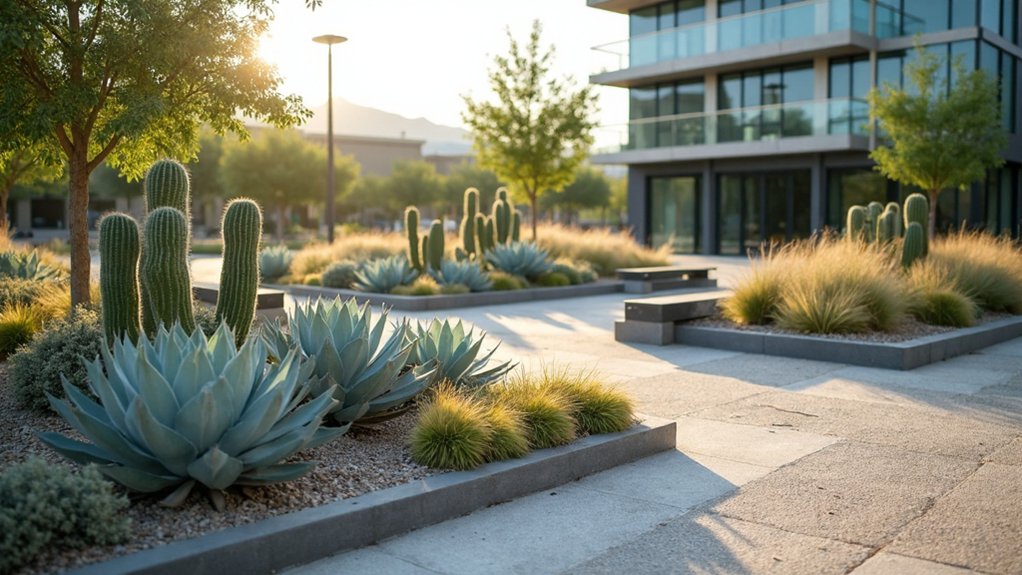
Picture your commercial property’s sprinkler system running endlessly during peak summer months while your water bills skyrocket and local drought restrictions tighten. You’re facing a costly dilemma that’s becoming increasingly common across business districts nationwide. Smart commercial landscape design can slash your water consumption by up to 60% without sacrificing the professional appearance that attracts customers. There’s a systematic approach that transforms water-hungry landscapes into resilient, cost-effective environments that thrive regardless of weather conditions.
Key Takeaways
- Water-wise commercial landscapes reduce water consumption by 30-50% while lowering maintenance costs through drought-resistant plant selection.
- Strategic hydrozoning groups plants with similar water needs, maximizing efficiency through comprehensive site analysis and native plant incorporation.
- Proper soil preparation with organic amendments improves drainage and water-holding capacity, reducing plant mortality in drought conditions.
- Drip irrigation systems deliver 90% efficiency with smart controllers and moisture sensors that automatically adjust watering schedules.
- Native and drought-tolerant plant selection creates visually appealing, year-round landscapes that demonstrate responsible environmental stewardship.
Understanding Commercial Water-Wise Landscaping Benefits
When water scarcity becomes an increasing concern for businesses, commercial water-wise landscaping emerges as both an environmental imperative and a smart financial strategy. You’ll reduce water consumption by 30-50% compared to traditional landscapes while considerably lowering maintenance costs. Drought-resistant plants require minimal supplemental irrigation, thriving in challenging conditions where conventional landscapes struggle.
Your investment in efficient irrigation systems and strategic soil management pays dividends through reduced utility bills and enhanced property aesthetics. Native plants adapt naturally to local moisture conditions, requiring less organic amendments and mulch to maintain healthy growth. These sustainable landscapes demonstrate your commitment to responsible water stewardship while creating visually appealing environments that withstand drought conditions, ensuring long-term viability for your commercial property.
Strategic Planning and Design Principles for Commercial Properties
Successful water-wise commercial landscaping requires a methodical approach that begins with thorough site analysis and strategic design planning. You’ll need comprehensive water audits to identify inefficient systems and struggling areas, informing your drought-resistant landscaping strategy. Implementing hydrozoning by grouping plants with similar water needs optimizes your water-wise irrigation system while reducing waste.
Your landscape design should incorporate native plants adapted to local climate conditions, drastically lowering long-term water consumption. Integrate stormwater management features like rain gardens, bioswales, and permeable pavement to retain water on-site and decrease irrigation dependency. These water conservation strategies not only reduce operational costs but also enhance property value. Establish regular maintenance practices including system inspections, irrigation schedule adjustments, and proactive plant care to guarantee ongoing sustainability and efficiency of your commercial landscape investment.
Soil Preparation and Amendment Techniques
Although drought-resistant plants can survive harsh conditions, they’ll only reach their full potential when planted in properly prepared soil that promotes deep root development and efficient water retention. Effective soil preparation begins with analyzing existing soil types to determine necessary amendments. You’ll need to improve soil drainage by incorporating organic matter, sand, and compost, which enhances both soil texture and soil structure. These soil amendments increase soil water-holding capacity while preventing root rot from poor drainage. Adding soil organic matter helps regulate soil temperature and maintains ideal soil moisture levels. Quality soil preparation reduces plant mortality and creates water-efficient landscapes requiring minimal irrigation. This investment in proper soil structure guarantees your drought-resistant commercial landscape thrives with reduced water input.
Selecting Native and Drought-Tolerant Plants for Commercial Spaces
How do you choose plants that’ll thrive in your commercial landscape while dramatically reducing water costs? Start by prioritizing native plants adapted to your local climate—they’ll require minimal watering and maintenance compared to non-native species. Select drought-tolerant plants with specialized adaptations like deep root systems or waxy leaves that survive extended drought conditions naturally.
Group plants by their water needs to maximize water efficiency through targeted irrigation. This strategic approach reduces overall water usage while maintaining visual appeal. Incorporate diverse native and drought-tolerant species to enhance biodiversity and create resilient landscapes that withstand environmental stresses.
Choose plants that provide year-round interest, eliminating high-maintenance seasonal replacements. This thoughtful plant selection forms the foundation of successful landscape design, delivering substantial water savings while creating stunning commercial spaces that endure challenging conditions.
Installing Efficient Irrigation Systems and Smart Technologies
Smart plant selection creates the perfect foundation, but pairing it with efficient irrigation technology amplifies your water savings exponentially. Drip irrigation delivers water directly to plant roots with 90% efficiency, eliminating waste from evaporation and runoff. You’ll maximize water conservation by integrating weather-based irrigation controllers that automatically adjust schedules based on local conditions, preventing costly overwatering.
Install soil moisture sensors to monitor saturation levels and communicate with your smart irrigation system for ideal timing. High-efficiency sprinkler heads with pressure-regulating nozzles guarantee uniform distribution while preventing misting losses. Complement your drought-resistant plants with organic mulch to retain soil moisture longer between watering cycles.
This thorough irrigation technology approach reduces commercial landscape water consumption by 30-50% compared to traditional systems, delivering substantial cost savings.
Maintenance Strategies for Long-Term Water Conservation Success
Three essential maintenance pillars determine whether your water-wise landscape thrives or fails over time. First, you’ll need to adjust watering schedules seasonally and monitor weather conditions to minimize water waste. Installing smart irrigation systems with leak detection helps conserve precious water while reducing long-term maintenance costs.
Second, apply a layer of organic mulch around plants to retain soil moisture and suppress weeds. This organic mulch around plants greatly reduces irrigation frequency. Group plants with similar water requirements together for more efficient care.
Third, implement regular pruning, fertilization, and pest management practices. These proactive measures guarantee reduced maintenance needs while promoting plant health. Your thorough maintenance plan should include periodic reviews and adjustments, preventing costly remediation while maintaining increased property values through sustainable landscape management.
Frequently Asked Questions
What Are the Typical Costs for Converting Existing Commercial Landscapes to Drought-Resistant Designs?
You’ll typically spend $3-8 per square foot converting existing commercial landscapes, but you’ll recover costs through reduced irrigation expenses, commercial landscape rebates, and water conservation incentives while benefiting from low maintenance plant species.
How Long Does It Take to See Water Savings After Implementing Water-Wise Landscaping?
You’ll see absolutely massive water savings within weeks! Efficient irrigation systems and watering schedule optimization deliver immediate results, while native plant selection, xeriscaping techniques, and mulching benefits create long-term reductions through sustainable maintenance practices.
Are There Local Regulations or Permits Required for Commercial Drought-Resistant Landscape Installations?
You’ll need to check local landscape ordinances and zoning regulations before starting. Most municipalities require permit requirements, design review processes, and irrigation permits. Site inspections verify plant approvals and planting restrictions compliance with maintenance guidelines.
What Insurance or Liability Considerations Exist for Commercial Properties With Water-Wise Landscapes?
Ninety percent of commercial properties face increased liability risks. You’ll need water wise liability coverage for xeriscaping installation insurance, plant maintenance contracts, and irrigation system warranties. Consider commercial water audits to protect against drought resistant landscape claims.
Can Water-Wise Landscaping Increase Commercial Property Values and Attract More Tenants?
You’ll boost property values through increased curb appeal and reduced maintenance costs. Water-wise landscapes attract eco-conscious tenants with lower water bills, enhanced sustainability, and positive environmental impact while building your conservation-minded reputation.
Conclusion
You’ll discover that water-wise commercial landscaping isn’t just theory—it’s proven reality. When you implement these drought-resistant strategies, you’re not gambling with untested concepts. You’re investing in documented solutions that’ve already transformed countless commercial properties. Your landscape won’t just survive challenging conditions; it’ll thrive while cutting water bills by up to 50%. The evidence is clear: strategic plant selection, smart irrigation, and proper soil preparation create resilient, cost-effective environments that exceed traditional landscaping performance.