
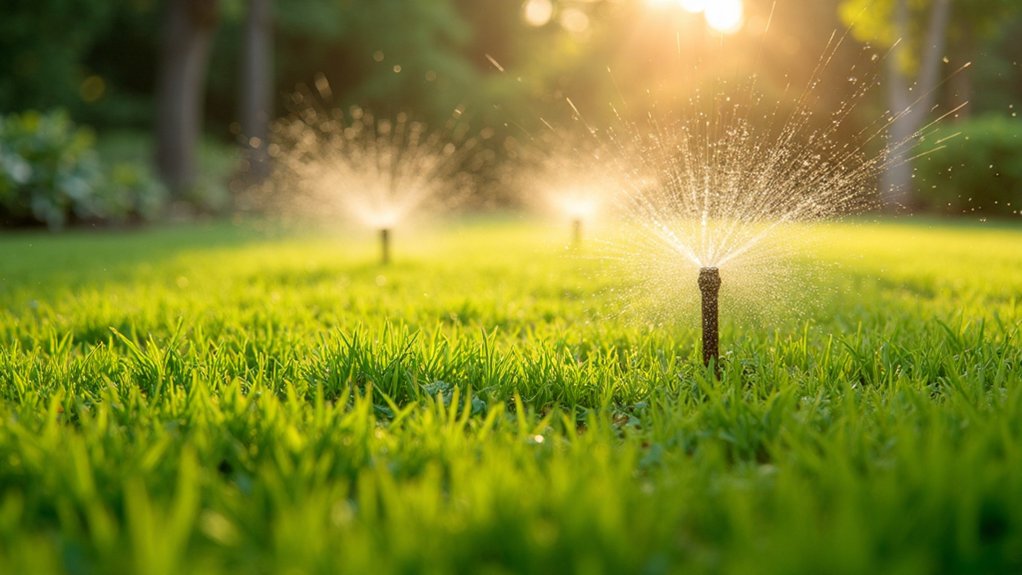
You’re probably wasting 30% more water on your lawn than necessary, according to the EPA’s latest irrigation efficiency studies. Most homeowners assume that maintaining a green, healthy lawn requires substantial water usage and high utility bills, but that’s simply not the case. With the right irrigation strategies and technology, you can dramatically reduce your water consumption while actually improving your lawn’s health and appearance. The key lies in understanding a few fundamental principles that most people completely overlook.
Key Takeaways
- Water lawns between 4-8 AM when temperatures are cooler to reduce evaporation and improve water absorption by up to 40%.
- Install smart irrigation controllers that automatically adjust watering based on weather and soil conditions, reducing water usage by 15-30%.
- Monitor soil moisture using sensors or tests to water only when needed, avoiding overwatering and maintaining optimal lawn health.
- Create separate irrigation zones for sunny and shaded areas since they have different water requirements due to varying evaporation rates.
- Use drip irrigation for trees, shrubs, and garden beds while reserving sprinkler systems specifically for lawn areas to maximize efficiency.
Understanding Your Lawn’s Water Needs and Consumption Patterns
How much water does your lawn actually need, and are you giving it too much or too little? Your lawn’s water usage can consume up to 50% of your household’s total summer consumption, making efficient watering essential for both your wallet and water conservation efforts. Several factors determine your lawn’s specific needs: climate conditions, soil type, grass species, and sun exposure levels. Rather than guessing, monitor soil moisture directly using moisture sensors or simple soil tests. Smart irrigation systems can automatically adjust watering schedules based on weather conditions and soil moisture readings. Check your sprinkler heads regularly for proper coverage and functionality. By understanding these consumption patterns and implementing targeted watering strategies, you’ll reduce water usage by 15-30% while maintaining a healthy, lush lawn year-round.
Timing Your Watering Schedule for Maximum Efficiency
While many homeowners water their lawns whenever it’s convenient, strategic timing can dramatically improve water absorption and reduce waste by up to 40%. The best watering window falls between 4-8 AM during early morning hours when temperatures are cooler and winds are minimal, allowing maximum soil penetration before evaporation occurs.
Smart controllers revolutionize watering schedules by monitoring local weather conditions and soil moisture levels. These systems automatically adjust irrigation cycles, skipping unnecessary watering during rainy periods and extending intervals when humidity is high. You’ll eliminate significant water waste while maintaining consistent lawn health.
Avoid midday watering when sun intensity peaks, as up to 30% of water evaporates before reaching roots. Evening watering isn’t ideal either, since prolonged moisture creates fungal growth conditions that damage grass.
Smart Irrigation Controllers and Weather-Based Technology
Why settle for guesswork when technology can optimize every drop of water your landscape receives? Smart irrigation controllers revolutionize water delivery by automatically adjusting schedules based on real-time conditions, cutting usage by 15-30%.
These advanced systems offer four key benefits:
- Weather-based sensors detect rainfall and skip unnecessary watering cycles, preventing overwatering during wet periods
- Zone-specific programming tailors water delivery to different plant types, sun exposure, and soil conditions across your landscape
- Soil moisture monitoring guarantees you’re watering only when plants actually need it
- Mobile apps provide remote monitoring and manual override capabilities for responsive management
The technology pays for itself through reduced water utility bills, making smart irrigation controllers a wise investment for efficient landscape management.
Drip Irrigation Systems for Targeted Water Delivery
You’ll need pressure regulators to control flow rates and guarantee ideal distribution throughout your system. While drip irrigation systems aren’t suitable for maintaining a healthy lawn, they’re perfect for trees, shrubs, and garden beds. They discourage weed growth by delivering water directly to soil, maintaining proper soil moisture levels. When paired with smart controllers, these systems adapt to your specific landscape needs while dramatically reducing overall water use.
Designing Effective Irrigation Zones for Different Areas
Since different plants have varying water requirements and your property likely contains multiple landscape types, creating distinct irrigation zones becomes essential for maximum efficiency. You’ll maximize water conservation by grouping plants with similar water needs together while accounting for environmental factors.
Consider these key factors when designing your irrigation zones:
- Different plant types – Group drought-tolerant plants separately from water-loving varieties to avoid overwatering or underwatering
- Sun exposure – Create separate zones for sunny and shaded areas since sunlight dramatically affects water evaporation rates
- Soil conditions – Clay soils retain moisture longer than sandy soils, requiring different watering schedules
- Specific needs – Design zones around high-maintenance areas like vegetable gardens versus low-maintenance groundcover
Separate zones allow you to customize watering duration, frequency, and timing for ideal plant health.
Selecting Water-Conserving Sprinkler Heads and Nozzles
After establishing your irrigation zones, the sprinkler heads and nozzles you choose will determine how effectively water reaches your plants. Water-conserving sprinkler heads maximize distribution uniformity, reducing your irrigation water usage while maintaining a healthy lawn. Multi-stream nozzles offer superior performance by resisting wind interference, preventing misting that wastes water and ensuring precise delivery to target areas.
High distribution uniformity sprinkler heads can boost your lawn’s water efficient performance by up to 30%. These wind-resistant features direct water exactly where it’s needed, eliminating runoff and overspray. When selecting equipment, consider your water pressure requirements and choose nozzles that maintain consistent coverage patterns. Efficient sprinkler heads and nozzles transform your irrigation system’s performance, delivering excellent results while significantly reducing water waste and lowering utility bills.
Moisture Sensing Technology for Precision Watering
While selecting the right sprinkler heads improves water delivery, moisture sensing technology takes your irrigation system’s precision to the next level. Solar-powered moisture sensors track real-time soil moisture at multiple depths, enabling intelligent watering decisions that eliminate guesswork.
This advanced moisture sensing technology transforms your irrigation approach through:
- Automated watering adjustments based on actual soil conditions and rainfall data
- Zone-specific watering that customizes hydration for different landscape areas
- Precision data collection that prevents overwatering and reduces water waste
- Enhanced water efficiency that farmers use to dramatically cut water consumption
You’ll achieve superb plant health while considerably lowering water bills. The system automatically modifies schedules based on real-time soil moisture readings, ensuring each zone receives exactly what it needs when it needs it.
Managing Water Pressure to Prevent Waste and Runoff
Proper water pressure management forms the foundation of an efficient irrigation system that prevents costly water waste and damaging runoff. You’ll need to monitor your system’s flow rate regularly, as excessive pressure causes overspray onto sidewalks, driveways, and neighboring properties. Most sprinkler systems operate ideally between 20-30 PSI, allowing for proper irrigation without creating mist that evaporates before reaching your lawn.
Install pressure regulators at each zone to maintain consistent output and prevent water hammering that damages equipment. You can reduce water bills considerably by adjusting pressure based on your specific sprinkler heads’ requirements. Lower pressure also minimizes soil compaction and allows better water penetration. Consider watering without maximum pressure during windy conditions, when overspray becomes more pronounced and wasteful.
Seasonal Maintenance and System Optimization Strategies
Since irrigation systems face varying demands throughout the year, you’ll maximize efficiency by implementing targeted seasonal maintenance and optimization strategies. Smart system using requires proactive care to maintain peak performance while reducing water waste and costs.
Your efficient irrigation maintenance should include these essential steps:
- Conduct regular inspections to identify leaks, clogged nozzles, and misaligned heads that waste water and create uneven coverage patterns.
- Adjust sprinkler heads seasonally and replace worn components to guarantee ideal water distribution across all zones.
- Group plants with similar watering needs into dedicated zones, allowing customized schedules that match soil moisture requirements.
- Implement deep, infrequent watering sessions applying at least half an inch to encourage deeper root growth and improved drought resistance throughout changing seasons.
Calculating Your Water Savings and Return on Investment
Understanding the financial impact of your water-efficient irrigation investment helps you make informed decisions and track long-term savings. You’ll typically see 15-30% reductions on water bills when upgrading systems, with smart controllers and moisture sensors adding another 15-30% savings. Drip irrigation systems deliver the most dramatic results, cutting how much water you use by 30-50% compared to traditional sprinklers while maintaining a healthy lawn.
Your payback period ranges from 2-5 years through reduced utility costs. The right irrigation system based on soil conditions maximizes these savings. Adding rainwater harvesting can slash your home’s water usage by 40-100%, depending on local rainfall. Calculate your current irrigation costs, then multiply by potential savings percentages to estimate annual reductions and determine your lawn irrigation system’s return on investment.
Frequently Asked Questions
Do Sprinklers Make Your Water Bill High?
Your wallet’s bleeding money! Yes, inefficient sprinkler systems drain your budget through poor sprinkler system efficiency and neglected sprinkler system maintenance. However, proper sprinkler system optimization and smart sprinkler system management can dramatically slash those soaring bills.
What Is the Most Water-Efficient Method of Irrigation?
You’ll find drip irrigation systems and subsurface irrigation techniques most water-efficient. Smart water sensors with weather-based controllers minimize evaporation losses better than efficient sprinkler heads, while xeriscaping landscapes reduces overall water needs considerably.
How to Reduce Irrigation Water Usage?
You’ll reduce irrigation water usage by installing soil moisture sensors, upgrading to water efficient sprinkler heads, implementing drip irrigation systems, optimizing watering schedule timing, selecting native plant varieties, using smart irrigation controllers, and designing water efficient landscaping.
Conclusion
You’ve discovered the gentle art of water stewardship through thoughtful irrigation practices. Your lawn won’t feel neglected when you embrace these conservation-minded approaches. Smart controllers and moisture sensors become your silent partners in resource management. Your wallet will thank you as utility expenses ease, while your landscape maintains its verdant appeal. You’re not just trimming costs—you’re nurturing both your property’s beauty and the environment’s well-being through mindful water allocation strategies.