
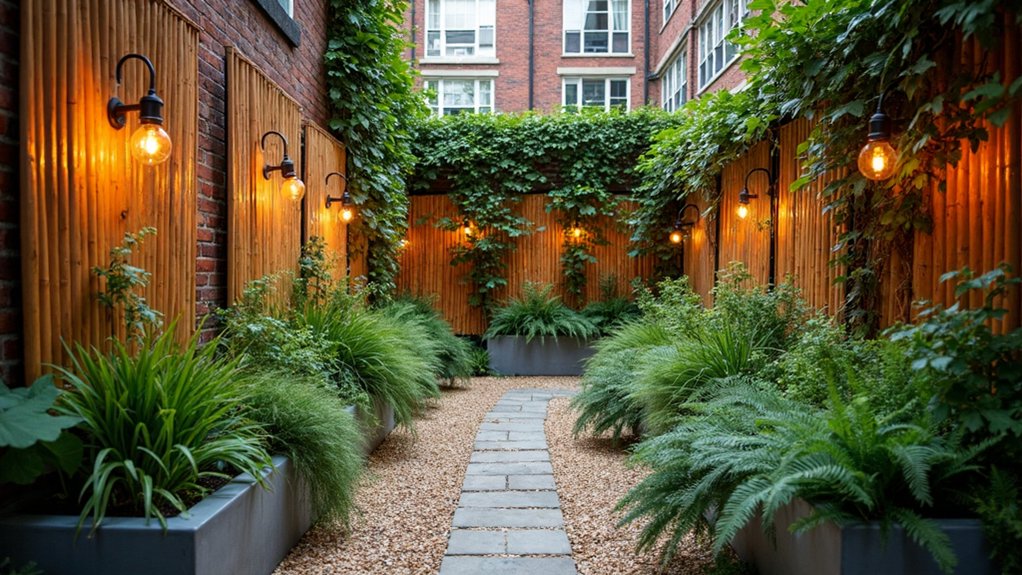
Your cramped city backyard is like a rough diamond—it holds tremendous potential beneath its challenging surface. You’ve probably gazed out at your small urban lot, wondering how you’ll ever transform that concrete-dominated space into the peaceful retreat you’re craving. The truth is, you don’t need sprawling acreage to create an intimate sanctuary that shields you from the urban chaos. With the right design strategies, you can reveal your lot’s hidden possibilities.
Key Takeaways
- Use vertical design elements like trellises, raised beds, and tiered plantings to maximize space and create perceived depth in cramped urban lots.
- Install strategic privacy barriers through layered plantings, architectural elements, and varied materials to create intimate outdoor sanctuaries despite dense surroundings.
- Preserve mature trees during construction using permeable materials and expert guidance to maintain property value and natural screening.
- Blur indoor-outdoor boundaries with glass doors, matching materials, custom planters, and water features that mask urban noise.
- Create functional zones with sunken seating areas, multifunctional furniture, and cantilevered decks to optimize limited square footage.
Transforming Small City Backyards Into Private Sanctuaries
While urban lots may seem too cramped for meaningful outdoor living, you can transform even the smallest city backyard into a private sanctuary with strategic design choices. A skilled landscape designer will help you maximize your space through clever solutions like sunken seating areas and cantilevered decks that create functional zones without overwhelming the footprint.
Smart garden design incorporates mature trees for instant privacy and vertical plantings to blur indoor-outdoor boundaries. You’ll want to layer diverse plants strategically, soften hard surfaces with water features, and utilize varied lighting for year-round appeal. These thoughtful approaches help you escape the intensity of urban life, creating an intimate retreat that feels worlds away from the bustling city just beyond your property lines.
Maximizing Limited Square Footage Through Strategic Design
When every square foot matters in your urban landscape, vertical design becomes your most powerful ally. You’ll transform cramped outdoor spaces into expansive living space by thinking upward rather than outward. Trellises, raised beds, and tiered plantings create layers that fool the eye into perceiving greater depth and dimension.
Strategic garden designs incorporate these essential elements:
- Multifunctional furniture – Choose benches with built-in storage or tables that double as planters
- Vertical growing systems – Install wall-mounted planters and climbing structures to maximize growing area
- Zone creation – Use different materials and heights to define distinct areas for dining, relaxation, and gardening
You’ll discover that thoughtful placement of permeable hardscaping and carefully selected plants with varying textures creates the illusion of spaciousness while maintaining functionality in your compact retreat.
Protecting Existing Trees While Creating New Outdoor Living Spaces
Although building new outdoor living spaces around established trees presents design challenges, you’ll find that preserving mature specimens delivers far greater rewards than starting from scratch. Working with experienced landscape architects guarantees you’ll protect valuable tree roots while maximizing your outdoor space. When planning deck construction near mature trees like magnolias, consult certified arborists to avoid root damage. You’ll need to prevent soil compaction and avoid raising grade levels near the root flare. Consider permeable materials like crushed rock for seating areas—this allows rainwater to penetrate and nourish existing root systems. The key is adapting your design to accommodate the tree rather than forcing changes to the natural environment. This approach preserves both the tree’s health and your property’s significant aesthetic and financial value.
Creating Privacy and Intimacy in Dense Urban Settings
Creating a private retreat in densely populated urban areas requires strategic design choices that maximize intimacy without sacrificing functionality. You’ll need to thoughtfully position screens, planters, and level changes to transform your small backyard into a cozy sanctuary. Frame your outdoor space with architectural elements and layered plantings to create outdoor living room-style enclosure.
Consider these privacy-enhancing techniques:
- Material Selection – Choose bamboo and concrete to soften hard surfaces while providing effective visual barriers
- Sunken Design – Incorporate a sunken patio with strategically placed walls to shield your garden from neighboring views
- Vertical Solutions – Maximize your limited lot through vertical gardening and selective plantings for an oasis-like atmosphere
These approaches help you create outdoor retreats that feel intimate despite urban density.
Layering Plants for Lush Tropical Appeal in City Gardens
Beyond establishing privacy boundaries, your plant choices themselves become the stars of your urban oasis. Layered plantings transform your compact outdoor space into a lush tropical landscape that feels worlds away from city concrete. Create depth by positioning bamboo and ornamental banana as your tallest backdrop layer, while purple lily-of-the-Nile, coral-flowering canna lilies, and broad-leaved elephant’s ear fill the middle tier.
An L-shaped planter behind seat-height storage benches maximizes your garden’s soil capacity for these bold tropical specimens. You’ll achieve that immersive jungle feeling through strategic combinations of varying heights, textures, and hot-colored flowers. This layered approach doesn’t just provide visual interest—it creates a verdant sanctuary where tropical plants act as living screens, delivering both beauty and functional privacy in your urban landscape.
Incorporating Water Features to Mask Urban Noise
Traffic noise and construction sounds can quickly shatter the peaceful ambiance you’ve worked so hard to create with your layered tropical plantings. A well-placed water feature transforms your living space into a true urban oasis by masking disruptive sounds with soothing water movement.
Consider these strategic placement options:
- Near seating areas – Position fountains or bubbling rocks close to patios and benches to encourage relaxation and conversation
- Against boundary walls – Wall-mounted features help deflect urban noise while maximizing limited space
- As focal points – Central ponds or birdbaths with recirculating pumps attract wildlife and create natural sound barriers
Even compact tabletop fountains considerably improve your outdoor space’s acoustic quality. The gentle trickle of moving water provides tranquility that helps you forget you’re surrounded by city chaos.
Blurring Boundaries Between Indoor and Outdoor Living
While water features provide auditory relief from city noise, the most dramatic transformation happens when you eliminate the visual and physical barriers separating your indoor and outdoor spaces. Glass doors that pivot or slide open create seamless connections between your living room, kitchen, and garden terrace, effectively doubling your usable space.
Position a custom cedar planter box for culinary herbs just outside your kitchen window to blur spatial boundaries further. Train fragrant roses over trellises near windows, allowing their scent to drift indoors and create sensory connections. Protect wooden terrace furniture with stainless steel trays that echo your interior’s metallic accents.
Complete the integration with soft lighting—path lights and uplights that create continuous ambiance flowing from indoor living areas to your outdoor retreat.
Smart Storage Solutions for Compact Urban Yards
Every square foot matters in an urban yard, and clever storage transforms cluttered spaces into organized outdoor sanctuaries. You’ll maximize functionality by strategically placing storage benches and repurposing underutilized areas like spaces behind dense plantings or under stairs. These solutions keep gardening supplies and outdoor gear accessible yet discreet.
Consider these smart storage strategies:
- Custom-built cabinets – Tailor shelving to fit awkward nooks and crannies, turning wasted corners into functional storage
- Vertical wall-mounted racks – Free up ground-level space for entertaining while keeping tools organized
- Multifunctional furniture – Storage ottomans and benches provide seating with hidden compartments
Steel planters can double as storage bases while adding structure. Every single vertical surface offers potential storage opportunities. Strategic placement will help soften harsh urban elements while maintaining your yard’s aesthetic appeal.
Using Containers and Vertical Elements When Soil Is Limited
When soil runs short in urban settings, containers and vertical elements step up to create lush gardens that rival traditional ground plantings. Large planters transform your City Backyard into diverse ecosystems, supporting shrubs, perennials, grasses, and vegetables on rooftops and balconies. Waist-high containers provide sufficient depth for specimen plants like smoke bushes that double as natural screens.
Maximize your Outdoor Living space through vertical gardening with trellises and walls supporting cascading vines. These techniques add layers of greenery without consuming precious ground space. Ornamental grasses and billowy perennials soften harsh concrete edges while creating movement and texture for enhanced visual interest.
Strategic lighting placement featuring uplights and path lights transforms compact gardens into atmospheric retreats, highlighting vertical elements and creating inviting evening ambiance.
Frequently Asked Questions
What Is the Rule of 3 in Landscaping?
You’ll create visual balance by grouping plants in threes rather than even numbers. This principle involves thoughtful placement of elements with strategic proportions and layered textures, making your landscape design more dynamic and naturally appealing to the eye.
What Is the Average Cost of a Landscape Designer?
You’ll pay an estimated hourly rate of $50-$150 for landscape designers, with total projects ranging $2,000-$15,000. Factor in client communication challenges and ongoing landscape maintenance budgets when planning your investment.
What Is the Biggest Challenge in Landscape Architecture?
You’ll discover that limited space constraints aren’t just aesthetic hurdles—they’re complex puzzles involving site accessibility challenges, utility conflicts, and ongoing maintenance requirements that’ll test your creativity and problem-solving skills more than any other design aspect.
What Are the Principles of Urban Landscape?
You’ll focus on spatial arrangement to maximize limited areas, select sustainable materials that reduce environmental impact, and establish visual hierarchy through layered plantings. These principles help you create functional, beautiful urban spaces that enhance city living.
Conclusion
You’ll discover that your cramped concrete lot can become an expansive oasis through clever design choices. While sirens wail beyond your fence, bamboo rustles softly in your layered garden. Where parking meters once defined your view, cascading water features now create natural soundscapes. You’ve traded urban chaos for curated calm, proving that square footage doesn’t determine sanctuary potential. Your small city backyard now rivals any sprawling suburban retreat in tranquility and beauty.