
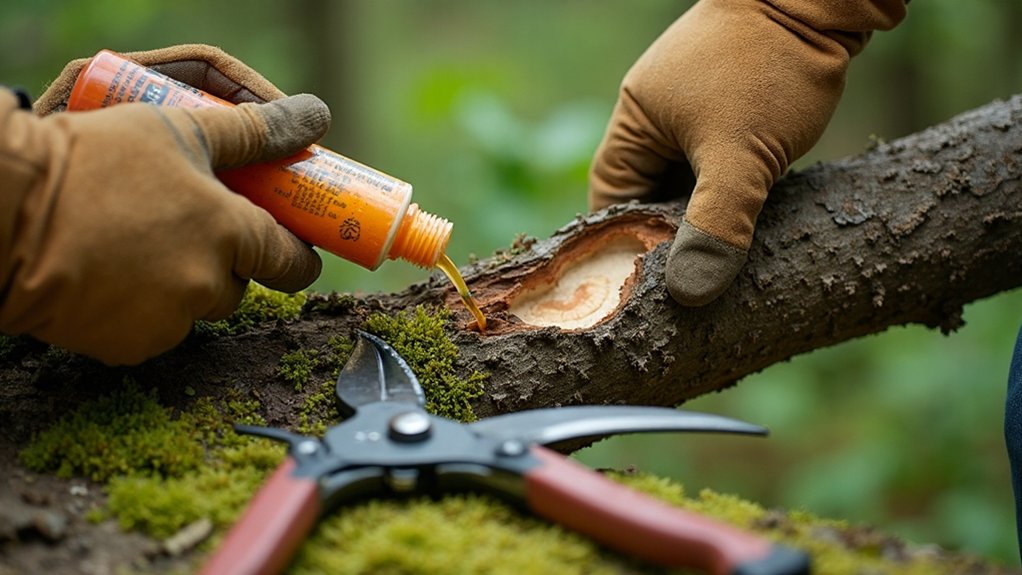
When nature unleashes its fury or you’ve finished pruning your trees, you’re left staring at fresh wounds that could determine your tree’s future health. You might think slapping on some wound dressing or filling cavities helps, but you’d actually be hindering your tree’s remarkable ability to heal itself. The difference between proper wound care and common mistakes isn’t just about appearance—it’s about whether your tree survives and thrives for decades to come.
Key Takeaways
- Clean wounds by removing torn bark and rough edges, but avoid flush cuts that damage the protective branch collar.
- Skip wound dressings and tree paint as they trap moisture and interfere with the tree’s natural healing process.
- Allow trees to compartmentalize damage naturally through callus tissue formation, which seals wounds over time.
- Consult a certified arborist for large wounds, hazardous branches, or extensive decay around damaged areas.
- Focus on supporting natural recovery rather than “fixing” wounds with cement fills or other artificial materials.
Safety First: Assessing Risks Before Taking Action
Before you even think about treating a wounded tree, you must evaluate the safety hazards around you. Storm damage creates numerous safety risks that require immediate attention. First, scan for downed power lines and utility lines near the damaged tree. Never approach these areas yourself—contact utility workers immediately. Look up for hanging branches that could fall unexpectedly, especially those under tension from structural damage.
Don’t attempt removing large, twisted limbs or cutting down damaged trees without proper training and equipment. These situations demand professional expertise. Consult a certified arborist to assess the tree’s condition and determine safe treatment options.
Be wary of unsolicited offers from individuals with chainsaws who may lack qualifications and insurance. Your safety depends on proper evaluation before any wound care begins.
Understanding How Trees Naturally Heal Wounds
Once you’ve confirmed the area is safe to work in, you’ll want to understand how trees naturally respond to injuries before intervening. Trees don’t actually heal wounds like human tissue does. Instead, they compartmentalize the damage by walling off the affected area to prevent decay from spreading. The tree forms callus tissue around the wound’s edges, gradually covering the exposed wood over time.
This natural process works faster during growing seasons and varies by species. Younger trees seal wounds more quickly than older ones due to their vigorous growth. Well-drained soils with proper nutrition and oxygen availability support faster recovery. The tree’s goal isn’t to repair the structural damage but to contain it and prevent water infiltration that could compromise the surrounding healthy wood.
Proper Wound Treatment Techniques
Understanding the tree’s natural healing process allows you to make informed decisions about when and how to intervene. Proper wound treatment techniques focus on supporting the tree’s natural defensive mechanisms rather than hindering them.
Essential steps include:
- Clean the wound properly – Remove torn bark and rough edges with sharp, sterilized tools, cutting back to sound wood while preserving the branch collar
- Avoid flush cuts – Never cut flush against the trunk as this removes protective tissue needed for callus formation
- Skip wound dressing – Modern research shows that wound dressing typically slows the healing process and can trap moisture, promoting decay
Your goal isn’t to “fix” the wound but to optimize conditions for natural recovery. Make clean cuts that expose healthy tissue and allow the tree’s compartmentalization process to work effectively.
Common Mistakes to Avoid in Tree Wound Care
Despite following proper wound treatment techniques, many tree care mistakes can undermine the natural healing process and cause lasting damage to your trees. Avoid improper pruning cuts that leave stubs or tear bark, as these create entry points for pathogens. Don’t use wound dressings or tree paint on cuts – these products trap moisture and actually promote decay rather than prevent it. Never attempt filling cavities with cement or other materials, which was once accepted practice but now proves harmful. These fillers prevent proper drainage, allowing decay to spread internally while creating structural weakness. Instead, let wounds heal naturally through the tree’s compartmentalization process. Focus on making clean cuts and maintaining tree health rather than applying artificial treatments that interfere with recovery.
When to Call a Professional Arborist
When should you step back and let the experts handle your tree’s wounds? Professional arborists become essential when tree wounds expose significant bark damage or compromise the layer of vascular tissue beneath. You’ll need their expertise if you notice extensive discoloration and decay around wound sites, or when loose bark indicates deeper structural problems.
Consider calling certified professionals when:
- Large wounds affect callus tissue formation or proper wound closure
- Hazardous situations involve unstable branches or complete tree removal needs
- Complex damage requires specialized equipment beyond basic pruning tools
ISA Certified Arborists understand how new wood develops and can assess whether your tree’s natural healing processes will succeed. They’ll determine if wounds will properly close or if intervention’s needed. Don’t risk improper tree care techniques that could worsen tree wounds or prevent healthy recovery.
Frequently Asked Questions
How to Treat Tree Damage From Storm?
You’ll need structural evaluation and exposure assessment first. Support compartmentalization through proper pruning, apply wound dressing for decay prevention and microbial inhibition, provide nutrient supplementation, guarantee insect deterrence, and focus on environmental adaptation over aesthetic enhancement.
Should I Put Anything on a Tree Wound?
Studies show 90% of treated wounds heal slower than untreated ones. Don’t apply wound dressing application or sealants—they impede natural healing. Skip wound sterilization techniques and medication. Trees’ compartmentalization systems work best alone, requiring only proper wound monitoring techniques.
How Do You Help a Tree Heal After Pruning?
You’ll help your tree heal by using proper pruning technique with clean, sharp tools. Don’t over-prune, time cuts correctly for tree health, and maintain equipment well. Focus on safety and aesthetics while promoting strong growth.
How Long Does It Take for a Tree Wound to Heal?
You’ll see rapid wound closure in 6-12 months for small cuts, but larger wounds need 2-5 years. Tree species influence best healing time considerably, while proper wound maintenance strategies and environmental factors impact effective callus formation and minimal scar tissue development.
Conclusion
You’ve learned that proper tree wound care isn’t about rushing to cover or fill injuries, but allowing nature’s healing process to work. Remember, an ounce of prevention is worth a pound of cure—regular maintenance and careful pruning prevent many wounds from occurring. When you’re unsure about treatment or face complex damage, don’t hesitate to contact a certified arborist. Your tree’s health depends on informed decisions and proper care techniques.