
Your trees might be silently struggling beneath their seemingly healthy exterior. You’ve probably noticed some yellowing leaves, stunted growth, or branches that break more easily than they should. These aren’t just natural aging signs—they’re often your trees crying out for proper nutrition. While you water them regularly and prune when necessary, there’s a pivotal element you might be overlooking. Understanding what nutrients your trees actually need could transform their health in ways that’ll surprise you.
Key Takeaways
- Trees require nitrogen for lush foliage growth, phosphorus for strong root development, and potassium for disease resistance.
- Conduct soil tests to identify nutrient deficiencies and determine which specific nutrients your trees need for optimal health.
- Choose slow-release, organic fertilizers that provide steady nutrient delivery without causing harmful nutrient spikes or root damage.
- Apply fertilizer in spring for new growth support and fall for root development, avoiding over-fertilization of established trees.
- Distribute fertilizer around the tree’s drip line rather than against the trunk, then water thoroughly for proper absorption.
What Is Fertilizer and Why Do Trees Need It?
Two primary factors determine your tree’s health: the nutrients available in your soil and how effectively your tree can absorb them. Trees require essential nutrients for proper growth and root development, but natural soil often lacks adequate levels of nitrogen, phosphorus, and potassium. That’s where fertilization becomes imperative for effective tree care.
Fertilizer is a chemical substance you apply to supplement nutrient deficiencies in your soil. These nutrients fuel indispensable processes like photosynthesis, root expansion, and overall tree vigor. When your soil can’t provide sufficient nutrition naturally, fertilizer bridges that gap, ensuring your trees receive what they need to thrive. Without proper fertilization, trees may experience stunted growth, weakened root systems, and increased susceptibility to diseases and environmental stressors that compromise their long-term health.
Essential Nutrients for Optimal Tree Health
While fertilizer provides indispensable supplementation, understanding which nutrients your trees actually need determines the success of your fertilization efforts. Your trees require three primary macronutrients: nitrogen for lush foliage, phosphorus for strong roots, and potassium for disease resistance. Tree fertilizers should deliver these essential elements directly to the root zone where absorption occurs.
A soil test reveals which nutrients your trees need to be fertilized with, preventing costly guesswork. Fertilization replenishes depleted soil and provides the nutrient boost necessary for ideal growth. However, fertilization is one component of tree care—proper balance matters most. Micronutrients like iron and magnesium support overall vitality in specific soil conditions. Without adequate nutrition, your tree gradually weakens, becoming vulnerable to pests and diseases while producing lackluster growth.
Types of Fertilizers and Their Applications
Now that you know what nutrients your trees need, selecting the right fertilizer type becomes your next priority. Complete fertilizers deliver nitrogen, phosphorus, and potassium in balanced ratios, giving your tree thorough nutrition for exceptional health. If you prefer natural approaches, organic fertilizers slowly release nutrients over time without overwhelming root systems.
Slow-release nitrogen formulations work best for steady tree growth, preventing nutrient spikes that damage roots. When you fertilize, consider micronutrients like iron, manganese, and magnesium for specific soil deficiencies. Deep root fertilization delivers nutrients directly to active root zones, maximizing absorption.
The best time to fertilize depends on your goals—fall fertilization promotes root development, while spring applications support new growth. Choose fertilizers based on soil analysis and your tree’s specific requirements for optimal results.
When and How Often to Fertilize Your Trees
Although proper fertilizer selection sets the foundation for tree health, timing your applications correctly determines whether your trees truly benefit from the nutrients you provide. Spring fertilization kickstarts active growing season, while fall applications help your trees store essential nutrients for winter survival. Most established trees don’t need to be fertilized every year—soil testing determines actual nutrient deficiencies before treatment.
Young or newly planted trees require more frequent feeding to support rapid development. Fertilization 101: Boosting Growth means understanding that over-fertilization damages growth and overall tree health. When you fertilize your trees, apply nutrients directly at the root zone for maximum absorption. Proper fertilization timing, combined with supporting healthy soil conditions, guarantees your investment in tree care delivers lasting results for ideal tree vitality.
Proper Application Methods for Maximum Effectiveness
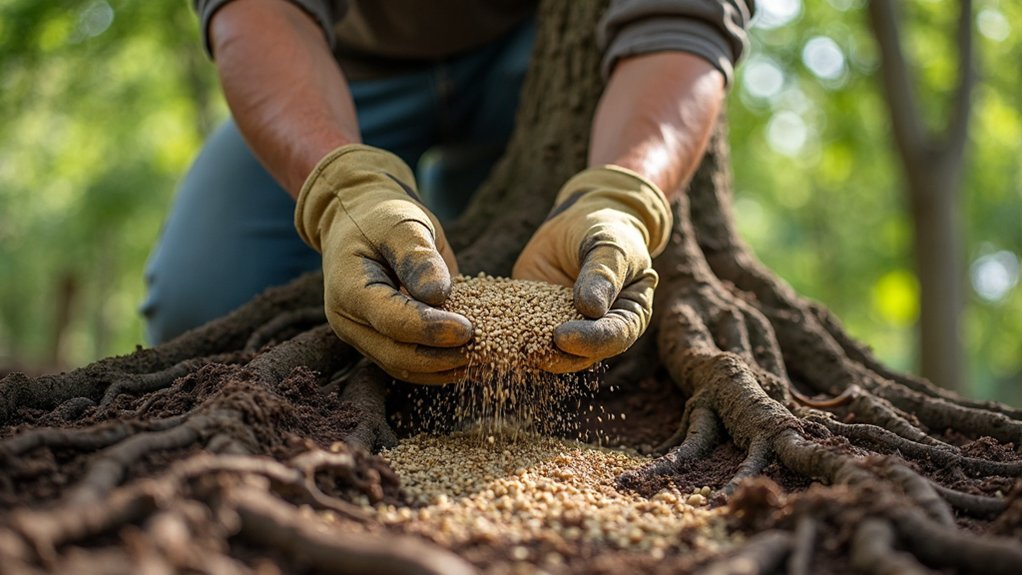
Successful fertilizer application depends entirely on where and how you deliver nutrients to your trees. Apply fertilizer around the drip line, not against the trunk, to target active roots. This placement becomes even more critical with compacted soil conditions that restrict nutrient movement.
Choose slow-release, granular fertilizers over quick-release formulas for steady nutrient delivery. The amount of fertilizer you use should reflect your soil testing results, which reveal specific deficiencies and prevent waste.
Water thoroughly after application to help nutrients penetrate the soil and reach root zones. This step’s particularly important in compacted soil conditions where water movement is restricted.
Improper application—such as over-fertilizing or placing nutrients too close to the trunk—can damage roots and stress your trees unnecessarily.
Signs Your Trees Need Fertilization and Common Mistakes to Avoid
Your trees will tell you when they’re struggling with nutrient deficiencies through visible warning signs that shouldn’t be ignored. Watch for early leaf drop, branch die-back, or stunted new growth – these indicate your tree needs immediate attention. Nutrient-deficient trees can’t resist disease effectively and become stress magnets for pests.
Common mistakes can sabotage your fertilization plan. Over-fertilizing causes more harm than good, so choose the right fertilizer based on soil testing rather than guessing. Don’t apply fertilizer to the trunk area – focus on the root systems where absorption occurs. Young trees require more frequent feeding than mature ones. Skip late-season fertilizing that encourages tender growth before winter. When you avoid these pitfalls and boost nutrients properly, your trees thrive with stronger immunity and vigorous development.
Frequently Asked Questions
What Is the Best Fertilizer for Trees?
You’ll want balanced tree fertilizer with proper NPK ratios. Choose slow release tree fertilizer or timed release organic options in pellets, granules, or spikes. Follow proper application rates for best results.
Where Do Trees Get 90% of Their Nutrients From?
Your trees get 90% of their nutrients through photosynthesis, combining carbon dioxide from air with water absorption via their root system. This nutrient uptake process doesn’t rely on soil composition or organic matter supplementation.
How to Use 10-10-10 Fertilizer on Trees?
You’ll need 1-2 pounds per trunk inch diameter. Apply this balanced fertilizer around the drip line, 2-3 inches deep, during early spring. Combine with slow release organic fertilizers for ideal root zone application results.
What Is the Most Important Nutrient for Tree Growth?
Nitrogen’s the most essential nutrient you’ll need for tree growth. It drives foliar development, but you can’t ignore seasonal nutrient demands, soil pH management, and micronutrient deficiencies that affect different tree species’ overall health.
Conclusion
You’ll dramatically improve your trees’ health by following proper fertilization practices. Research shows that well-fertilized trees can live up to 25% longer than neglected ones, making your investment worthwhile. Don’t wait for visible decline—proactive feeding strengthens root systems and boosts disease resistance before problems arise. By testing your soil, choosing appropriate fertilizers, and timing applications correctly, you’re ensuring your trees won’t just survive but thrive for generations to come.