
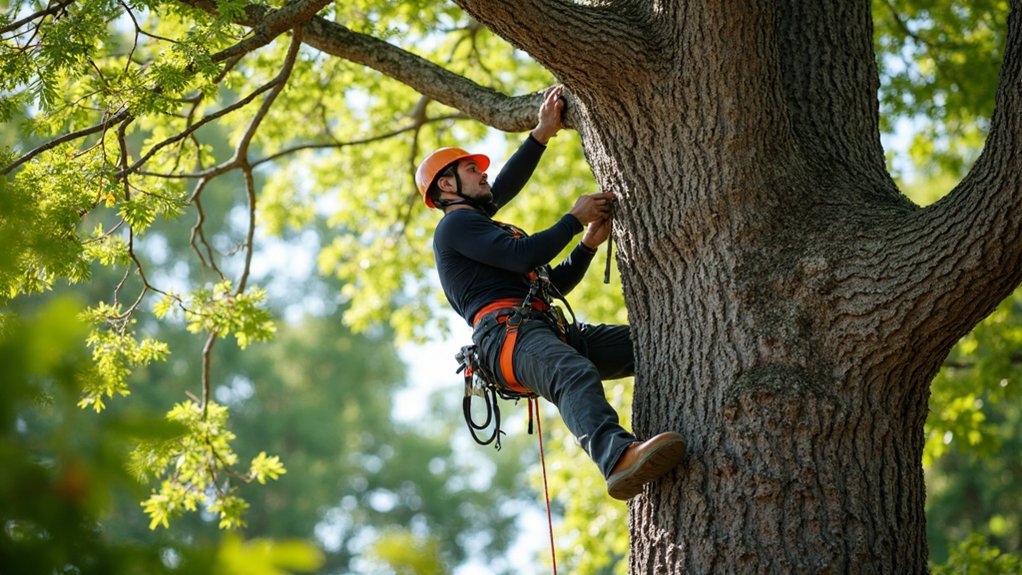
You’ve probably noticed dead branches cluttering your trees’ canopies, but you might not realize they’re silently undermining your landscape’s health. Tree crown cleaning isn’t just about aesthetics—it’s a strategic practice that can transform struggling trees into thriving assets. When you understand the hidden dangers lurking in neglected deadwood and discover the remarkable benefits of proper removal techniques, you’ll see why this maintenance practice separates successful property owners from those constantly battling tree-related problems.
Key Takeaways
- Crown cleaning removes deadwood, dying branches, and damaged limbs to improve air circulation and enhance overall tree health.
- Prompt deadwood removal prevents disease spread, reduces branch failure risks, and increases light penetration for healthy branch growth.
- Essential techniques include deadwood removal, selective thinning, reduction pruning, and structural pruning to maintain tree integrity.
- Professional services are recommended for large trees due to safety requirements and specialized techniques needed for proper crown cleaning.
- Crown cleaning should occur during dormant seasons, costing $200-500 per tree, with frequency depending on tree maturity.
What Is Tree Crown Cleaning and Why Does It Matter
When you look up at a mature tree’s canopy, you’re seeing the crown—the upper portion where branches and foliage create the tree’s distinctive shape. Crown cleaning involves removing deadwood, dying branches, and damaged limbs from your tree’s crown to promote healthier growth. This essential maintenance practice improves air circulation throughout the canopy while enhancing overall tree health.
Unlike structural pruning that focuses on the tree’s framework, crown cleaning targets problem areas that could compromise your tree’s significance. When you remove deadwood promptly, you’re preventing disease spread and reducing branch failure risks. Pruning trees through crown cleaning also increases light penetration, allowing healthy branches to flourish. This targeted maintenance keeps your tree’s crown strong, attractive, and structurally sound for years to come.
The Science Behind Deadwood Removal Benefits
Although deadwood removal appears straightforward, the science reveals a more complex relationship between pruning and tree health than most homeowners realize. Tree biology shows that different types of deadwood require distinct responses from your tree’s natural defense systems.
Understanding how decay in trees actually works challenges common assumptions about tree care:
- Abscised branches don’t need wound closure since your tree’s natural mechanisms effectively manage this deadwood
- Non-abscised damaged wood removal provides minimal benefits through accelerated compartmentalization of decay, primarily for unhealthy trees
- Decaying organisms aren’t inherently pathogenic – they’re often opportunistic rather than causative
Your tree’s crown relies on sophisticated biological processes rather than simple wound closure. Effective tree pruning considers these mechanisms, though studying direct impacts of deadwood removal on tree structure remains challenging due to multiple variables.
Essential Crown Cleaning Techniques for Optimal Tree Health
How can you transform your tree’s health through strategic branch removal? Professional tree service experts use multiple crown cleaning techniques to maximize your tree’s overall importance. Start with deadwood removal by cutting away diseased or dying branches that threaten structural integrity. Next, implement thinning techniques, removing select branches to improve air circulation and sunlight penetration throughout dense canopies. This pruning method prevents interior dieback while promoting healthy growth patterns. Consider reduction pruning when branches encroach on structures, maintaining natural shape while decreasing size. For young trees, focus on structural pruning to establish strong central leaders and balanced branch architecture. Crown raising provides ground clearance by removing lower limbs, while crown reduction eliminates excessive weight from weak branches. These combined techniques deliver significant health benefits for long-term tree sustainability.
Professional Vs DIY Crown Cleaning: Making the Right Choice
Three critical factors determine whether you should tackle crown cleaning yourself or hire professionals: safety risks, technical expertise, and long-term tree health consequences.
DIY crown cleaning requires proper safety gear and climbing equipment, especially when removing hazardous deadwood from tall trees providing shade around your property. However, improper reduction pruning can compromise your tree’s health and may necessitate costly Tree Removal later.
Consider these key factors when deciding:
- Tree complexity – Crown reduction on large specimens demands specialized techniques
- Safety requirements – Professional equipment prevents injuries during deadwood removal
- Long-term Benefits of Tree care – Certified Arborist services include warranties guaranteeing proper Health Care
Professional services often cost less than expected while ensuring ideal tree health outcomes through expert reduction pruning techniques that preserve your tree’s structural integrity.
Cost Factors and Budget Planning for Crown Cleaning Services
When budgeting for crown cleaning services, you’ll find that costs typically range from $200 to $500 per tree, though several key variables directly impact your final investment. Your tree’s crown size and height substantially influence pricing, as larger canopies require more time to remove dead branches throughout the structure. Accessibility affects costs too—trees near power lines or buildings need specialized equipment like bucket trucks, increasing expenses.
The complexity of proper pruning work matters considerably. If your overall tree has extensive deadwood blocking light penetration and air circulation, expect higher fees. Multiple trees and shrubs on your property often qualify for volume discounts from professional services. Consider using online cost calculators for personalized estimates based on your specific tree trimming needs, helping you plan your budget more accurately.
Tools and Safety Equipment Required for Effective Deadwood Removal
Planning your crown cleaning budget sets the foundation, but having the right tools and safety equipment determines whether you can execute the work safely and effectively. Dead wood removal requires specific pruning tools matched to branch sizes: pruning shears for small branches, pole pruners for medium height work, and chainsaws for larger limbs.
Essential safety equipment safeguards you during tree work:
- Personal Protection – Safety glasses, gloves, and hard hats prevent injury from falling debris
- Height Access – Ladders, bucket trucks, or safety harnesses enable safe reach to upper branches
- Cleanup Tools – Rakes, tarps, and chippers handle debris removal efficiently
Consider hiring a certified arborist for complex removal projects. Their training guarantees proper techniques that protect both you and your trees while achieving desired results.
Timing and Frequency Guidelines for Crown Cleaning Maintenance
Nothing impacts crown cleaning success more than timing your maintenance correctly. You’ll achieve ideal results by scheduling crown cleaning during your tree’s dormant season—late fall or early winter minimizes stress and promotes quality tree health benefits.
Your maintenance frequency depends on tree maturity. Mature trees need crown cleaning every 3-5 years, while young specimens require annual care due to rapid tree growth. This selective removal process involves the removal of dead, diseased, or damaged branches through what’s called strategic pruning.
Avoid selectively removing branches during spring growth flushes or hot summer months when trees are most vulnerable. Don’t neglect lower branches during maintenance—they’re equally important for overall tree health.
Proper timing and regular crown cleaning can extend your quality tree’s lifespan by 20-30 years, making this investment worthwhile for long-term tree growth and wellness.
Frequently Asked Questions
Why Remove Deadwood From Trees?
You’ll enhance tree vigor and structural integrity by removing deadwood. This improves photosynthesis efficiency, conserves nutrients, prevents disease spread, and provides aesthetic improvements. Proper branch removal techniques guarantee safety considerations while delivering significant ecosystem benefits for healthier growth.
Does Tree Pruning Enhance Root Growth?
Like Hercules gaining strength through struggle, you’ll find that proper pruning stimulates root system health and root biomass development. Strategic cuts redirect energy downward, enhancing root mass expansion and optimizing root nutrient absorption for stronger foundational growth.
What Is Crown Cleaning a Tree?
You’ll use specialized tree care techniques to remove dead, diseased, or broken branches from a tree’s canopy. Professional arborist guidance guarantees proper deadwood identification criteria while maintaining ideal crown structure for healthier growth.
Is It Important to Remove Dead Branches From Trees?
Like surgeons removing infected tissue, you’ll find proper tree maintenance requires eliminating dead branches. Certified arborist recommendations emphasize seasonal pruning schedules protect urban tree canopy benefits while professional tree care services guarantee robust health outcomes.
Conclusion
You’ll find that crown cleaning isn’t just busywork—it’s hitting the nail on the head when it comes to tree care. You’ve learned the techniques, understood the costs, and know when to call professionals versus tackling it yourself. Don’t let deadwood drag your trees down; you’re now equipped with the knowledge to keep them thriving. Remember, you’re investing in your landscape’s future health, and that investment will pay dividends for years.