
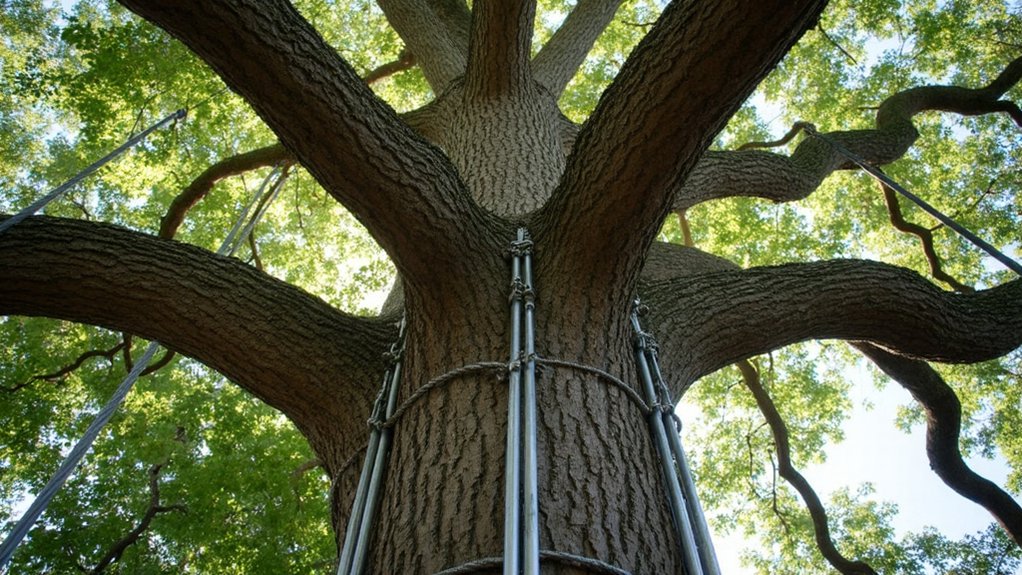
You’ve probably noticed that magnificent oak in your yard starting to lean after the last storm, or maybe you’ve spotted a concerning crack running down your favorite maple’s trunk. When trees develop structural weaknesses—whether from severe weather, disease, or simply the weight of their own growth—you’re faced with a critical decision. Tree cabling and bracing might be the difference between saving a beloved tree and watching it become a costly hazard that threatens your property and safety.
Key Takeaways
- Tree cabling and bracing uses steel cables and rods to reinforce structurally weak trees and redistribute stress loads.
- Systems support trees with codominant stems, cracked trunks, overextended limbs, or storm damage threatening structural integrity.
- Professional installation follows ANSI standards using high-strength cables in upper canopy and threaded rods through weak unions.
- Trees needing support show excessive branch movement, lopsided growth, tight crotches, or split trunk formations during wind events.
- Annual inspections and detailed assessments every 3-5 years ensure hardware integrity and continued effectiveness of support systems.
What Is Tree Cabling and Bracing?
When your trees develop structural weaknesses from storm damage, heavy foliage, or natural growth patterns, tree cabling and bracing provides essential support to prevent failure. Tree Cabling And Bracing involves installing specialized hardware to reinforce compromised tree structures. This structural support system uses steel cables positioned in the upper canopy to redistribute stress loads across multiple stems or branches. Bracing rods provide additional reinforcement for splits or cracks in trunks and major limbs.
These tree support systems target weak tree areas by limiting the movement of vulnerable branches during wind events. Professional arborists assess structural defects and determine appropriate cable placement heights and tensions. The extra support extends your tree’s lifespan while maintaining its natural appearance, making it a preferred alternative to complete removal.
When Should Trees Be Cabled and Braced?
Several critical warning signs indicate your tree needs cabling and bracing support before structural failure occurs. You should have an arborist inspect your tree when structural issues compromise its stability and threaten property safety.
Consider cables and braces when you notice:
- Codominant stems or trees with multiple trunks that could split apart during storms or heavy snow loads
- Cracked or damaged tree’s trunk showing visible stress fractures or weak attachment points
- Overextended limbs creating excessive weight that strains the main structure
- Recent storm damage with hanging branches or compromised structural integrity
- Mature trees showing instability regardless of age or species
ISA Certified Arborists can evaluate whether cabling and bracing will effectively support your tree’s compromised structure and prevent catastrophic failure.
Professional Techniques and Materials Used
While tree support systems may appear straightforward, professional arborists employ specialized techniques and materials that require extensive training and expertise. When cabling your tree, certified arborists install high-strength steel cables or dynamic synthetic fabric in the upper crown to restrict movement of weak branches and leaders. For structural bracing, they’ll insert long threaded rods directly through weak branch unions to prevent splitting. If you’re dealing with newly-planted trees, staking provides essential support while allowing controlled movement that promotes trunk growth. All materials and installation methods must conform to ANSI industry standards. Properly executed tree care requires qualified professionals who understand how these support systems work together to stabilize damaged structures effectively.
Signs Your Tree Needs Structural Support
Although healthy trees can withstand most weather conditions, certain warning signs indicate your tree’s structure has become compromised and requires professional support systems. When you inspect your trees, you’ll need to assess the tree carefully to determine whether structural intervention can reduce the risk of failure.
Here are key indicators that your Tree Needs cables or braces:
- Heavy or multiple stems creating excessive weight that threatens structural integrity
- Lopsided canopies showing imbalanced growth patterns that destabilize the entire tree
- Excessive branch movement during normal wind conditions, indicating weakness prone to breakage
- Tight crotches or poorly attached upright branches that aren’t securely connected to the main trunk
- Split trunks or V-shaped formations where bracing can help prevent complete structural failure
Professional arborists can determine whether cable and brace systems installed properly will effectively support your compromised tree.
How Long Do Tree Support Systems Last?
When properly installed and maintained, tree support systems provide decades of reliable structural reinforcement for your compromised trees. You can expect professionally installed cabling and/or bracing to last 20 to 40 years with minimal maintenance requirements. The longevity depends heavily on material quality, proper installation techniques, and ongoing care from certified professionals.
Mature trees require annual ground-level inspections and detailed assessments every 3-5 years to monitor hardware integrity and the tree’s trunk condition. Arborists use these evaluations to determine if adjustments are necessary and may recommend corrective pruning or proper pruning techniques to reduce stress on support systems. Without consistent professional monitoring, your tree’s health and the system’s effectiveness can deteriorate markedly. Regular tree service maintenance guarantees your investment continues protecting both your property and the structural integrity of supported trees.
Benefits of Hiring Certified Arborists
Because tree cabling and bracing require precise technical knowledge and specialized equipment, you’ll want to entrust this critical work to certified arborists who possess the expertise to execute these systems safely and effectively.
Professional Tree specialists following ANSI A300 guidelines are less likely to damage your root system or compromise your tree’s natural beauty. When trees Need Structural support, certified arborists determine the best course of action through thorough inspection rather than guesswork.
- You’ll protect your trees with industry-standard techniques tailored to specific structural needs
- Professional assessment prevents unnecessary tree removal by identifying which trees benefit from cabling
- Specialized equipment guarantees proper installation without damaging bark or branches
- Expert evaluation helps protect your property and family from potential hazards
- Quality workmanship extends system longevity and effectiveness
Maintenance and Inspection Requirements
Once certified arborists complete your tree cabling and bracing installation, you’ll need to maintain these systems through regular inspections to preserve their effectiveness and safety. Annual ground inspections allow you to monitor visible hardware and cable conditions without climbing. However, you’ll require close-up inspections every 3-5 years to thoroughly assess the tree trunk’s integrity where hardware anchors into the wood.
When cabling and bracing trees, certified arborists must evaluate whether the tree’s trunk and upper crown connections remain structurally sound. Trees with multiple support points need particular attention, especially if the tree is weak or compromised. High winds can stress these systems extremely, making regular professional assessments vital. Properly maintained cable installations can protect your tree for 20 to 40 years when you follow recommended inspection schedules.
Frequently Asked Questions
What Is Cabling and Bracing a Tree?
You’ll reinforce weak branches through cable installation techniques after structural defect identification. Professional arborist guidance guarantees proper load distribution considerations, minimizing tree damage while providing long term effectiveness through integrated tree care solutions and regular visual inspections.
Is Cabling a Tree a Good Idea?
Cables last 20-40 years! You’ll improve tree stability and storm damage mitigation when addressing branch weaknesses. Professional inspections determine if cabling suits your aesthetic considerations while supporting wildlife habitat and overall health better than removal.
How to Support a Weak Tree Branch?
You’ll need branch structure analysis and health assessment first. Consider branch reinforcement options like cabling installation techniques with proper attachment points, tension adjustments, and weight distribution. Evaluate pruning considerations and decay mitigation for structural integrity.
How Long Does Cabling a Tree Last?
Like a sturdy bridge spanning decades, your tree’s cabling average lifespan reaches 20-40 years with proper installation. You’ll need regular inspections every 3-5 years, but the long term benefits and cost effectiveness make maintenance requirements worthwhile.
Conclusion
You’ll be surprised to learn that properly installed tree cabling systems can extend a tree’s lifespan by 15-20 years on average. Don’t let structural weaknesses force you into costly tree removal when professional support systems offer a viable alternative. You’re investing in both your property’s safety and your landscape’s longevity when you choose qualified arborists for installation. Remember, you’ll need regular inspections to guarantee your system continues protecting your valuable trees effectively.