
You probably don’t realize that walking across your lawn repeatedly creates microscopic soil layers that suffocate your grass roots. This hidden compaction blocks essential air, water, and nutrients from reaching where they’re needed most, leaving your turf struggling to thrive despite your best fertilizing and watering efforts. Lawn aeration breaks through these invisible barriers, but knowing when and how to do it properly makes the difference between a mediocre yard and the lush, resilient lawn you’ve been trying to achieve.
Key Takeaways
- Lawn aeration creates holes in compacted soil to improve air, water, and nutrient penetration for healthier grass growth.
- Core aeration is most effective, removing soil plugs to alleviate compaction and promote better root development than spike methods.
- Cool-season grasses need spring or fall aeration, while warm-season grasses require late spring or early summer timing.
- Use a core aerator creating 3-4 inch deep holes with 2-3 inch spacing in a criss-cross pattern across the lawn.
- Mow short before aerating, leave soil cores to decompose naturally, and water lightly for two weeks after treatment.
What Is Lawn Aeration and Why Does Your Grass Need It?
While your lawn might look healthy on the surface, compacted soil beneath can slowly strangle your grass’s root system. Lawn aeration is the process of creating small holes in your soil to improve air, water and nutrients penetration to grass roots. This essential lawn care practice alleviates compacted soil that restricts healthy root growth and development.
Core aeration works by removing small plugs of soil, instantly improving soil structure and allowing your roots to breathe. When soil becomes compacted from foot traffic or heavy clay composition, your grass can’t access the oxygen and nutrients it desperately needs. Aeration encourages deeper root growth, prevents thatch buildup, and reduces water runoff. The result? A healthy lawn with improved vigor, better drought resistance, and enhanced overall appearance throughout the growing season.
Benefits of Regular Lawn Aeration for Healthier Turf
Regular lawn aeration delivers transformative benefits that extend far beyond what you can see on the surface. By addressing soil compaction, you’re creating pathways for improved soil oxygen exchange and promoting deeper root growth that makes your grass more resilient during drought conditions.
Core aeration removes small soil plugs, dramatically enhancing water and nutrient absorption while breaking down harmful thatch buildup that blocks essential resources from reaching grass roots. You’ll notice reduced lawn disease and weed growth as your turf becomes healthier and more competitive.
Regular aeration also solves poor drainage issues that plague many lawns. When combined with overseeding, aeration creates ideal conditions for new grass establishment, resulting in denser, more uniform turf that crowds out weeds naturally.
Different Types of Lawn Aeration Methods Explained
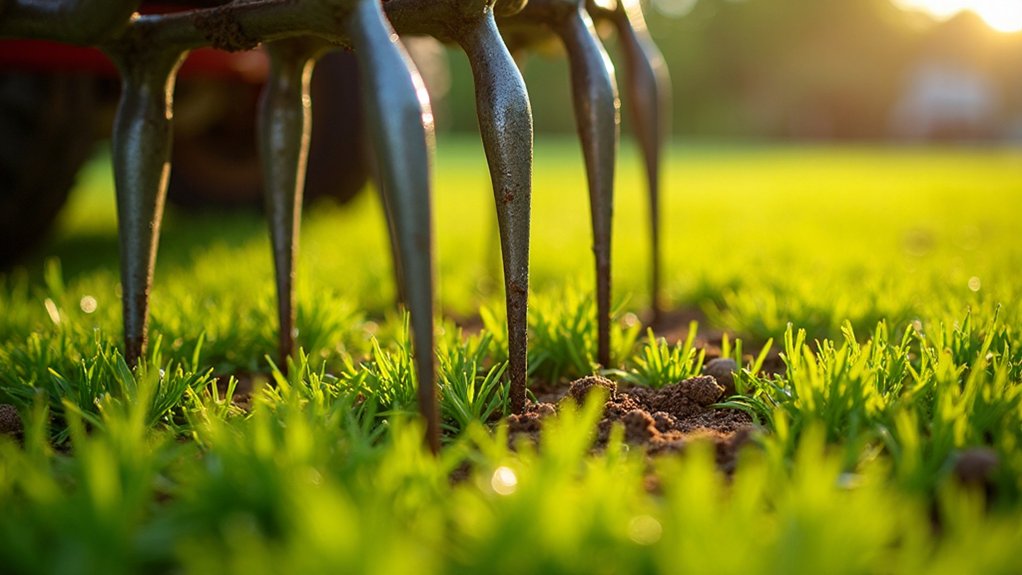
Your spike aerator pushes solid tines into soil without removing plugs, making it less effective for compaction relief. Liquid aeration offers a spray-on solution that gradually improves soil permeability over time. Slicer aeration cuts thin slits using rotating blades, creating pathways for air and water penetration without extracting soil.
For thorough, detailed, or exhaustive results, combination aeration tools merge core and spike features, delivering enhanced air and water penetration while addressing various soil conditions effectively.
When to Aerate Your Lawn: Timing for Cool and Warm Season Grasses
Since timing determines aeration success, you’ll need to match your schedule with your grass type’s natural growth cycles. Cool-season grasses like fescue and Kentucky bluegrass require spring or fall aeration when they’re actively growing. This timing allows the lawn to recover quickly and fill core holes naturally. Warm-season varieties like bermuda and zoysia need late spring or early summer aeration during peak growth periods.
You should aerate annually or biannually depending on soil compaction and foot traffic. Avoid aerating during dormant periods or weed-sprouting seasons, as this stresses your grass. The best approach is timing aeration 4-6 weeks before winter or summer stress periods. This gives your lawn adequate time to benefit from improved water penetration and allows you to apply fertilizer through the aerator holes effectively.
Step-by-Step Process for Aerating Your Lawn Properly
While proper timing sets the foundation for successful aeration, executing the process correctly ascertains you’ll achieve excellent results for your lawn’s health. Start your aeration process by mowing short and clearing debris from the lawn throughout. Use a core aerator to create aeration holes 3-4 inches deep in a criss-cross pattern, maintaining 2-3 inch spacing between holes. This spacing verifies water and fertilizer reach grass roots effectively. Don’t remove the soil cores—let them decompose naturally to enrich your soil with beneficial microorganisms. After lawn aeration, water lightly for two weeks to help holes close and encourage new root growth. Avoid aerating during extreme heat or when you notice dead grass, as this stresses your lawn unnecessarily.
Essential Tools and Equipment for Effective Lawn Aeration
Having the right equipment makes all the difference between effective aeration and simply poking holes in your lawn. Core aerators with hollow tines that extract 3-4 inch soil plugs are your best choice for relieving soil compaction. Unlike spiked shoes that merely puncture the ground, these machines actually remove soil, creating space for air and water penetration.
You’ll find two main options: manual core aerators for smaller lawns and powered core aerators for larger areas. While professionals use commercial-grade equipment that covers ground efficiently, you can rent or purchase units for DIY projects. Before operating any lawn aeration equipment, mark your sprinkler heads and avoid wet soil conditions. Muddy ground will clog hollow tines and reduce effectiveness, making proper timing essential for successful aeration.
DIY Aeration Vs Professional Services: Making the Right Choice
Two key factors should guide your decision between DIY and professional lawn aeration: your lawn’s size and your available time. DIY aeration saves money but requires proper technique to address soil compaction and thatch buildup effectively. Without specialized tools and expertise, you’ll risk uneven coverage across your lawn.
Professional services bring core aerators and proven experience to deliver ideal results. They’ll target problem areas precisely while maintaining consistency throughout your property. For large or complex lawns, the time investment for DIY often outweighs equipment rental savings.
Key considerations for your decision:
- Equipment access – Professionals own specialized tools versus your rental costs
- Coverage quality – Expert technique prevents patchy, incomplete aeration
- Time investment – Large lawns demand significant effort and multiple passes
- Guarantee protection – Professional services typically include work warranties
- Lawn maintenance expertise – Experienced teams identify and address specific soil issues
Frequently Asked Questions
Is October Too Late to Aerate a Lawn?
October’s timing depends on your lawn condition assessment and grass growth patterns. You can still aerate if soil compaction levels are high, but guarantee proper post aeration watering and adjust your lawn maintenance schedule accordingly.
What Is the Best Month to Aerate Your Lawn?
You’ll find September’s ideal timing for cool-season grasses, with favorable temperatures promoting root growth and lawn recovery. For warm-season varieties, May’s beneficial timing addresses soil compaction when grass density peaks, regardless of aerator types used.
What Should You Do Before Aerating Your Lawn?
You’ll absolutely transform your lawn’s potential! Start with soil preparation, grass health assessment, and sprinkler system check. Complete lawn mower maintenance, pre-aeration fertilization, weed control, drainage inspection, compaction analysis, core sample collection, and lawn dethatching.
What to Do Right After Aerating a Lawn?
After core aeration, you’ll want to water your lawn deeply, apply lawn fertilizer to the holes, overseed aerated areas, and avoid mowing immediately. Also avoid heavy foot traffic while monitoring soil moisture levels.
Conclusion
You’ll transform your lawn’s health dramatically through proper aeration – studies show that compacted soil reduces grass root growth by up to 50%. Whether you’re choosing DIY methods or professional services, timing your aeration correctly for your grass type makes all the difference. Don’t let compacted soil suffocate your turf’s potential. Start aerating seasonally, and you’ll notice thicker, more resilient grass that withstands drought and heavy foot traffic much better than before.