
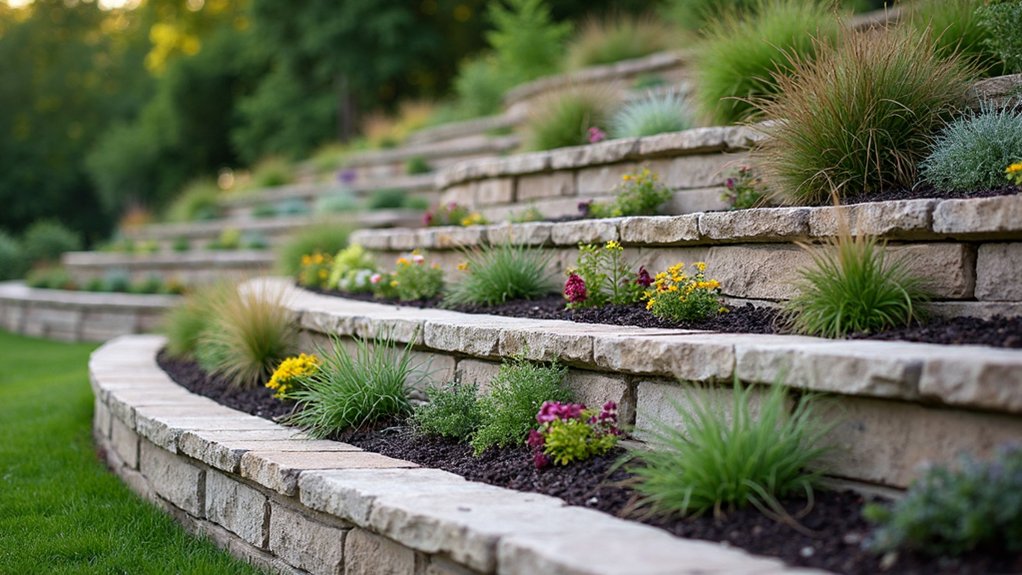
Like ancient civilizations that carved magnificent steps into mountainsides, you can transform your sloped backyard into a series of functional terraced levels. Terraced retaining walls don’t just prevent erosion—they create distinct garden rooms that maximize your property’s potential. Whether you’re dealing with a gentle incline or a steep hillside, the right approach to materials, drainage, and construction techniques will determine whether your project becomes a lasting landscape feature or an expensive mistake waiting to happen.
Key Takeaways
- Assess slope angle, soil composition, and water flow patterns to determine retaining wall requirements and identify areas needing professional consultation.
- Choose materials like natural stone, concrete blocks, or timber based on budget, durability needs, and desired aesthetic appeal.
- Excavate each level systematically, creating solid foundations with compacted base materials and proper gravel drainage layers.
- Install perforated drainage pipes behind walls with gravel backfill to prevent water pressure buildup and structural damage.
- Maintain consistent spacing and step-back alignment between terraced levels while verifying proper water runoff at each construction stage.
Assessing Your Slope and Setting Design Goals
Before you break ground on your terraced retaining wall project, you’ll need to thoroughly evaluate your slope’s characteristics and establish clear design objectives. Start by measuring the angle and examining your soil composition—sandy soils drain differently than clay, affecting your retaining wall requirements. Use a level to map elevation changes and identify steep areas needing professional consultation.
Next, observe how water flows across your sloped terrain during rainfall. Note where erosion occurs, as these problem areas will guide your structural planning. Consider whether you want usable flat spaces, improved accessibility, or purely aesthetic enhancement.
Finally, establish your budget parameters. This determines whether you’ll install simple timber walls or invest in stone terracing systems that provide long-term stability for your sloped garden transformation.
Choosing Materials for Durable Terraced Walls
Once you’ve mapped your slope’s challenges, selecting the right materials becomes your foundation for long-term success. Your wall design should align with your budget, aesthetic preferences, and soil type conditions.
Natural stone like fieldstone or limestone delivers timeless beauty and exceptional durability, though it commands premium pricing. Concrete blocks offer cost-effective versatility with customizable sizes, shapes, and colors that suit most terraced projects. Timber provides rustic charm but demands regular maintenance and replacement cycles.
Consider using gabion baskets for modern appeal and simplified installation on challenging slopes. Your soil type influences material selection—sandy soils require different approaches than clay. Evaluate long-term durability against upfront costs, ensuring your terraced walls withstand weather, soil pressure, and time while maintaining their structural integrity.
Essential Tools for Terraced Garden Construction
Your material selection sets the stage, but having the right tools transforms your terraced garden vision into reality. Start with basic equipment: a sturdy shovel for excavation, rake for grading, level for ensuring even surfaces, and wheelbarrow for moving materials efficiently. Don’t skip safety gear—gloves and eye protection are non-negotiable when working with stone and power tools.
Precision tools like laser levels or string lines create perfectly aligned terraces, while compaction equipment such as tampers or plate compactors establish solid foundations. For retaining wall construction, you’ll need masonry tools including trowels, mortar mixers, and chisels to work with stone or concrete blocks effectively. Complete your toolkit with gardening essentials like pruners, loppers, and garden hoses for planting and ongoing maintenance tasks.
Step-by-Step Construction Process for Multiple Levels
Although terraced construction might seem overwhelming, breaking it into systematic phases secures successful results across multiple levels. Start at the bottom and work upward, establishing each tier before moving higher. Excavate the first level, creating a solid foundation by compacting the base and adding gravel drainage. Install your first retaining wall, backfilling with proper drainage materials to effectively hold back soil.
Once the lower tier’s complete, repeat this process for subsequent levels, maintaining consistent spacing between walls. Each level should step back slightly from the one below, creating stable tiered gardens. Verify alignment and drainage at every stage.
After completing all walls, install irrigation systems and plant materials. Schedule regular maintenance inspections to safeguard long-term structural integrity and prevent erosion issues.
Water Management and Drainage Solutions
Water stands as the greatest threat to terraced retaining wall systems, making thorough drainage solutions absolutely essential for long-term success. You’ll need to install perforated pipes behind your retaining walls with gravel backfill to prevent dangerous hydrostatic pressure buildup that causes wall failure.
Proper slope grading directs water runoff away from structures while preventing destructive soil erosion. Install catch basins and surface drains strategically throughout your terraced levels to capture stormwater before it pools on planting beds. You can’t overlook downspout placement—route them directly into your drainage systems rather than allowing water to cascade down terraces.
Consider integrating permeable pavers into pathways between levels. These promote natural water infiltration while reducing surface accumulation, creating an inclusive water management system that protects your investment.
Plant Selection for Terraced Garden Beds
Once your drainage infrastructure is properly established, selecting the right plants becomes imperative for both aesthetic appeal and structural stability of your terraced garden beds. Choose drought-tolerant species like sedum, lavender, and ornamental grasses that thrive in elevated, well-drained conditions. Incorporate deep-rooted groundcovers such as juniper, vinca, and pachysandra to stabilize soil on each level. Select cascading plants like trailing rosemary or ivy to create soft shifts between terraces. Organize your flower beds by sun exposure, placing sun-loving species on upper levels and shade-tolerant plants in lower, sheltered areas. Vary plant heights, textures, and bloom times for visual interest. Consider installing drip irrigation systems and incorporating natural stones as mulch to enhance both functionality and aesthetics of your terraced garden design.
Creating Safe Pathways Between Levels
Three essential elements form the foundation of safe pathway design between terraced levels: proper materials, adequate lighting, and strategic placement. You’ll need to incorporate stairs, ramps, or stepping stones to navigate your sloped yard safely. Choose non-slip materials like natural stone or textured concrete to prevent slips while helping prevent water runoff issues. Install handrails along steep sections and guarantee pathways are wide enough for comfortable passage.
Strategic lighting illuminates steps and terraces for nighttime visibility. Design gentle slopes that create usable connections between levels while supporting the overall goal to prevent erosion.
- Use interlocking pavers for durability and easy maintenance
- Install drainage channels alongside pathways to redirect water flow
- Create rest areas on longer pathway sections for user comfort
- Position lighting fixtures to minimize glare while maximizing visibility
- Incorporate native plantings along pathway edges for natural integration
Enhancing Your Terraced Space With Features
Several thoughtfully selected features can transform your terraced retaining walls from purely functional structures into alluring outdoor living spaces. Your garden ideas should focus on maximizing both aesthetic appeal and functionality across each level. Install seating areas on wider terraces to create comfortable destination points. Add strategic lighting to extend evening usability while highlighting architectural elements. Consider incorporating a water feature like a small waterfall or reflecting pool, which introduces soothing sounds and visual movement throughout your landscape. Dedicate one terrace to outdoor cooking with a built-in grill station or pizza oven. Include arbors, pergolas, or sculptures as focal points that define different spaces and enhance visual appeal, creating a truly functional outdoor space that serves multiple purposes.
Seasonal Maintenance and Long-Term Care
While these beautiful terraced features enhance your outdoor space, they’ll only continue to thrive with proper ongoing care. Your garden on sloped land requires consistent attention to maintain both structural integrity and plant health. Seasonal maintenance becomes essential when dealing with uneven terrain, as weather changes can affect both your retaining walls and vegetation differently throughout the year.
- Structural Inspections: Regularly examine retaining walls for cracks, shifting, or damage that could compromise stability
- Vegetation Management: Prune and trim plants to prevent root damage while maintaining a clean appearance
- Debris Removal: Clear weeds and debris from terrace beds to promote healthy plant growth and prevent erosion
- Mulch Renewal: Re-apply mulch every 1-2 years for moisture retention and weed suppression
- Irrigation Adjustments: Modify watering systems seasonally to prevent oversaturation
Frequently Asked Questions
How to Terrace a Sloped Garden?
You’ll transform your sloped garden by incorporating strategic garden design elements, implementing proper soil preparation techniques, addressing drainage considerations, selecting appropriate plant selection options, and planning for ongoing maintenance requirements throughout the terracing process.
What Are the 7 Common Mistakes Made When Installing Retaining Wall Blocks?
You’d think stacking blocks is simple, yet you’ll likely mess up these seven areas: poor block alignment, insufficient drainage, inadequate excavation, lack of proper backfill, improper capping, skipping geogrid reinforcement, and ignoring manufacturer specifications.
Is It Possible to Level a Sloping Garden?
You can level sloping gardens using soil removal methods and gradual slope reduction techniques. Consider drainage considerations when creating raised planting beds, ensuring you’re following proper landscape design principles for ideal water management and stability.
How to Create a Level Line for a Sloped Garden?
Like drawing a blueprint on nature’s canvas, you’ll establish your level line by determining slope angle, calculating soil depth, selecting appropriate materials, incorporating drainage systems, and addressing erosion concerns for ideal garden transformation.
Conclusion
You’ve learned how terraced retaining walls can transform your sloped garden into a functional, beautiful landscape. With proper planning, material selection, and construction techniques, you’ll create lasting multi-level spaces that solve erosion problems while adding visual interest. Here’s something remarkable: terraced gardens can reduce soil erosion by up to 90% compared to traditional sloped landscaping. You’re not just building walls—you’re creating a sustainable garden system that’ll protect your investment for decades to come.