
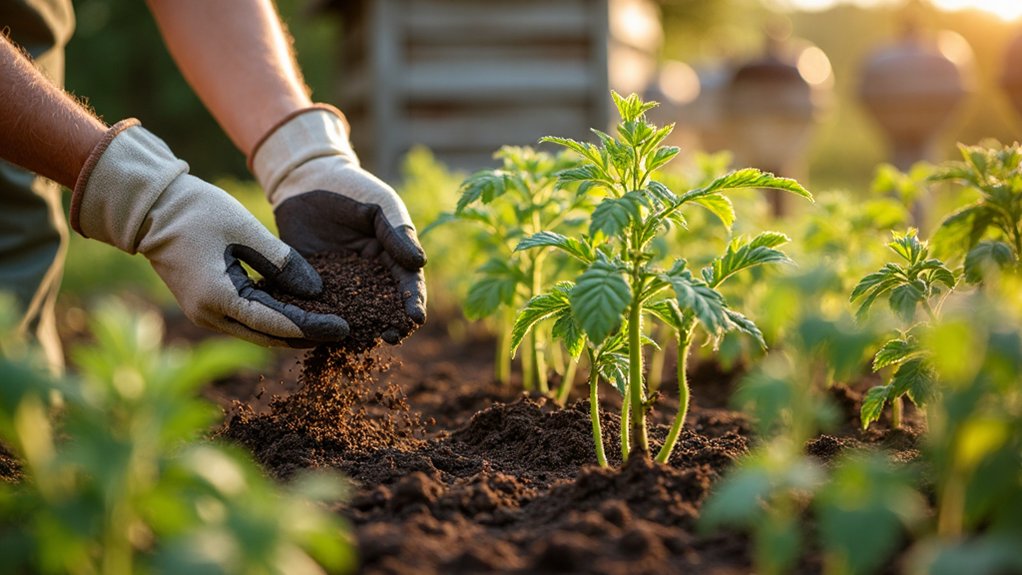
Picture your garden thriving with vibrant blooms while crystal-clear groundwater flows beneath your feet. You’re standing at the crossroads of gardening excellence and environmental responsibility, where every fertilization choice you make ripples through your local ecosystem. Traditional chemical fertilizers promise quick results but leave lasting scars on soil health and water quality. There’s a better path forward—one that nourishes both your plants and the planet, and it’s simpler than you might expect.
Key Takeaways
- Create DIY organic fertilizers from household waste like rice water, pasta water, and eggshells to reduce costs and environmental impact.
- Build nutrient-rich compost using food scraps and yard waste to naturally enhance soil health and microbial activity.
- Apply organic fertilizers during peak growing seasons and conduct soil tests to prevent overfeeding and nutrient runoff.
- Use slow-release natural fertilizers that gradually feed plants while improving soil water retention and ecosystem resilience.
- Transition from chemical fertilizers by incorporating organic amendments, cover crops, and beneficial microorganisms for sustainable soil management.
Understanding Eco-Friendly Fertilizers and Their Environmental Benefits
The shift toward eco-friendly fertilizers represents a fundamental change in how you can approach soil nutrition while protecting environmental health. These natural fertilizers derive from plant-based materials, animal waste, and beneficial microorganisms that actively improve soil structure and microbial diversity. Unlike chemical alternatives, organic options reduce water contamination by preventing harmful runoff and nutrient leaching into groundwater systems.
You’ll find that natural fertilizers release nutrients gradually, supporting long-term plant health without causing nutrient overload. This sustainable approach enhances soil water retention while building resilience against environmental stressors. By choosing eco-friendly options, you’re eliminating the harmful effects associated with synthetic chemicals while promoting beneficial microbial activity. These fertilizers don’t just feed your plants—they create thriving soil ecosystems that support healthier gardens and protect surrounding environments from contamination.
DIY Organic Fertilizers From Common Household Waste
Every day, your kitchen generates valuable fertilizer ingredients that typically end up in the trash or down the drain. These common household waste products can become powerful organic fertilizers that promote plant health and sustainable growth while reducing environmental impact.
Transform your kitchen scraps into nutrient-rich soil amendments:
- Rice water – Contains starch and NPK nutrients that boost grass and plant growth when applied directly to soil
- Pasta water – Dilute and cool completely before using the starch-rich water as an organic fertilizer
- Potato water – Full of beneficial nutrients that nourish plants and improve soil quality
- Eggshell water – Provides calcium boost to soil, while crushed shells offer natural pest control
These DIY fertilizers cost nothing, reduce waste, and deliver essential nutrients your plants crave.
Building Healthy Soil Through Composting and Natural Amendments
While kitchen scraps provide immediate nutrition for your plants, building long-term soil health requires a deeper approach that transforms your garden’s foundation. Start composting food scraps, yard waste, and manure to create nutrient-rich organic matter that improves soil structure. You’ll boost your soil’s water-holding capacity and microbial activity through regular vermicompost applications.
Natural soil amendments like rock dust, biochar, and greensand supply essential trace minerals your plants crave. During off-seasons, plant cover crops such as clover and rye grass—they’ll fix nitrogen naturally while preventing erosion. Don’t forget aeration; loosening compacted soil and top-dressing with compost promotes better gas exchange and root development. These practices work together, increasing soil organic matter and creating a thriving ecosystem that sustains itself season after season.
Smart Application Techniques for Maximum Nutrient Efficiency
Although building healthy soil creates the foundation for plant nutrition, timing and technique determine whether your fertilizer investment pays off or washes away with the next storm. Smart sustainable lawn care practices maximize nutrient efficiency while protecting your root systems and water usage.
- Time applications strategically – Apply organic fertilizers during late spring and late summer when grass growth peaks, ensuring nutrients support active development rather than sitting unused.
- Test before treating – Conduct soil tests to identify specific nutrient deficiencies, preventing overfeeding that compromises soil health and wastes resources.
- Choose slow-release formulas – Select organic fertilizers over synthetic fertilizers to provide steady nutrition without overwhelming your lawn’s natural processes.
- Incorporate through aeration – Work fertilizers into soil after lawn mowing, allowing better absorption than surface applications that risk runoff during storms.
Transitioning From Chemical to Sustainable Fertilization Methods
Breaking free from chemical dependency doesn’t happen overnight, but your lawn will thank you for making the gradual shift toward sustainable fertilization methods. Start by incorporating organic fertilizers and microbial soil inoculants that build healthy soil structure while enhancing beneficial bacterial activity. These alternatives promote long-term soil fertility without contaminating groundwater.
You’ll find success using accessible options like compost, seaweed extracts, rice water, and vegetable water to gradually enrich your soil. These homemade concoctions provide essential nutrients while minimizing household waste. Unlike synthetic alternatives that degrade soil health over time, sustainable methods improve water retention and boost natural nitrogen fixation processes.
This progression will reduce environmental impact while investing in your land’s resilience, creating a healthier ecosystem for future generations.
Frequently Asked Questions
What Is the Most Environmentally Friendly Fertilizer?
You’ll find compost production through vermicomposting techniques creates the most environmentally friendly fertilizer. It enhances soil carbon sequestration, supports nutrient cycling analysis, and promotes ecological soil restoration while advancing regenerative agriculture practices for sustainable lawn care strategies.
What Is a Sustainable Fertilizer?
Like a chef’s slow-simmered stew, sustainable fertilizers gradually release nutrients through natural nutrient cycling processes. You’ll enhance soil nutrient composition, boost microbial activity levels, and achieve pollution mitigation effects while supporting renewable resource utilization and ecosystem biodiversity.
How Is the Use of Natural Fertilizers Friendly to the Environment?
You’ll improve soil health while reducing greenhouse gas emissions through organic matter replenishment. Natural fertilizers enhance nutrient cycling, promote biodiversity, provide water conservation benefits, and support pesticide-free gardening without harmful chemical runoff.
What Is an Eco Friendly Organic Fertilizer?
You’ll find eco-friendly organic fertilizers include slow release fertilizers, nutrient dense compost, biochar amendments, seaweed based fertilizers, bone meal supplements, greensand applications, alfalfa meal additions, kelp extract boosters, rock phosphate sources, and vermicompost utilization.
Conclusion
Your garden becomes a symphony when you orchestrate sustainable fertilization practices. You’ve learned to conduct nature’s own nutrients through composting, DIY organic solutions, and smart application techniques. By shifting from chemical dependence, you’re not just feeding your plants—you’re nurturing an entire ecosystem. Each sustainable choice you make harmonizes with the environment, creating a melody that’ll resonate through seasons of healthier soil, thriving plants, and a more resilient landscape for years ahead.