
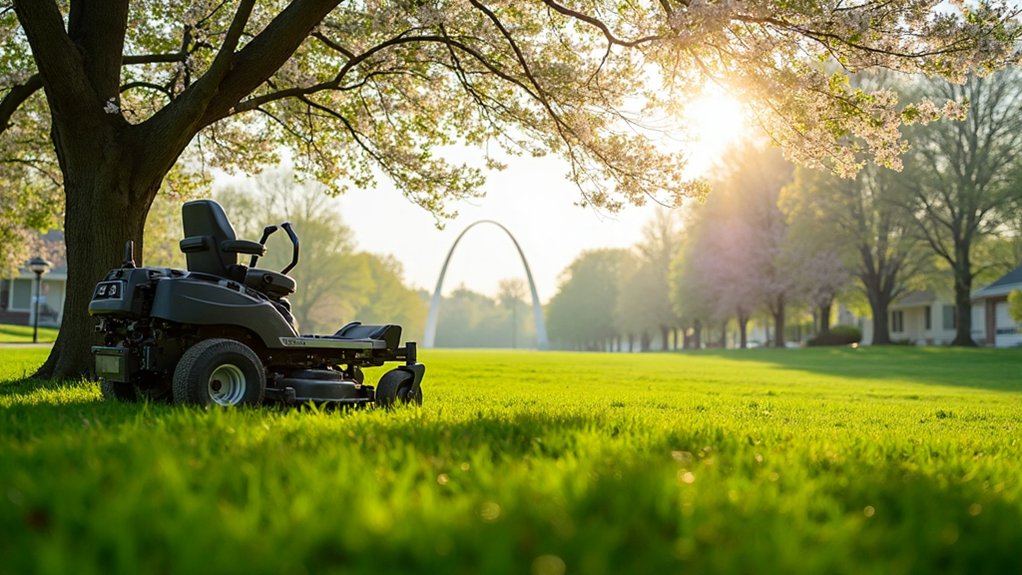
You’ve likely noticed your St. Louis lawn looking a bit rough after Missouri’s unpredictable winter weather. Before you fire up that mower for the first time this season, there’s more to ponder than simply cutting grass. Your yard’s spring preparation will determine whether you’ll spend summer months enjoying a lush, green space or constantly battling weeds, brown patches, and drainage problems. The difference lies in what you do right now.
Key Takeaways
- Sharpen mower blades every 20-25 hours of use and clean thoroughly before first spring mowing.
- Test soil pH and apply limestone or sulfur to maintain optimal 6.0-7.2 range for healthy grass.
- Apply pre-emergent herbicides between mid-March and mid-April to prevent crabgrass and annual weeds.
- Clear drainage systems and address standing water issues to prevent lawn disease and pest problems.
- Maintain 3-3.5 inch mowing height to promote deep roots and inspect for brown patch fungal diseases.
Prepare Your Mower for Spring
Before you can achieve that perfect spring cut, you’ll need to guarantee your mower is in top condition. Start by disconnecting the spark plug and emptying the gas tank for safety. Remove your mower blade and inspect it closely—dull blades damage grass and invite disease. You should sharpen blades every 20-25 hours of use.
Clean the blade thoroughly with a dry rag, or use penetrating oil and a brush to remove debris buildup from last season. When sharpening, file along the blade’s existing angle or use a grindstone for best results. Don’t skip this essential step—sharp blades create a healthy cut that keeps your St. Louis lawn looking pristine. Proper blade maintenance prevents lawn damage and ensures optimal mowing performance throughout spring.
Test and Adjust Your Soil Ph
While your mower’s ready for action, your soil’s pH level determines whether your grass will actually thrive this spring. Get a soil test to identify your current pH, as many St. Louis yards struggle with high pH levels. The ideal pH range for healthy lawn and plants falls between 6.0-7.2.
For acidic soils below 6.0, you’ll need limestone applications ranging from 4.5-105 lbs per 1,000 square feet. Basic soils above 7.2 require sulfur treatments of 0.5-14 lbs per 1,000 square feet. The exact amount depends on your soil type, which you can determine by squeezing damp soil in your hand.
Adjusting your soil pH into the proper range guarantees your grass absorbs nutrients effectively, giving you that lush Missouri lawn you’re aiming for.
Apply Pre-Emergent Herbicides to Prevent Weeds
Once you’ve balanced your soil pH, you’ll want to create a protective barrier against weeds by applying pre-emergent herbicides between mid-March and mid-April. This timing’s fundamental for effective weed control since you need to establish the chemical barrier before weed seeds begin germinating in your soil.
Pre-emergent herbicides prevent annual weeds like crabgrass from sprouting, making your spring lawn care routine more manageable. Before application, calibrate your sprayer properly and follow the product’s instructions meticulously to guarantee even coverage across your entire yard.
Remember that pre-emergent treatments work best when you combine them with proper lawn mowing practices, such as maintaining the correct cutting height. This integrated approach reinforces your overall weed control strategy throughout the growing season.
Check Drainage and Address Water Issues
After establishing your weed prevention strategy, you’ll need to assess how well water moves through your property. Walk your lawn after heavy rain to identify drainage problems like standing water, soggy areas, and soil fissures that indicate poor water flow.
Start by cleaning your gutters and downspouts, removing debris that blocks proper water movement. Clear any accumulated debris from French drains and channel drains to restore their functionality. If water still pools despite these efforts, puncture compacted soil areas to break underground barriers preventing absorption.
Consider installing a rain garden in problematic zones. This attractive landscape feature naturally manages runoff while adding visual appeal to your yard. Proper drainage protects your lawn’s health and prevents waterlogged conditions that encourage disease and pest problems throughout the growing season.
Inspect for Fungal Problems and Brown Patches
Several telltale signs reveal fungal infections lurking in your St. Louis lawn after winter’s harsh conditions. Look for circular brown patches or dead grass areas that indicate fungal diseases like brown patch affecting your yard. You’ll spot these issues best during early morning inspections when dew makes fungal webbing visible on grass blades.
Brown patch creates distinctive round, wet brown patches with gray smoke rings around the edges. Combat this problem by applying slow-release nitrogen fertilizer and removing all grass clippings from your lawn immediately.
Prevention proves more effective than treatment. Proper mowing techniques, consistent fertilization schedules, and regular dethatching substantially improve air circulation throughout your grass. These practices create an environment that naturally resists fungal development and keeps your Missouri lawn healthy.
Establish Proper Mowing Height and Frequency
While your St. Louis lawn awakens from winter dormancy, establishing proper mowing height becomes pivotal for Missouri lawn health. Set your mower to maintain 3-3.5 inches—this mowing height promotes deep root development while preventing weed germination. During each lawn mowing session, never remove more than one-third of the grass blade height to avoid stressing your turf.
Effective lawn maintenance requires varying your mowing pattern regularly to prevent ruts and uneven wear. Always mow when dry conditions exist, as wet grass creates clumping and tears that damage your Missouri lawn. Essential lawn care includes keeping sharp mower blades for clean, even cuts that prevent grass damage. This proper mowing approach guarantees your yard develops the resilience needed to thrive throughout St. Louis’s challenging growing season.
Frequently Asked Questions
When Should I Start Getting My Lawn Ready for Spring?
You should start your seasonal lawn maintenance in late February or early March. Begin with soil testing recommendations, then follow with lawn aeration strategies, thatch removal methods, and establishing your fertilizing schedule before active growth begins.
When Should You First Mow Your Yard in the Spring?
You should first mow your yard when grass reaches ideal mowing height of 3-3.5 inches, typically in March or April. Use proper mowing techniques, removing only one-third of blade length to avoid stressing your lawn.
When Should You Start Mowing Your Lawn in Missouri?
You should start mowing your Missouri lawn in early to mid-April when grass actively grows. Maintain ideal mowing height of 3-3.5 inches, use proper mowing techniques, and consider mulching benefits for healthier turf throughout the season.
What Is the 1/3 Rule for Lawns?
The 1/3 rule means you shouldn’t remove more than one-third of grass blade height when mowing. This proper mowing height prevents scalping, avoiding lawn damage while promoting healthy growth and maintaining adequate leaf surface for photosynthesis.
Conclusion
You’ll reap significant rewards by following these spring preparation steps. According to the University of Missouri Extension, properly maintained lawns can increase your property value by up to 15%. Don’t underestimate the impact of consistent spring care – it’s the foundation for summer success. Start with mower maintenance, test your soil, apply pre-emergents, and address drainage issues now. You’re investing in both your lawn’s health and your home’s worth this growing season.