
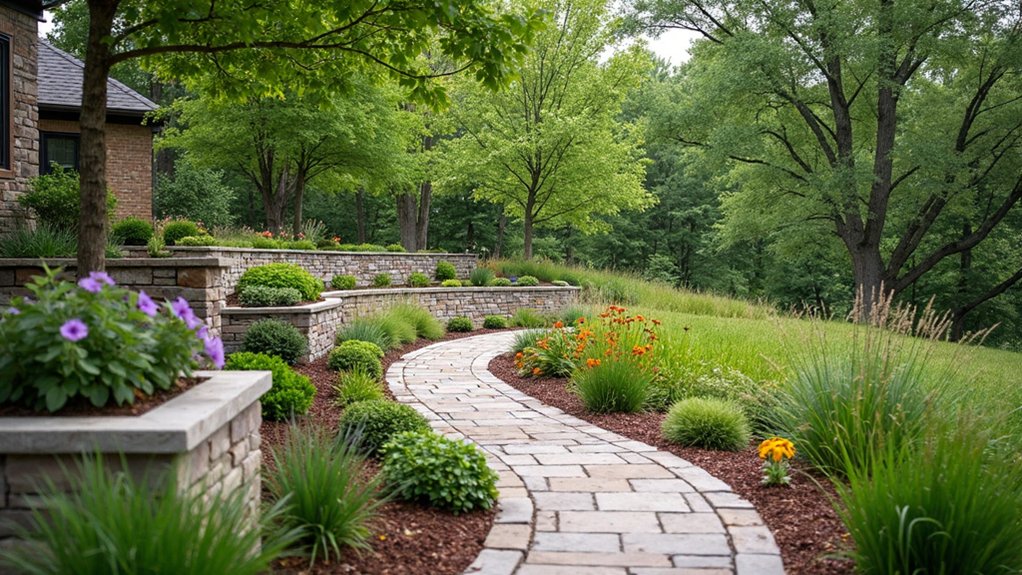
You’ve likely noticed how St. Louis’s unpredictable weather can wreak havoc on your landscape plans—scorching summers that stress your plants, surprise late frosts that kill tender growth, and clay soil that either floods or turns rock-hard. Your yard’s success depends on understanding Missouri’s dual hardiness zones and their unique demands. Most homeowners make costly mistakes by fighting against these natural conditions instead of working with them, but there’s a smarter approach.
Key Takeaways
- St. Louis falls in USDA Hardiness Zones 6b-7a with winter temperatures between 0°F-10°F requiring cold-hardy plant selection.
- Heavy clay soil creates drainage challenges, requiring organic matter amendments and native plants adapted to wet-dry cycles.
- Select Missouri natives like purple coneflower, little bluestem, and black-eyed Susan for drought tolerance and pollinator support.
- Design shade structures and windbreaks to manage hot, humid summers and protect plants during cold winters.
- Install rain gardens and smart irrigation systems to handle 40 inches of annual rainfall and prevent waterlogging.
Understanding St. Louis’s USDA Hardiness Zones and Weather Patterns
When designing your St. Louis,MO landscape, you’ll work within USDA Hardiness Zones 6b and 7a, where winter temperatures drop between 0°F and 10°F. This climate creates unique challenges for outdoor spaces, demanding careful plant selection and sustainable design strategies.
Your Landscaping must account for hot, humid summers and approximately 40 inches of annual rainfall. These Environmental conditions, combined with the region’s heavy clay soil, substantially impact drainage and root health. The clay retains moisture but can become waterlogged, affecting plant survival.
Understanding these climate patterns helps you choose appropriate plants that’ll thrive in Missouri’s seasonal extremes. You’ll need species that can handle both winter cold snaps and summer heat waves. By working with these natural conditions rather than against them, you’ll create resilient outdoor spaces that require minimal maintenance.
Soil Characteristics and Drainage Challenges in Missouri Landscapes
Missouri’s heavy clay soil creates the foundation challenge you’ll face in St. Louis residential landscaping. This compacted soil leads to significant drainage challenges that can cause root rot and nutrient deficiencies in your plants. You’ll need strategic soil amendments to combat these issues effectively.
Adding organic matter like compost transforms your soil’s structure and improves water-holding capacity. This enhancement allows better nutrient absorption while preventing waterlogged conditions that damage plant roots.
When selecting plants for Missouri’s USDA Hardiness Zones 5-7, you’ll find native plants naturally adapted to these soil conditions and climate zones. They’ll require fewer amendments and maintenance once established. Focus on drought-tolerant species that handle clay soil’s alternating wet-dry cycles, creating a sustainable landscape that works with Missouri’s challenging soil characteristics.
Native Plant Selection for Year-Round Success in St. Louis
Since St. Louis spans USDA Hardiness Zones 6b and 7a, you’ll need plants that withstand winter lows between 0°F and 10°F. Native plant selection guarantees your landscape thrives in St. Louis climate conditions while supporting local ecosystems.
Choose proven performers like purple coneflower, little bluestem, black-eyed Susan, and serviceberry. These native plants demonstrate excellent plant adaptation and regional suitability. They’re naturally equipped for Missouri’s seasonal extremes and require minimal maintenance once established.
The Missouri Botanical Garden’s Plant Finder tool helps you identify additional options perfectly suited for your property. Focus on drought-tolerant plants that reduce water usage while creating pollinator-friendly plants habitats.
This sustainable landscaping approach builds resilience against pests and weather extremes. You’ll create a beautiful, low-maintenance landscape that works with nature rather than against it.
Seasonal Design Strategies for Hot Summers and Cold Winters
Your plant choices form just one piece of successful St. Louis Landscape Design. You’ll need strategic seasonal approaches to handle Missouri’s extreme Climate variations across Hardiness Zones 6b and 7a. During scorching summers, position Drought-Resistant Plants in shaded areas created by strategically placed trees. Install pergolas and covered patios as Outdoor Structures that provide relief from 90°F heat while extending your outdoor living season.
Winter preparations require Evergreen Plants and Wind Barriers to protect your landscape from harsh temperatures dropping near 0°F. You can’t overlook infrastructure either – incorporate Sustainable Practices like Rainwater Harvesting systems and permeable hardscaping to manage St. Louis’s heavy clay soils and unpredictable precipitation. These integrated strategies guarantee your landscape thrives year-round despite Missouri’s challenging seasonal extremes.
Water Management and Irrigation Systems for Variable Rainfall
While St. Louis receives about 40 inches of rainfall annually, you’ll need comprehensive water management strategies to handle both drought conditions and heavy precipitation events. You should incorporate rain gardens, bioswales, and permeable pavement to control stormwater runoff while promoting groundwater recharge. These features capture excess water during storms and prevent flooding issues.
Install smart irrigation systems with soil moisture sensors and weather-based controllers to optimize water usage during dry periods. Zone your sprinklers to deliver precise amounts where needed. Select drought-tolerant plants and native plants that naturally adapt to Missouri’s variable rainfall patterns, reducing your dependence on supplemental watering.
Proper irrigation systems design and maintenance guarantee efficient water distribution while preventing waste through over-watering or runoff, creating a sustainable landscape year-round.
Sustainable Hardscaping Materials for Missouri’s Climate Extremes
Beyond water management systems, the hardscaping materials you choose must withstand Missouri’s extreme climate fluctuations, from scorching summers reaching 90°F+ to frigid winters dropping below freezing. Permeable pavers excel in managing stormwater runoff while preventing erosion in heavy clay soils common throughout the region. Interlocking concrete pavers provide exceptional durability against freeze-thaw cycles that can crack lesser materials.
You’ll find locally sourced limestone and locally sourced sandstone integrate seamlessly with Missouri’s natural landscape while resisting weathering damage. These native stones require minimal maintenance and complement existing terrain. For elevated surfaces, composite decking crafted from recycled materials offers superior performance in Missouri climate conditions. Unlike traditional wood, it won’t warp, splinter, or rot in humid summers, making it an environmentally responsible choice that reduces replacement costs.
Maximizing Property Value Through Climate-Appropriate Landscape Design
Strategic landscape design that aligns with St. Louis’s USDA Hardiness Zones 6b-7a can dramatically boost your property value by 20-30%. Climate-appropriate plantings featuring native, drought-tolerant species reduce maintenance while enhancing curb appeal year-round. Your landscape architecture investment becomes more valuable when you integrate sustainable design principles that address environmental concerns specific to Missouri’s temperature extremes.
Smart hardscaping elements like patios and outdoor living spaces extend your home’s functionality beyond interior walls. These additions, combined with energy-efficient irrigation systems and stormwater management, create landscapes that prospective buyers find attractive and cost-effective. You’ll maximize returns by selecting materials and plants that thrive in hot, humid summers and cold winters, ensuring your outdoor investment maintains its beauty and value through Missouri’s challenging climate variations.
Frequently Asked Questions
How Much Should I Budget for a Complete Landscape Redesign in St. Louis?
You’ll need $15,000-$50,000+ depending on site preparation costs, hardscape installation, irrigation system installation, and outdoor living spaces. Professional consultation fees, plant material selection, and drainage solutions substantially impact your landscape budget considerations for complete redesigns.
Do I Need Permits for Installing Retaining Walls or Water Features?
You’ll need permits for retaining walls over certain heights and water features requiring electrical work. Professional consultation services help navigate zoning regulations, while proper drainage system design guarantees compliance with local building codes and safety requirements.
Which Landscape Contractors in St. Louis Specialize in Climate-Appropriate Designs?
Looking for experts who truly understand your yard’s needs? You’ll want contractors specializing in native plant incorporation, drought tolerant plant selection, and sustainable irrigation systems to create beautiful, climate-smart landscapes that thrive year-round.
How Long Does a Typical Residential Landscape Installation Take to Complete?
You’ll typically need 2-6 weeks for residential landscape installation, depending on project timeline factors and contractor scheduling considerations. Weather dependent completion times and permitting process duration can extend your planning timeline beyond initial estimates.
What Maintenance Tasks Should I Perform Monthly Throughout the Growing Season?
You’ll need regular lawn mowing, weed removal, and irrigation system checks. Apply mulch, fertilizer, and handle shrub pruning. Monitor pest control, perform tree trimming, manage seasonal plantings, and schedule lawn aeration throughout Missouri’s growing season.
Conclusion
You might think climate-appropriate landscaping limits your design options, but Missouri’s diverse plant palette actually expands your creative possibilities. By working with your zone’s natural rhythms instead of against them, you’ll create stunning seasonal displays that thrive year-round. Your investment in native plants, proper drainage, and strategic hardscaping won’t just survive St. Louis’s weather extremes—it’ll showcase the unique beauty of Missouri’s landscapes while boosting your property value.