
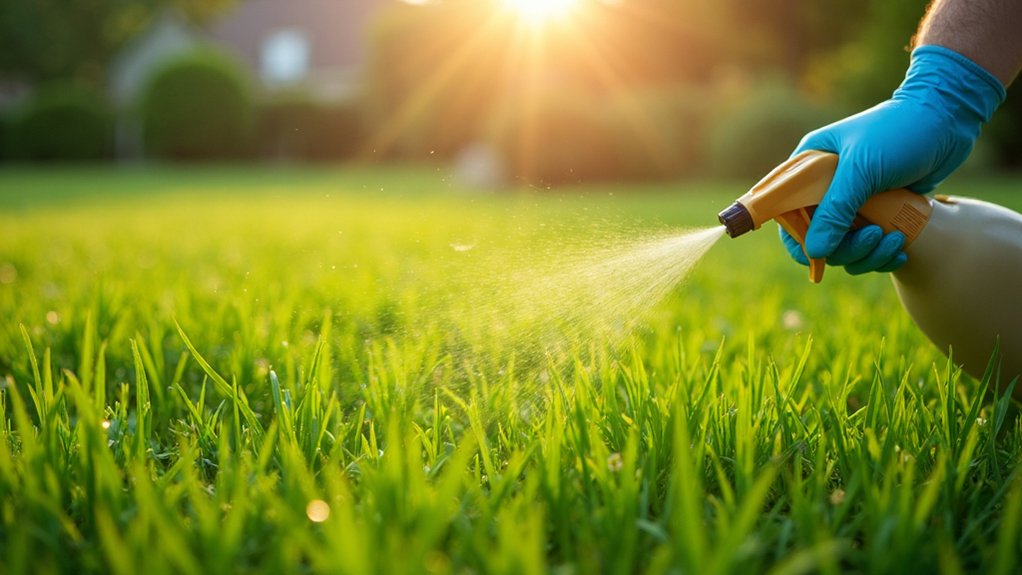
You can either fight weeds all summer long or you can prevent them from taking hold in the first place. As a St. Louis homeowner, you’re facing a critical window right now that’ll determine whether your lawn becomes a lush carpet or a battlefield of dandelions and crabgrass. The choices you make in the next few weeks will either set you up for effortless lawn care or months of frustration. Here’s what separates successful homeowners from those constantly struggling with weeds.
Key Takeaways
- Apply pre-emergent herbicides between mid-March and mid-April before soil temperature reaches 55°F for effective weed prevention.
- Use post-emergent herbicides on small, actively growing weeds while avoiding mowing several days before and after application.
- Time herbicide applications during calm weather with no rain expected within 48 hours for optimal effectiveness.
- Maintain tall fescue at 3-3.5 inches height to create shade that blocks sunlight and prevents weed germination.
- Keep soil pH between 6.0-7.2 using limestone or sulfur to promote grass health and create unfavorable weed conditions.
When to Apply Pre-Emergent Herbicides in Missouri
While spring brings renewed growth to your lawn, it also signals the perfect time to get ahead of troublesome weeds with pre-emergent herbicides. In Missouri, you’ll want to apply these treatments between mid-March and mid-April, before soil temperature reaches 55°F. This timing is absolutely essential for effective weed control – once weeds have sprouted, pre-emergent application becomes useless.
Monitor your soil temperature closely, as this determines when weed seeds begin germinating. You can’t afford to miss this narrow window of opportunity. However, avoid treating areas where you plan to overseed cool-season grasses this spring, as pre-emergents will prevent your desired grass seed from establishing. Proper timing and strategic application will maximize your lawn’s defense against unwanted weeds throughout the growing season.
Targeting Existing Weeds With Post-Emergent Control
Once weeds have already emerged in your lawn, you’ll need to switch tactics from prevention to elimination with post-emergent herbicides. These weed killer applications target actively growing broadleaf weeds and grassy weeds that have already sprouted.
Timing is critical for maximum effectiveness. Apply post-emergent herbicides when weeds are small and actively growing. You’ll have two main options: selective post-emergents that target specific weed types without harming your grass, or non-selective post-emergents like glyphosate for spot-treating individual problem weeds.
Avoid mowing for several days before and after application to guarantee proper herbicide absorption. Perennial weeds with extensive root systems may require multiple applications for complete elimination. The key is catching weeds early when they’re most vulnerable to treatment.
Weather Timing for Optimal Weed Killer Application
Several weather factors greatly impact weed killer effectiveness and can determine whether your application succeeds or fails. Weather timing directly affects how well weed killers penetrate target plants and remain active in surrounding areas.
Follow these critical weather guidelines for successful spring season applications:
- Check your weather forecast – Avoid pre-emergent herbicides and post-emergent treatments when rain’s expected within 48 hours to prevent washaway.
- Monitor wind conditions – Apply during calm periods to prevent drift that damages nearby vegetation and reduces product concentration on target weeds.
- Assess lawn moisture – Apply to slightly damp grass, not saturated soil, for ideal adhesion.
Weed prevention works best during early spring through late spring when grass is actively growing and healthy, not drought-stressed.
Proper Mowing Height to Prevent Weed Germination
Beyond chemical treatments, your mowing practices serve as one of the most effective weapons against weed invasion. Maintaining your tall fescue at 3-3.5 inches creates natural shade that prevents weed seed germination. Taller grass blades block sunlight from reaching the soil surface, keeping weeds from germinating and establishing in your lawn.
Set your mower blade to the proper height and sharpen the blades regularly for clean cuts that promote healthy grass growth. When you cut too short, you’re fundamentally scalping your lawn and exposing soil to direct sunlight, which encourages weed proliferation.
Your lawn mower becomes a prevention tool when used correctly. Proper mowing and watering practices work together, allowing your grass to develop deeper roots that naturally outcompete weeds for nutrients and space.
Soil Ph Management for Natural Weed Prevention
While proper mowing creates physical barriers against weeds, your soil’s pH level determines the chemical environment that either supports or suppresses weed growth. Maintaining the ideal pH range of 6.0-7.2 creates conditions less favorable for weeds while promoting healthier, more competitive grass.
Start with soil testing to determine your current pH level, then implement these pH adjustment strategies:
- Apply limestone to acidic soils below 6.0 pH (4.5-105 lbs per 1,000 sq ft depending on soil type)
- Add sulfur to alkaline soils above 7.2 pH (0.5-14 lbs per 1,000 sq ft based on soil conditions)
- Retest annually to monitor pH levels and adjust applications accordingly
This natural approach to weed prevention reduces your reliance on chemical controls while creating perfect growing conditions for your St. Louis lawn.
Organic Vs Chemical Weed Control Options
Once you’ve optimized your soil pH, you’ll need to choose between organic and chemical approaches for controlling weeds that still manage to establish in your lawn. Organic weed control methods like corn gluten meal offer 65% effectiveness at preventing germination, making them a healthy choice for early spring application as a pre-emergent treatment. However, chemical herbicides provide more effective prevention against spring weeds. For existing weeds, post-emergent options include vinegar-based organic sprays for small outbreaks or glyphosate-based herbicides for broader control—though these kill desirable grass too. Hand pulling remains the best organic method for isolated weeds. Chemical pre-emergents applied in early spring typically outperform organic alternatives, but consulting professionals helps determine your ideal weed control strategy.
Professional Weed Control Services in St. Louis
Professional weed control services offer St. Louis homeowners expert solutions that save time and deliver superior results. Licensed professionals understand the best time to apply treatments, whether you’re implementing spring lawn care tips or preparing for fall applications.
When you choose professional lawn care services, you’ll receive:
- Licensed expertise – State-certified technicians who know how to care for your lawn properly
- Customized treatment plans – Tailored approaches that prepare your lawn for seasonal challenges
- Optimal timing – Weather monitoring guarantees treatments are applied at the most effective time
Professional lawn maintenance eliminates guesswork from weed control. Experts make sure applications align with weather conditions and seasonal needs, maximizing effectiveness while protecting your investment.
Contact us today to discover how professional services can transform your spring lawn care routine and deliver lasting results.
Frequently Asked Questions
What Is the First Thing You Put on Your Lawn in the Spring?
You’ll first apply pre emergent weed control when soil reaches 55°F. Before that, you should determine lawn soil conditions, identify existing weeds, and treat for grub damage to properly rejuvenate lawn in spring.
What Weed Control to Use in Spring?
You’ll discover pre emergent treatments work best in early spring, while selective herbicide application targets existing broadleaf weeds. Consider organic weed control like corn gluten meal, plus manual weed removal and overseeding for holistic integrated pest management.
When to Fertilize a Lawn in Spring in Missouri?
You should fertilize your Missouri lawn in late April or early May when temperatures stay above 50°F. Proper fertilizer application timing with slow-release products promotes healthy growth while soil testing importance helps determine exact nutrient needs.
When Should I Apply Crabgrass Preventer in Missouri?
You should apply crabgrass preventer in Missouri between mid-March and mid-April when soil temperatures reach 55°F. This ideal timing for application guarantees pre-emergent herbicides work effectively before crabgrass germinates in early spring.
Conclusion
You’ve got all the tools to win the weed battle this spring. Remember, an ounce of prevention is worth a pound of cure—apply pre-emergents before soil hits 55°F, maintain proper mowing height, and keep your lawn thick and healthy. Whether you choose organic methods or chemical controls, timing’s everything. If you’re overwhelmed, don’t hesitate to call St. Louis professionals. Stay consistent with these practices, and you’ll enjoy a pristine lawn all season long.