
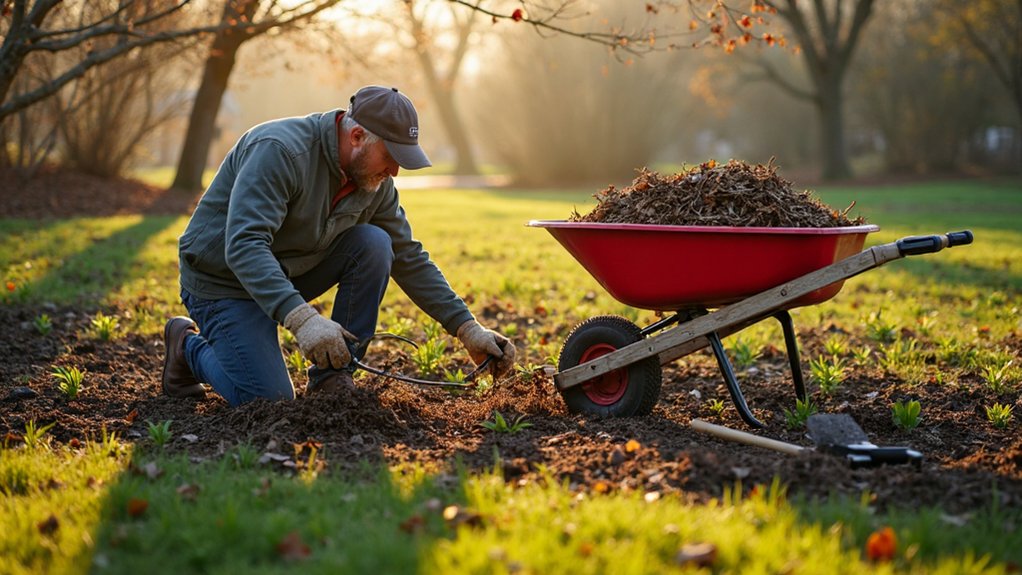
You’ve survived another winter, but your yard tells a different story. Dead branches hang precariously overhead, last year’s leaves still blanket your flower beds, and your once-pristine lawn looks more like a patchwork quilt of brown spots and overgrown areas. The growing season’s rapidly approaching, and you’re facing a mountain of cleanup tasks that’ll determine whether your landscape thrives or merely survives this year. Here’s where most homeowners make their biggest mistakes.
Key Takeaways
- Inspect and remove winter damage including broken branches, dead plant material, fallen leaves, and accumulated organic debris from garden beds.
- Prune trees and shrubs before new growth begins, cutting back perennials to 4-5 inches for optimal spring development.
- Sharpen mower blades and maintain grass height at 2.5-3 inches while aerating and overseeding thin lawn areas.
- Apply 2-3 inches of fresh organic mulch around plants, keeping it away from stems to retain moisture and suppress weeds.
- Inspect and test irrigation systems, programming controllers and checking rain sensors to ensure efficient water management throughout the season.
Assessing Winter Damage and Removing Debris
After months of harsh weather, your yard likely bears the scars of winter’s impact. Begin your spring cleanup by thoroughly inspecting trees, shrubs, and plants for damage like broken branches, split bark, or dead sections. Address these issues promptly to prevent further deterioration.
Next, tackle debris removal across your lawn and garden beds. Rake up fallen leaves, twigs, and organic matter that accumulated over winter. This yard waste can harbor mold and block sunlight from reaching your soil, inhibiting new growth. Clear out garden beds completely, removing old mulch and winter protection materials.
Don’t forget to cut back any damaged plant material and identify early weeds sprouting in the warming soil. Removing these now prevents establishment and competition with your desired plants as spring progresses.
Pruning Trees, Shrubs, and Perennials for Healthy Growth
Once you’ve cleared away winter’s debris, strategic pruning becomes your next priority for establishing a thriving landscape. Spring Yard Cleanup involves timing your cuts perfectly to maximize plant health and vigor. This is the good time to prepare your yard while plants remain dormant but ready for fresh growth.
Essential spring lawn care pruning tasks include:
- Prune trees and shrubs in early spring before new growth appears to encourage healthy branching structure
- Cut back perennials to 4-5 inches and ornamental grasses to 2-3 inches for stimulating fresh foliage
- Divide overcrowded perennial clumps when soil has thawed to rejuvenate plants and promote better flowering
- Trim rose canes 1 inch below blackened areas and train climbers horizontally
Getting Your Yard Ready through proactive Yard Work improves overall plant health and flowering potential.
Lawn Care Fundamentals: Aeration, Overseeding, and Mowing
Mowing completes your lawn care trinity. Sharpen your lawn mower blades for clean cuts that prevent disease and stress. Maintain grass height between 2.5-3 inches to encourage deeper roots. Adjust your Mowing schedule based on your specific grass type and growth rate throughout the season.
Mulching Strategies for Moisture Retention and Weed Control
While proper mowing sets the foundation for lawn health, strategic mulching transforms your entire landscape by creating protective barriers around trees, shrubs, and flower beds. Once your soil is dry enough to work with, applying mulch around plants becomes essential for maintaining healthy outdoor spaces throughout the growing season.
Effective mulching strategies include:
- Apply 2-3 inches of organic mulch like shredded bark, pine needles, or compost to regulate soil temperature and suppress weed growth
- Keep mulch away from plant stems to prevent moisture buildup and potential rot issues
- Refresh compacted areas with a fresh layer of mulch for consistent coverage
- Coordinate with your irrigation system to maximize water retention in your lawn and garden
This approach creates ideal growing conditions while reducing maintenance demands.
Irrigation System Maintenance and Water Management
Your mulching efforts work hand-in-hand with a properly functioning irrigation system to maximize water retention and plant health. Before spring activation, inspect irrigation system components including sprinkler heads, drip lines, and valves for damage or malfunctions. Program your controllers with appropriate watering schedules that align with seasonal water needs. Verify rain sensors function properly to prevent unnecessary watering during wet periods.
Conduct regular system checks and make prompt repairs to guarantee efficient water usage and prevent costly infrastructure deterioration. Consider upgrading to smart irrigation technology that automatically adjusts schedules based on local weather conditions. This proactive approach saves water, reduces utility costs, and guarantees your landscape receives ideal hydration throughout the growing season while supporting your mulching investment.
Tool Preparation and Equipment Tune-Up
Before you tackle the season’s first lawn care tasks, prepare your tools and equipment for peak performance through thorough inspection and maintenance. Winter storage can leave your equipment sluggish and unreliable, so proper preparation guarantees smooth operation when you need it most.
- Sharpen mower blades to deliver clean cuts that promote healthy grass growth and better air circulation
- Service power equipment by checking spark plugs, oil levels, and fuel systems that sat idle since last fall
- Clean and lubricate garden tools like pruners and shovels, removing rust and testing mechanisms in fresh air
- Inspect your irrigation system for leaks, cracks, or damaged components that could waste water
Organize everything for easy access, ensuring you’re ready to maintain proper soil structure and manage existing mulch efficiently.
Planning New Plantings and Landscape Improvements
With your tools sharpened and equipment running smoothly, you can now focus on designing the garden of your dreams. Early spring is the perfect time to research plant selections suited for your climate, ensuring healthy growth throughout the season. Sketch landscape improvements like new garden beds, water features, or seating areas that’ll transform your beautiful yard.
Visit local nurseries early for the best selection of trees and shrubs ready for the growing season. The promise of spring makes planning exciting, but remember to wait until after the last frost to plant tender varieties. Start warm-season seeds indoors now to get ahead. Consider soil amendments that improve soil quality—this preparation gives your yard the foundation needed for spectacular results.
Frequently Asked Questions
What Is Included in a Spring Clean up Landscaping?
You’ll remove dead leaves, prune shrubs, clean flower beds, clear debris, aerate soil, apply fertilizer, mulch garden beds, inspect your irrigation system, and sharpen your lawn mower for ideal growing season preparation.
What Is the First Thing You Put on Your Lawn in the Spring?
You should apply pre-emergent herbicide first on your lawn in spring to prevent crabgrass germination. After clearing debris and lawn dethatching, follow with fertilizer application, then proceed with lawn aeration, weed removal, and edging flower beds.
How Much Do Landscapers Charge for Spring Clean Up?
You’ll typically pay $150-500 for professional spring cleanup, with hourly rates averaging $50-100. Your total cost depends on property size, debris amount, and scope of work included, though seasonal discounts can reduce expenses.
When Should You Do Spring Yard Cleanup?
You should start spring cleanup when soil’s workable and temperatures consistently stay above freezing. Ideal timing involves removing debris first, then pruning trees, trimming shrubs, dethatching lawn, aerating soil, seeding bare spots, and fertilizing under perfect weather conditions.
Conclusion
You’ve now equipped yourself with the essential steps for successful spring yard cleanup. Here’s a compelling fact: properly maintained landscapes can increase your property value by up to 15%. By addressing winter damage, pruning strategically, caring for your lawn, mulching effectively, and maintaining irrigation systems, you’re not just creating a beautiful outdoor space—you’re making a smart investment. Your dedication to these spring preparations will pay dividends throughout the growing season ahead.