
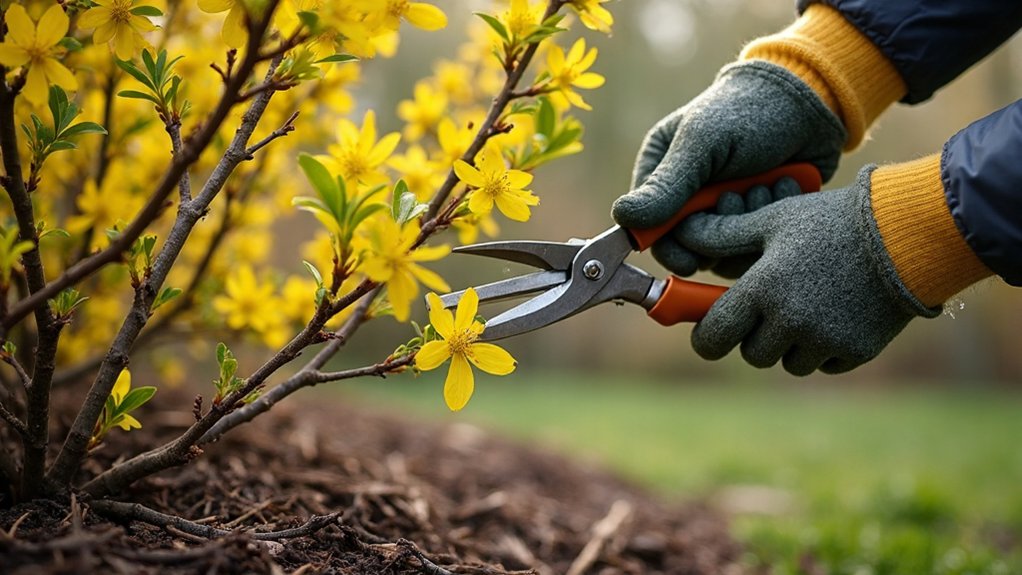
You might not realize that many shrubs actually benefit from late winter damage, as it forces them to redirect energy into stronger, more productive growth. While you’re surveying your landscape for broken branches and frost-burned foliage, you’re also uncovering opportunities to reshape your garden’s future. The key lies in distinguishing between damage that’ll hinder your plants and damage that’ll help them—a skill that separates thriving landscapes from merely surviving ones.
Key Takeaways
- Assess shrubs for winter damage by examining branches and buds, then prune dead or damaged areas before new growth begins.
- Conduct soil tests and incorporate 2-3 inches of compost with slow-release fertilizer to prepare planting beds for optimal growth.
- Prune most shrubs in early spring before budding, but wait until after flowering for spring-blooming varieties like lilacs.
- Inspect and test irrigation systems including sprinkler heads, controllers, and rain sensors to ensure proper spring watering schedules.
- Apply pre-emergent herbicides in early spring and use organic mulch around plants to prevent weeds and retain moisture.
Assessing Winter Damage on Shrubs and Trees
As winter’s harsh conditions give way to spring’s warmer temperatures, you’ll need to carefully examine your shrubs and trees for any damage that occurred during the colder months. Look for broken branches, bark splits, or dieback on your existing plants. These signs of winter damage can compromise the health of your trees and shrubs if left unaddressed.
To determine bud viability, gently scrape the outer layer of buds on your plants. Healthy plants will reveal green tissue underneath, indicating they’re ready to produce new growth. If you discover brown or black tissue, those buds won’t survive.
Once you’ve identified problematic areas, prune shrubs by removing dead or damaged branches. This assessment sets the foundation for proper spring maintenance of your landscape.
Proper Pruning Techniques for Spring Growth
Once you’ve assessed winter damage, proper pruning becomes your next critical step for promoting healthy spring growth. Early spring offers the best time to prune most shrubs and trees before new growth emerges. You’ll encourage branching and increase flower production by making clean cuts just above outward-facing buds. Remove dead, damaged, or crossing branches systematically.
However, wait until after flowering to prune spring-blooming varieties like azaleas and rhododendrons to preserve this new season’s blossoms. Cut ornamental grasses and Russian sage back to 6 inches from the ground to stimulate fresh growth. Don’t forget to clear debris from the soil around your shrubs and prepare space for new plantings as you shape your landscape.
Soil Preparation and Fertilization Strategies
Three key steps will set your shrubs up for vigorous spring growth: testing your soil, enriching it with organic matter, and applying the right fertilizer at the ideal time.
Start with a soil test to determine soil pH and nutrient levels before making amendments. This prevents over-fertilization and guarantees nutrients reach your plants effectively. Next, incorporate 2-3 inches of compost into the top 6-8 inches of soil to improve soil structure and address soil compaction issues.
When soil temperature warms in early spring, apply fertilizer formulated for shrubs according to your soil test results. Use slow-release products that feed plants throughout the growing season. Finish by spreading organic mulches around established and new plants, keeping mulch several inches from stems to prevent disease while retaining moisture.
Irrigation System Maintenance and Setup
Winter weather can wreak havoc on irrigation systems, so you’ll want to thoroughly inspect every component before the growing season kicks into high gear. Check sprinkler heads for damage and examine drip lines for cracks or clogs that developed during the winter months. Don’t wait to prune your inspection—address issues now before this time of the year becomes too busy.
Program your controller for new watering schedules appropriate for spring conditions. Test rain sensors to guarantee they’re functioning properly throughout the growing season. Inspect hose bibs for freeze damage and adjust sprinkler coverage patterns to eliminate dry spots. Consider upgrading to a smart controller that automatically adapts to weather conditions, adding a protective layer of efficiency to your irrigation management this year.
Mulching Best Practices for Shrub Health
After addressing irrigation needs, proper mulching becomes your next essential task for maintaining healthy shrubs throughout the growing season. Apply a 2-3 inch layer of organic mulch around the base of your shrubs to retain soil moisture, suppress weeds, and regulate soil temperature effectively.
Choose shredded bark, pine needles, or compost as your mulch options. Before adding fresh material, rake and break up any compacted existing mulch to guarantee proper air circulation and water penetration.
Keep mulch away from stems and trunks to prevent rot and disease development. This creates a protective barrier while allowing your shrubs to breathe properly.
Plan to replenish your mulch layer annually, maintaining consistent coverage that supports ideal shrub health and vigorous growth throughout each season.
Weed Management and Prevention Methods
While mulching provides excellent weed suppression, you’ll need additional strategies to manage persistent weeds that compete with your shrubs for nutrients and water.
To Prepare Your Landscape for ideal growth, implement these targeted approaches:
- Apply pre-emergent herbicides in early spring – This prevents weed seeds from germinating before they become established around your trees and shrubs after winter dormancy ends.
- Hand-pull weeds when soil is moist – Remove dead growth and extract entire root systems of perennial weeds like dandelions to prevent regrowth.
- Use organic alternatives – Consider landscape fabric or corn gluten meal for chemical-free control that supports overall Lawn Care goals.
Time your interventions properly by combining these methods with regular monitoring. Test your soil pH annually, as healthy soil conditions favor desired plants over weeds, creating natural competition advantages.
Pest and Disease Monitoring
Looking ahead to the growing season, you’ll want to establish a routine inspection schedule to catch pest and disease issues before they compromise your shrubs’ health. Check for discolored or dead leaves, dieback, and visible insects weekly. Shrubs like lilacs often show powdery mildew, while other desirable plants may develop black spot or leaf scorch. When you identify problems, remove unsightly branches and diseased parts immediately to prevent spread. Apply dormant oil sprays in late winter to eliminate overwintering pest eggs. Shrubs can be pruned to improve air circulation, which discourages fungal growth. Cut back affected areas and treat with appropriate organic or chemical controls following label instructions. This proactive monitoring will encourage strong plant growth and maintain visual interest throughout the season.
Planning New Plantings and Garden Layout
Once you’ve assessed your existing shrubs for health issues, spring presents the perfect opportunity to expand your landscape with thoughtfully planned additions. Late winter or early spring is a good time to envision how new beds will transform your outdoor space.
Start your planning process with these essential steps:
- Analyze your site conditions – Map sun exposure patterns and soil drainage throughout your yard
- Choose climate-appropriate varieties – Consider using native plants that’ll thrive with minimal intervention
- Design for visual impact – Sketch layouts that balance plant heights and seasonal interest
Visit local nurseries early for the best selection of healthy specimens. Wait until after your area’s last frost date before planting tender varieties. Complete installations with a protective layer of mulch, then focus on Spring Lawn maintenance to complement your expanded landscape.
Native Plant Care and Maintenance Schedule
After establishing your new plantings, maintaining native species requires a different approach than caring for traditional ornamental shrubs. Spring’s the perfect time to remove dead foliage from native plants before new growth emerges. When pruning ornamental grasses, cut them inches away from the crown—dull blades tear the grass stems rather than making clean cuts, so guarantee proper mower blades are sharp.
Apply mulch around native plantings using 2-4 inches of organic material to conserve moisture and suppress weeds. Don’t disturb established root systems, and leave some standing vegetation for wildlife habitat. Monitor for invasive species while protecting self-sown native seedlings to minimize damage to desirable plants. Water new natives weekly if rainfall’s insufficient.
Frequently Asked Questions
What Is the Rule of 3 in Gardening?
The rule of thirds involves planting in odd-numbered groups for visual appeal. You’ll also consider proper planting depth, pruning timing, soil amendment needs, mulch application, sun exposure requirements, drainage considerations, pest prevention, and winter protection.
How to Prep Ground for Shrubs?
You’ll need proper site selection considering sun exposure and water requirements. Focus on soil aeration, ensuring proper drainage, and weed control. Plan appropriate plant spacing and planting depth, then finish with mulch application around each shrub.
When to Feed Shrubs in Spring?
Like awakening sleeping giants, you’ll want to establish an ideal feeding schedule between March and May. Apply balanced fertilizer ratios when new growth emerges, ensuring proper nutrient requirements are met before your shrubs’ growing season accelerates.
Is It Okay to Plant Shrubs in September?
Yes, you’ll find September offers ideal planting conditions for shrubs. Focus on proper soil preparation, site selection factors, and watering requirements. Consider sun exposure needs, cold hardiness concerns, and growth habit considerations for successful establishment.
Conclusion
You’ll find that just as nature awakens from winter’s dormancy, your diligent spring preparations mirror this same renewal cycle. By coincidence, the energy you invest now in pruning, fertilizing, and planning directly parallels your shrubs’ emerging vigor. You’re not just maintaining a landscape—you’re orchestrating a synchronized dance between human intention and natural rhythms. Your proactive care guarantees that when peak growing season arrives, both you and your garden will flourish together.