
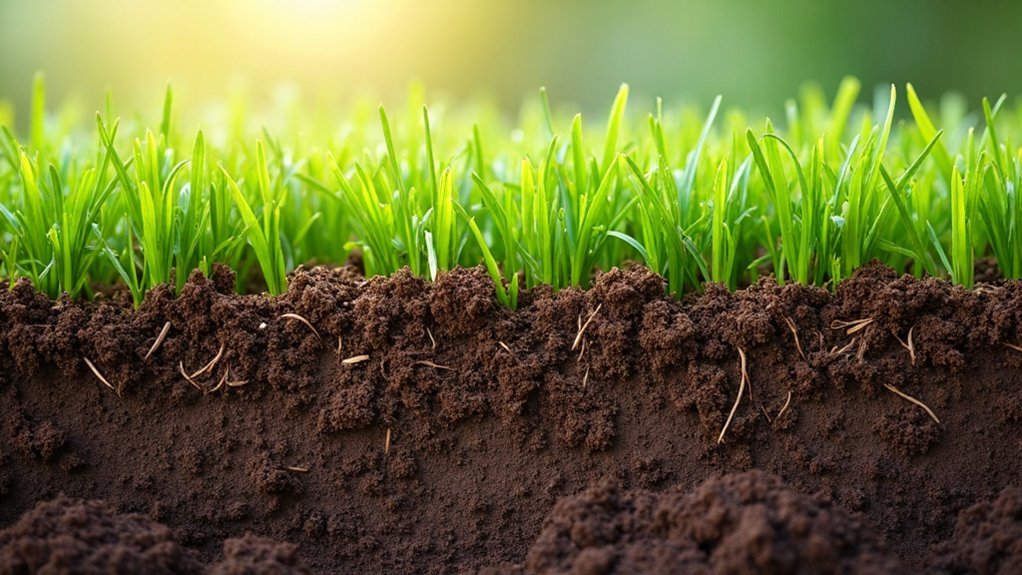
You might think spring lawn care is as simple as grabbing your aerator and getting to work, but there’s a pivotal step you’re likely missing. If your lawn has a thick thatch layer—that spongy, organic buildup between grass and soil—your aeration efforts won’t penetrate effectively. The order of these treatments can make or break your lawn’s recovery this season. Dethatching first will transform your results and save you from repeating the same frustrating cycle.
Key Takeaways
- Dethatch first if thatch layer exceeds 1/2 inch thickness to remove barriers blocking aeration equipment effectiveness.
- Cool-season grasses should avoid spring dethatching/aeration due to weed pressure; fall timing is optimal.
- Warm-season grasses benefit from spring through early summer dethatching followed by core aeration when actively growing.
- Thick thatch prevents aerator tines from reaching soil effectively, making dethatching the necessary first step.
- Complete both processes before applying pre-emergent herbicides to avoid disrupting the protective chemical barrier.
Understanding the Difference Between Aeration and Dethatching
While both aeration and dethatching improve your lawn’s health, they tackle completely different problems through distinct methods. Aerating involves punching holes in the soil to enhance air, water, and nutrient movement throughout your grass’s root system. This process specifically targets soil compaction issues that prevent critical elements from reaching where they’re needed most.
Dethatching, however, removes the accumulated layer of dead grass and organic debris that sits above your soil surface. This thatch buildup creates a barrier that blocks water, air, and nutrients from penetrating down to the roots. When you dethatch your lawn, you’re fundamentally clearing this obstruction so your grass can access crucial resources. Understanding these fundamental differences helps you determine which treatment your lawn needs most.
When Your Lawn Needs Dethatching Vs Aeration
Although both treatments address lawn health issues, determining which one your lawn needs requires examining specific symptoms and conditions. Your lawn’s thatch layer thickness serves as the primary indicator—measure it by cutting a small wedge from your turf. If it’s over 1/2 inch thick, dethatching should come before aeration.
Signs your lawn needs immediate attention:
- Spongy, bouncy grass that feels like walking on a mattress indicates excessive thatch buildup
- Water pooling on the surface after irrigation suggests severe soil compaction requiring core aerator treatment
- Thin, yellowing patches where grass struggles to access nutrients through thick thatch layers
For effective lawn maintenance, address thatch layer problems first. Once dethatching removes debris barriers, aeration can penetrate soil more efficiently, maximizing both treatments’ benefits for ideal spring lawn recovery.
Optimal Timing for Spring Lawn Care Activities
Since grass types respond differently to seasonal conditions, you’ll need to time your spring lawn care activities based on whether you’re growing cool-season or warm-season varieties. Cool-season grasses like Kentucky bluegrass shouldn’t be dedicated to lawn care activities like dethatching or aerating during spring due to increased weed pressure and poor growing conditions. Instead, fall provides ideal timing when these grasses are actively growing.
Warm-season grasses such as bermuda and zoysia thrive with spring through early summer care when they’re actively growing. For these varieties, core aeration followed by dethatching works best during this period. Compacted soil benefits most from aeration before dethatching, allowing better nutrient absorption. Remember to complete these activities before applying pre-emergent herbicides to avoid disrupting the protective barrier.
Why Dethatching Should Come Before Aeration
The order of your lawn care activities matters more than you might expect, particularly when it comes to dethatching and aeration. You should always dethatch before aerating your lawn because thick thatch creates a barrier that prevents aeration equipment from reaching the soil effectively.
When you use a dethatching rake first, you’ll remove dead grass and organic debris that’s choking your grass roots. This cleanup allows aerator tines to penetrate deeper into the ground, creating proper channels for air, water, and nutrients.
Consider these benefits of proper sequencing:
- Maximum soil penetration – Clear pathways let aerator tines reach their full depth
- Better root access – Removes suffocating layers blocking healthy growth
- Improved results – Your investment in lawn care delivers visible improvements faster
Step-by-Step Dethatching Process
When you’re ready to begin dethatching, start by evaluating your lawn’s thatch layer thickness using a small spade or knife to cut a wedge-shaped section of turf. If the thatch exceeds 1/2 inch, you’ll need to dethatch. Time your dethatching for early spring with cool-season grasses or late spring to early summer for warm-season varieties when they’re actively growing. Guarantee the soil is moist before starting. Use a dethatching rake for smaller areas or rent a power rake for larger lawns. Work in overlapping passes across your entire yard to verify even coverage. After dethatching, you can seed bare spots if needed. Remember to complete this process before applying any pre-emergent herbicides to maintain their effectiveness.
Proper Aeration Techniques for Spring
After you’ve completed dethatching, core aeration becomes your next critical step for achieving ideal soil health and grass growth. The Right Time for spring aeration is when soil is moist but not waterlogged, allowing the aerator to penetrate clay soil effectively without creating muddy conditions.
Your technique determines success:
- Overlap each pass by 50% – This guarantees complete coverage and prevents missed compacted areas that’ll haunt your lawn’s potential
- Focus intensively on high-traffic zones – These beaten-down areas desperately need extra attention to recover their importance
- Leave soil plugs scattered across the surface – They’ll naturally decompose and feed your grass with essential nutrients
For severely compacted clay soil, you’ll need to aerate your lawn twice during the growing season. Follow aeration immediately with grass seed application every year for optimal results.
Post-Treatment Care and Overseeding Considerations
Once your lawn has been properly aerated, you’ll want to capitalize on those freshly opened soil channels by overseeding within 48 hours. The aeration holes provide perfect pockets for new seed to establish strong root systems. Apply grass seed evenly across your entire lawn, paying extra attention to small areas where existing grass blades appear thin or damaged.
Choose cool season grasses like fescue or ryegrass for spring planting, as they’re less likely to struggle with summer heat stress. Water lightly but frequently for the first two weeks to help break seed dormancy and encourage germination. Avoid heavy foot traffic during this critical establishment period. The combination of aeration and overseeding creates ideal conditions for a thicker, healthier lawn throughout the growing season.
Common Mistakes to Avoid During Spring Lawn Maintenance
Many homeowners jump into spring lawn care with enthusiasm, but rushing certain tasks can actually set back your lawn’s progress for months. Understanding timing prevents costly mistakes that’ll haunt your yard all season.
Here are the biggest spring lawn care blunders:
- Aerating too early – You’ll create drier soil conditions and invite weeds when your grass needs stability most
- Dethatching at the wrong time – Spring isn’t the best time to dethatch; you’ll stress your turf before brutal summer heat arrives
- Overseeding extensively – Unfavorable growing conditions and weed competition make spring seeding largely unsuccessful
Coordinating lawn care activities becomes nearly impossible when you’re fighting against natural timing. Stick to small-scale patch seeding if absolutely necessary, but keep expectations realistic and plan to repeat efforts in fall.
Frequently Asked Questions
Should I Dethatch or Aerate My Lawn First?
You should dethatch first in your lawn care schedule. Dethatching techniques remove thatch buildup causes before core aeration process addresses soil compaction issues, maximizing overseeding benefits and nutrient penetration afterward.
Should You Dethatch a Lawn in the Spring?
You shouldn’t dethatch your lawn in spring. Ideal dethatching timing is fall when grass actively grows. Spring dethatching stresses recovering grass, creating bare patches. Consider dethatching versus overseeding lawn needs—aeration’s better for spring preparation.
Can You Aerate and Dethatch at the Same Time?
Your lawn’s practically suffocating! You can’t aerate and dethatch simultaneously, but doing both achieves soil compaction reduction, thatch buildup prevention, lawn health improvement, root system enhancement, surface water drainage, and nutrient absorption optimization for transformative results.
When Should You Aerate a Lawn in Spring?
You should aerate cool-season lawns in early spring when grass actively grows. Ideal aeration timing requires optimal soil conditions—moist but not saturated. This annual maintenance schedule reduces soil compaction, provides lawn health benefits, and prepares for overseeding.
Conclusion
You’ll achieve the best results by dethatching before aerating, but here’s what lawn experts don’t always tell you: this sequence only matters if your thatch exceeds half an inch. Test this theory by measuring your thatch layer first. If it’s thin, you’re wasting time and potentially damaging healthy grass by dethatching unnecessarily. Focus your energy on aeration alone when thatch isn’t the primary issue blocking soil penetration.