
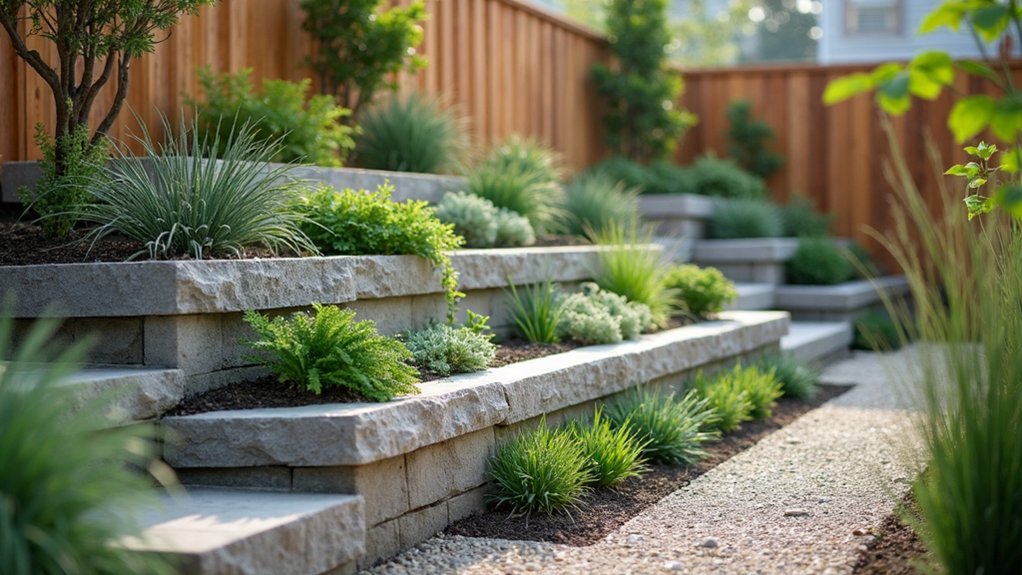
You’re looking at your sloped backyard and seeing wasted potential. That steep grade makes it impossible to set up a patio table, plant a garden, or even let the kids play safely. Multi-level retaining walls can change everything by transforming your challenging terrain into distinct, usable zones. Instead of fighting against your yard’s natural slope, you’ll work with it to create something far more functional and visually striking than a flat lawn ever could be.
Key Takeaways
- Multi-level retaining walls transform unusable sloped terrain into functional flat terraces, maximizing every square foot of limited yard space.
- Stepped wall designs create distinct zones for different purposes while adding visual depth and sophisticated vertical interest to small areas.
- Strategic material selection including natural stone, concrete blocks, or treated timber enhances both structural integrity and aesthetic appeal in compact spaces.
- Proper drainage, base preparation, and tier spacing prevent soil erosion while creating durable frameworks that withstand environmental pressures.
- Professional design expertise ensures optimal space utilization through strategic positioning while avoiding costly structural failures and drainage issues.
What Is a Multi-Level Retaining Wall Design?
The design allows you to create distinct areas within your yard—perhaps a garden bed on one tier and a seating space on another. These stepped walls maximize every square foot by converting unusable sloped ground into flat, purposeful zones. The result is a yard that doesn’t just manage elevation changes but actually capitalizes on them, giving your small space the depth and functionality it deserves.
Benefits of Multi-Level Retaining Walls in Small Yards
While traditional single-wall solutions simply hold back soil, multi-level retaining walls transform your small yard into a functional powerhouse. You’ll maximize limited space by creating usable flat terraces from sloped terrain, making previously unusable areas productive. Each wall adds visual depth and texture, enhancing your outdoor living experience with natural flow.
Multi-tiered walls let you designate different functions per level – upper terraces for seating areas, middle sections for raised gardens, and lower walls for privacy barriers. Retaining walls help prevent soil erosion while creating durable frameworks for your entire outdoor space.
The right landscape design incorporates steps, lighting, and irrigation systems directly into wall structures. This integration transforms basic yards into sophisticated outdoor environments, proving that strategic wall placement turns spatial limitations into design advantages.
Small Yard Landscaping Solutions With Multi-Level Retaining Walls
Beyond their structural advantages, multi-level retaining walls open up countless creative possibilities for small yard landscaping. You can transform sloped areas into raised garden beds that create visual interest while maximizing planting space. Tiered retaining walls with clean lines establish a sophisticated vertical design that makes limited spaces feel expansive.
Each level offers unique landscaping opportunities—plant cascading flowers on upper tiers while creating herb gardens below. You’ll find that even a small retaining wall can anchor larger design elements like built-in seating or water features. The stair-step configuration naturally defines planting zones, allowing you to group plants by sun requirements or maintenance needs. This approach creates functional and beautiful outdoor spaces that feel larger than their actual footprint.
Best Materials for Multi-Level Retaining Walls
When selecting materials for your multi-level retaining wall system, you’ll discover that each option brings distinct advantages to small yard designs. Natural stone delivers timeless, organic appeal perfect for creating stunning tiers, while concrete blocks offer clean lines and modular flexibility for complex configurations. Treated timber provides warmth and rustic charm for lower-height applications.
Regardless of your materials choice, you’ll need proper drainage, solid base preparation, and correct spacing between tiers for structural integrity. Don’t overlook combining materials—stone and concrete create visually cohesive systems that maximize design potential.
Professional expertise guarantees your material selection matches site conditions perfectly. Consider integrating lighting and irrigation systems during construction to enhance both functionality and nighttime aesthetics in your compact outdoor space.
Why Work With a Professional for Complex Yard Designs
Although small yard retaining walls might appear straightforward, complex designs demand professional expertise that goes far beyond basic construction knowledge. You’ll need professionals who understand your unique slope, soil conditions, and space constraints to design effective retaining wall systems. Experienced landscape design experts can maximize space by strategically positioning hardscaping features and walkways throughout your compact outdoor space.
Without professional guidance, you risk serious problems like erosion, drainage issues, and foundation damage. Landscape architects know how to select appropriate materials while incorporating functional elements like built-in seating or planters. They’ll guarantee structural integrity while maintaining aesthetic cohesion throughout your design. Working with professionals transforms your limited area into a multi-purpose living space that’s both beautiful and functionally sound.
Frequently Asked Questions
How Much Does It Typically Cost to Build Small Retaining Walls?
You’ll spend $3,000-$15,000 on small retaining walls, considering material selection challenges, foundation excavation expenses, reinforcement bar expenses, backfill material costs, drainage system installation, site preparation labor, and engineer consultation fees for structural integrity assessments.
Do I Need Permits for Building Short Retaining Walls in My Yard?
Need permits for your retaining wall? You’ll typically need permits for walls over 3-4 feet due to building code requirements and local regulations overview. Check DIY project considerations and professional installation advice before starting construction.
How Do I Properly Drain Water Behind a Small Retaining Wall?
You’ll need proper drainage techniques including subsurface drainage pipes, porous backfill materials, and landscape fabric. Consider soil type, grade sloping recommendations, and water diversion strategies. Don’t forget downspout redirections for effective surface runoff mitigation.
What’s the Maximum Safe Height for a DIY Retaining Wall Project?
You can safely build DIY retaining walls up to 3-4 feet high with proper building materials selection, soil compaction techniques, and drainage system installation. Beyond this height, you’ll need professional structural integrity assessment for safety.
How Do I Maintain and Clean My Retaining Wall Over Time?
You’ll need to inspect regularly for cracks and shifts, remove debris from drainage paths, apply sealant annually, monitor soil erosion, adjust irrigation to prevent water damage, and repaint when needed while evaluating structural integrity.
Conclusion
Think you can’t afford a multi-level retaining wall? You’re missing the bigger picture. While the upfront investment seems steep, you’ll actually save money long-term by preventing costly erosion damage and increasing your property value substantially. Don’t let your small yard limit your outdoor dreams. You’ll maximize every inch of space while creating distinct zones for entertainment, gardening, and relaxation. Start planning your transformation today—your cramped yard has untapped potential.