
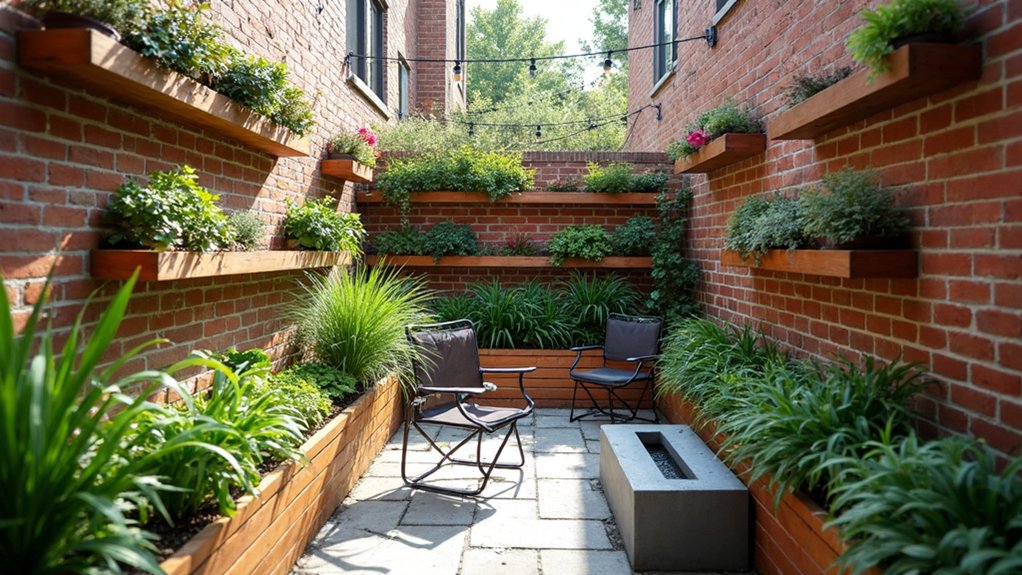
You’ve stared at your compact yard countless times, wondering how to transform that cramped outdoor space into something extraordinary. The truth is, small doesn’t mean limited—it means strategic. Your tiny backyard holds untapped potential that most homeowners overlook, and the right design approach can create an outdoor oasis that rivals properties twice the size. But here’s what separates successful small-space transformations from disappointing attempts that waste both money and square footage.
Key Takeaways
- Maximize vertical space with trellises, wall-mounted planters, espalier trees, and living green walls to grow upward instead of outward.
- Create distinct functional zones using outdoor rugs, potted plants, and different levels to organize dining, relaxing, and entertaining areas.
- Use permeable hardscaping materials like pavers and raised beds with multifunctional elements such as storage benches and integrated planters.
- Select columnar trees, low-spreading ground cover, and drought-tolerant plants that provide maximum impact with minimal space requirements.
- Incorporate built-in seating, strategic lighting, and water features to extend usable hours and create ambiance in compact yards.
Maximize Vertical Space With Strategic Garden Design
When ground space is at a premium, you’ll need to think upward to create a thriving garden in your compact yard. Install trellises and wall-mounted planter boxes along fences to support climbing plants and maximize growing space. Espalier fruit trees trained against walls provide fresh produce without consuming valuable square footage.
Create a stunning vertical garden using tiered planters and vertical gardening systems that accommodate multiple plant varieties. Hanging plants add dimension while conserving ground space, and ornamental grasses in tall containers create natural privacy screens.
Consider installing a living green wall for dramatic impact, transforming blank surfaces into lush focal points. Select columnar trees that grow tall rather than wide, providing structure without overwhelming your compact landscape. These strategic vertical elements transform small yards into layered, productive outdoor sanctuaries.
Create Functional Outdoor Rooms and Zones
Transform your compact yard into a series of purposeful outdoor rooms by strategically dividing the space into distinct functional zones. These yard design ideas help maximize every square foot while creating depth through thoughtful organization. Use design elements like outdoor rugs, potted plants, and varied furniture to establish clear boundaries between dining, relaxing, and entertaining areas.
Small yard landscaping becomes more effective when you’re intentional about zoning. Front yard landscaping ideas can include a welcoming seating nook separated from a garden display area. This landscape design approach doesn’t confine your outdoor spaces—it enhances functionality. Landscaping ideas that make your yard feel larger include using different levels, textures, and purposes for each zone. These landscaping tips transform cramped areas into organized, multi-functional outdoor environments.
Smart Hardscaping Solutions for Small Properties
Five key hardscaping elements can dramatically enhance your compact yard’s functionality while adding visual appeal. Choose permeable materials like pavers, gravel, and decomposed granite to increase drainage and eliminate water pooling issues. Transform sloped terrain with raised garden beds and retaining walls that create usable outdoor living spaces.
Incorporate multifunctional elements such as built-in benches with storage compartments and integrated planters to maximize your space’s utility. Design strategic pathways and walkways that guide foot traffic while visually expanding your yard’s perceived size.
Elevate your landscape’s ambiance by integrating thoughtful lighting and water features alongside sculptural architectural details. These smart hardscaping solutions work together to create a cohesive, functional outdoor environment that feels larger than its actual footprint.
Plant Selection Strategies That Enhance Compact Areas
Strategic plant selection becomes your most powerful tool for creating visual depth and maximizing growing space in compact yards. You’ll want to choose columnar or espalier-trained trees that grow upward rather than outward, giving your small landscape dramatic vertical interest without consuming precious horizontal space.
Create seamless ground cover carpets using low-growing, spreading plants that unify your yard’s design. Add ornamental grasses and wispy perennials to introduce movement and textural contrast within your compact plantings.
Container gardening offers incredible flexibility—combine trailing vines with cascading flowers and upright specimens for multi-layered arrangements. Focus on drought-tolerant, low-maintenance plants that require minimal pruning, keeping your small yard looking polished year-round while reducing your workload considerably.
Multi-Purpose Features and Built-In Elements
Beyond selecting the right plants, you’ll multiply your yard’s functionality by incorporating built-in elements that serve multiple purposes while conserving space. Built-in seating around fire pits or dining areas maximizes every inch counts in small yards while creating natural gathering spots. Raised beds serve dual roles—defining your outdoor space while accommodating various plant types from herbs to ornamental varieties.
Retaining walls transform challenging slopes into functional areas, creating visual separation that makes your yard feel larger. These design strategies work especially well in compact spaces where traditional furniture won’t fit. Make sure to integrate lighting throughout your design—uplights, path lights, and subtle accents extend usable hours while highlighting key features. Custom materials like natural stone or decorative gravel elevate even the smallest installations.
Lighting and Visual Tricks to Expand Your Space
When you’re working with limited square footage, clever lighting and visual techniques can transform your compact yard into a space that feels surprisingly expansive. Remove deck railings to extend sight lines and create openness throughout your living space. Edge your garden beds with clean lines to establish order and prevent areas from appearing chaotic, which can make spaces feel smaller.
Blur indoor-outdoor boundaries by installing large windows and extending interior flooring onto your small patio. Position potted plants near your front door to draw eyes outward and enhance the sense of space. Create focal points using native plants in containers placed strategically around pea gravel pathways. These visual tricks work together to maximize your yard’s perceived size while delivering significant visual impact.
Sustainable Design Practices for Low-Maintenance Appeal
Smart design choices that create visual impact can also reduce your long-term maintenance burden while supporting environmental sustainability. You’ll make your small outdoor space more efficient by embracing xeriscaping principles with drought-tolerant, native plants that thrive without constant watering. Replace traditional grass in your front garden with artificial turf or expand plant beds filled with low-care succulents and evergreen shrubs that feel natural yet require minimal upkeep. Incorporate permeable pavers or gravel to improve drainage while creating attractive pathways. A drip irrigation system delivers water precisely where needed, eliminating waste from sprinklers. Strategic placement of ornamental grasses adds texture and movement to your design without demanding frequent attention, proving sustainable landscapes can be both beautiful and practical.
Frequently Asked Questions
What’s the Average Cost to Landscape a Small Yard Under 500 Square Feet?
You’ll typically spend $1,500-$4,000 landscaping under 500 square feet. Get landscape contractor estimates, explore DIY landscaping budget tips, choose low maintenance ground cover ideas, and consider affordable landscape lighting options to maximize your compact yard space planning investment.
How Do I Get Permits for Hardscaping Changes in My Compact Yard?
You’ll need to check local building codes and navigate the permit application process. Contact your city’s building department for retaining wall permits, patio installation guidelines, and drainage considerations before starting DIY hardscape projects.
Which Plants Work Best in Small Spaces With Poor Drainage Issues?
Like Noah’s ark saving species from floods, you’ll need drought tolerant ground covers, native species perennials, and self contained raised beds. Choose compact shrub varieties and container gardening strategies to rescue your waterlogged space.
Can I Install a Water Feature in a Tiny Urban Backyard?
You can absolutely install water features in tiny backyards! Consider portable water fountains, tabletop water elements, or compact waterfall designs. Self-contained ponds and container water features work perfectly for urban patio waterfalls without requiring extensive space.
How Do I Maintain Privacy Without Blocking Natural Light in Small Yards?
You’ll achieve privacy through layered planting beds with tall potted plants and trellised climbing vines. Use semi-transparent fencing panels or decorative privacy screens alongside strategically placed bushes to create lush greenery screening while preserving light.
Conclusion
You’ve discovered the secret to turning your postage stamp-sized yard into an absolutely breathtaking outdoor paradise. By implementing vertical gardens, creating distinct zones, choosing smart hardscaping, selecting the right plants, incorporating multi-purpose features, using strategic lighting, and embracing sustainable practices, you’ll transform every square inch into functional beauty. Your compact yard won’t just compete with larger spaces—it’ll outshine them with thoughtful design that maximizes impact while minimizing maintenance requirements.