
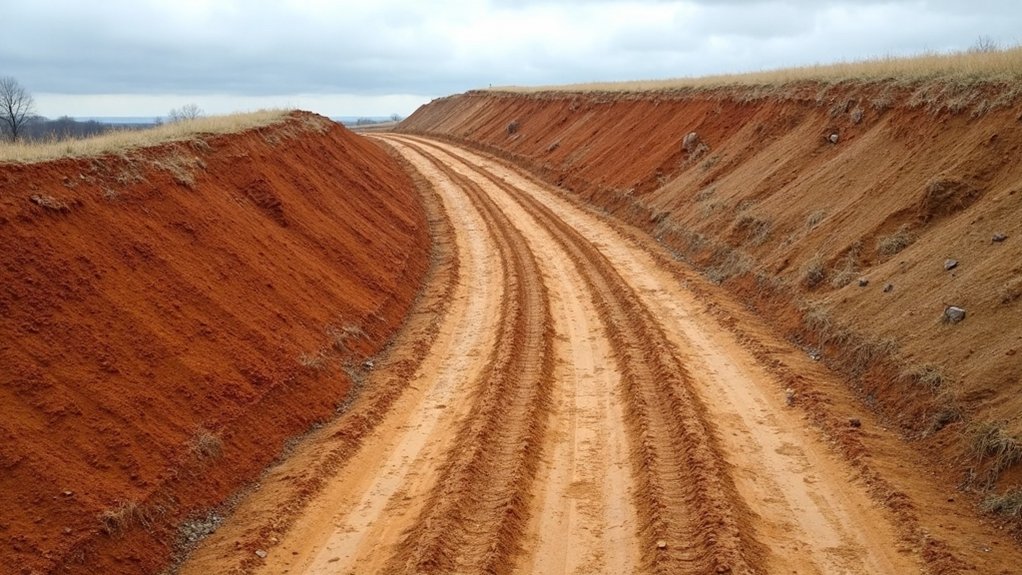
You’ll face unique challenges when grading slopes in the Greater St. Louis area due to the region’s predominant clay-based soils. These dense, moisture-retentive soils behave differently than standard dirt and sand mixtures, creating potential stability issues if you don’t account for their specific characteristics. Your project’s success depends on understanding how local clay responds to water movement, seasonal changes, and grading techniques. What you don’t know about these soil properties could lead to costly problems down the road.
Key Takeaways
- Clay-based soils in St. Louis require specialized grading techniques due to low permeability and shrink-swell behavior.
- Slopes exceeding 15% need careful assessment for erosion patterns and may require terracing or retaining walls.
- French drains and engineered swales are essential for redirecting water away from graded slopes in clay soils.
- Thorough geotechnical investigation must precede slope grading to determine soil composition, plasticity, and bearing capacity.
- Strategic vegetation placement and proper mulching help stabilize graded slopes against washout during heavy rainfall events.
Understanding Clay-Based Soil Characteristics in St. Louis
When you’re planning slope grading projects in the St. Louis region, you’ll encounter predominantly clay-based soils that demand specialized attention. Your first step involves understanding these challenging site conditions and their unique engineering properties. Clay soils in this area retain excessive water due to low permeability, creating drainage complications that can undermine your grading efforts.
You’ll also face shrink-swell behavior, where clay expands when wet and contracts during dry periods. This movement threatens slope stability and can cause significant foundation problems if not properly addressed. The high water retention characteristics make these soils particularly susceptible to washout and gullying during heavy rainfall events.
Before beginning any slope grading work, you must conduct thorough soil testing to identify specific clay composition, plasticity indices, and bearing capacity for your particular site.
Assessing Existing Site Conditions and Terrain
After completing your soil analysis, you’ll need to evaluate the physical characteristics of your project site to develop an effective grading strategy. Start by measuring land contours using a transit or laser level to create detailed topographical maps. Document existing drainage patterns, noting where water naturally flows during heavy rainfall common in the St. Louis region.
Focus on identifying grade changes throughout your property, particularly steep slopes that may require terracing or retaining walls. Pay attention to areas where clay soil has already shifted or settled, as these indicate potential problem zones.
Complete your assessment by evaluating soil stability on slopes exceeding 15%. Test for erosion patterns and check how existing vegetation affects soil retention, especially during Missouri’s wet spring seasons when clay becomes most unstable.
Drainage Solutions for Local Soil Types
Because St. Louis area soil conditions present unique challenges, you’ll need specialized drainage solutions to manage water effectively. Clay-rich soils and karst topography demand strategic approaches to prevent erosion and property damage.
Your drainage system should include:
- French drains to redirect subsurface water away from structures
- Engineered swales to channel surface runoff efficiently
- Permeable surfaces to reduce water accumulation on slopes
- Strategic grading around sinkholes and underground cavities
- High water table considerations for long-term stability
You can’t ignore stormwater management in this region’s poorly draining clay soils. These conditions create ponding issues that compromise slope integrity. Professional contractors understand seasonal flooding concerns and design systems that handle Missouri’s variable precipitation patterns. They’ll assess your specific terrain and implement drainage solutions that work with local soil characteristics rather than against them.
Foundation Preparation Requirements
Effective drainage systems work hand-in-hand with proper foundation preparation to protect your investment from St. Louis’s challenging soil conditions. You’ll need thorough site evaluation methods that include geotechnical investigations to assess your soil’s composition and bearing capacity. These tests determine the specific foundation design requirements for your property’s unique conditions.
Your contractor must follow strict soil compaction requirements, especially when dealing with the area’s expansive clay soils. Proper compaction prevents future settlement that could compromise structural integrity. The foundation inspection process involves multiple checkpoints throughout construction, verifying that grading meets engineering specifications and local building codes.
Don’t underestimate the importance of hiring experienced local contractors who understand St. Louis’s soil challenges. They’ll guarantee your foundation preparation accounts for potential settlement, erosion, and water flow issues specific to this region.
Erosion Prevention Strategies
While foundation preparation sets the groundwork for stability, implementing targeted erosion prevention strategies protects your property from St. Louis’s challenging weather patterns. You’ll need all-encompassing landscaping designs that work with your terrain’s natural characteristics.
Effective erosion control requires these essential strategies:
- Proper slope grading – Direct water runoff away from your property using ideal gradients
- Terracing techniques – Create gentle slopes that reduce erosion risk on steep landscapes
- Strategic vegetation placement – Install ground cover plants for natural soil stabilization
- Professional mulch recommendations – Apply appropriate materials to protect exposed soil
- Specialized equipment usage – Utilize expert services for long-term stability solutions
Incorporating sustainable practices into your slope grading project guarantees lasting protection while maintaining your property’s aesthetic appeal and environmental responsibility.
Equipment and Techniques for Clay Soil Grading
When working with St. Louis area clay soils, you’ll need specialized equipment to meet compaction requirements effectively. Scrapers and sheepsfoot rollers are essential tools for properly conditioning and compacting clay material. You can’t achieve stable results without managing moisture content precisely – too wet creates rutting, while too dry causes clumping.
Your moisture management strategy should involve grading in multiple passes with gradually increasing compaction force. This approach guarantees you achieve the stable, level surface needed for slope integrity. For high-plasticity clays common in the region, you’ll often need soil conditioning strategies like incorporating gypsum or other amendments to improve workability.
Success depends on carefully sequencing your grading operations while managing surface water throughout the process.
Meeting Local Building Standards and Regulations
Before you break ground on any slope grading project in the Greater St. Louis area, you’ll need to navigate local building standards and regulations. Municipal code compliance isn’t optional—it’s essential for successful project completion.
The permit application process requires several key steps:
- Submit detailed grading and drainage plans to local building departments
- Guarantee designs meet stormwater management standards and erosion control requirements
- Obtain necessary approvals from St. Louis County or your specific municipality
- Schedule project inspection procedures at designated milestones
- Verify compliance with local slope and drainage specifications
You can’t afford to skip these regulatory requirements. Non-compliance leads to costly delays, fines, and mandatory remediation work. Working with experienced professionals who understand local codes assures your project meets all standards from the start.
Professional Geotechnical Analysis Benefits
Although proper permits establish the foundation for your slope grading project, professional geotechnical analysis verifies you’re building on solid ground—literally. Local geotechnical engineers provide thorough soil testing that reveals critical insights into soil composition, stability, and drainage characteristics specific to Greater St. Louis conditions.
These detailed assessments enable tailored grading plans that address unique geological challenges like expansive clays or poor drainage issues common in the region. Through proactive mitigation strategies identified during analysis, you’ll avoid costly surprises during construction.
Expert geotechnical reports guide equipment selection, grading techniques, and soil amendments needed for ideal slope performance. Local professionals guarantee your project meets regional building codes while reducing risks associated with improper grading methods.
Frequently Asked Questions
At Which Slope Is Grading Required?
You’ll need grading when slopes exceed 3-5%, depending on local codes. Steeper grades create erosion control requirements, soil compaction concerns, and drainage implications that mandate professional intervention to prevent water damage and structural issues.
What Type of Soil Is in St. Louis?
You’ll find chiefly clay-rich soils in St. Louis, with silty compositions near rivers. These soils affect nutrient content retention, create challenging drainage patterns, and increase erosion potential, especially when you’re planning construction or landscaping projects.
What Is the Proper Soil Grading?
Picture water flowing smoothly away from your foundation like a gentle stream. You’ll need proper soil composition analysis, understand drainage requirements, and complete thorough topsoil preparation to create that ideal 1-2% slope for effective water management.
How Does Slope Grading Work?
You’ll reshape land contours using specialized equipment to create ideal angles for drainage considerations. The process focuses on erosion prevention while maintaining soil stability, ensuring water flows properly away from structures and preventing damaging runoff patterns.
Conclusion
You’ve navigated the muddy waters of St. Louis clay soil grading—no small feat in this challenging terrain. Like building on shifting sands, you can’t afford to cut corners when dealing with these demanding soil conditions. You’ll find that proper preparation, drainage solutions, and professional analysis aren’t luxuries—they’re necessities. Don’t let your project become a house of cards; invest in the right techniques and equipment for lasting stability.