
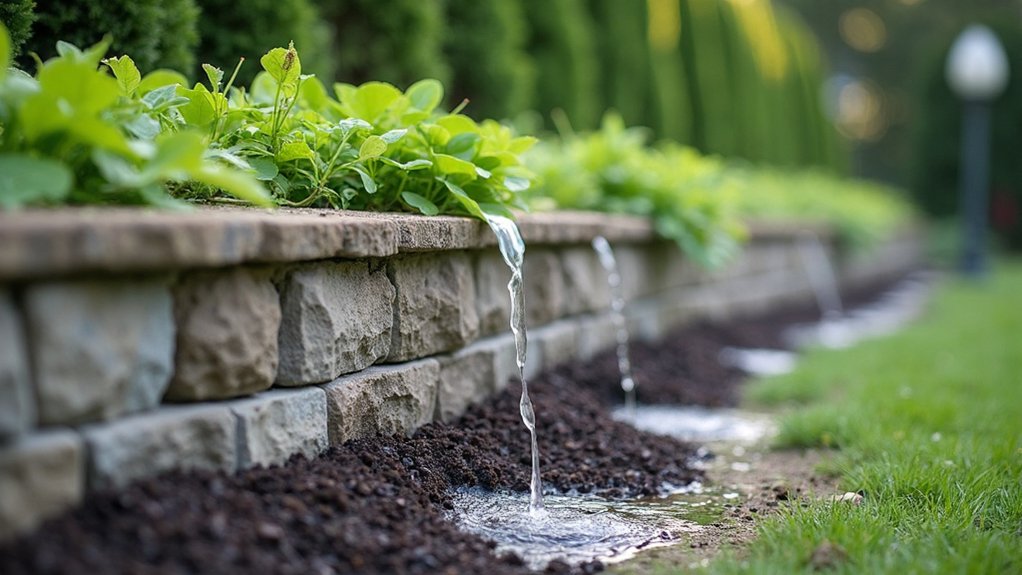
You’ve invested thousands in that beautiful retaining wall, but there’s a silent threat working against it every single day. Water pressure building behind your wall doesn’t announce itself with warning signs—it simply accumulates until structural failure becomes inevitable. The difference between a wall that lasts decades and one that crumbles within years often comes down to a drainage system you can’t even see. Here’s what’s happening beneath the surface.
Key Takeaways
- Proper drainage systems redirect water away from retaining walls, preventing hydrostatic pressure that threatens structural integrity and longevity.
- Install perforated pipes at the wall base with consistent slope to collect and channel water effectively away from the structure.
- Use non-woven geotextile fabric with proper overlap to prevent soil migration while allowing water infiltration through the drainage system.
- Backfill with ¾ inch clean crushed stone extending 12 inches behind the wall to promote water flow and enhance stability.
- Regular maintenance including pipe cleaning and debris removal ensures unobstructed drainage flow and prevents costly wall failures over time.
Understanding the Critical Role of Proper Drainage Systems
Water is relentless—it finds every weakness, exploits every gap, and builds pressure that can topple even the sturdiest retaining walls. You’re facing hydrostatic pressure whenever water accumulates behind your wall, threatening its structural integrity. Without proper drainage systems, you’ll watch soil erosion undermine your investment and potentially cause catastrophic wall failure.
Your defense relies on three critical components working together: perforated drain pipes that collect water, gravel backfill that allows efficient water flow, and filter fabric that prevents soil contamination. This integrated drainage system redirects water away from your wall before it builds dangerous pressure.
Don’t underestimate the importance of ongoing maintenance—neglecting your drainage components will compromise their effectiveness and leave your retaining wall vulnerable to water damage.
Essential Components for Effective Retaining Wall Drainage
Your drainage system’s effectiveness depends on selecting and installing the right components in the proper sequence. A well-designed drainage system begins with a solid gravel base that promotes water infiltration. You’ll need geotextile fabric to prevent soil migration while maintaining water flow. Install perforated pipe behind your wall, connecting it to French drains that direct water away from the structure.
Weep holes provide additional escape routes for trapped moisture, preventing hydrostatic pressure buildup. Choose appropriate backfill material—typically free-draining gravel or crushed stone—rather than impermeable clay soil. This thorough drainage approach guarantees effective retaining wall drainage by creating multiple pathways for water movement.
When you combine these components with proper drainage techniques, you’ll establish a system that protects your investment for decades.
Perforated Pipes and Their Strategic Placement
Perforated pipes serve as the backbone of your retaining wall’s drainage system, capturing and channeling water before it can accumulate behind the structure. You’ll need to position these pipes at the base of your wall with consistent slope toward a reliable outlet like a storm sewer or drainage swale. Proper sizing guarantees adequate drainage capacity for expected water flow volumes.
Strategic placement prevents dangerous hydrostatic pressure that can compromise your wall’s integrity. You must calculate pipe diameter based on your wall’s dimensions and anticipated water loads. Without proper outlet connections, water buildup becomes inevitable.
Regular maintenance keeps your system functioning ideally. Clear debris from pipes periodically and verify unobstructed flow paths to prevent costly drainage failures that threaten your entire retaining wall investment.
Filter Fabric Selection and Installation Techniques
Filter fabric forms the protective barrier that keeps your perforated pipe system functioning properly for decades. This geotextile acts as a selective filter, allowing water through while blocking soil particles that would clog your drainage system.
You’ll need non-woven, needle-punched material with high permeability for optimal performance. Consider these essential installation requirements:
- Fabric weight selection – Choose appropriate durability based on your wall height and soil conditions
- Proper overlap – Create seamless joints between fabric sections to guarantee soil infiltration prevention
- Secure attachment – Fasten the geotextile firmly to your retaining wall structure
- Extended coverage – Ensure fabric extends at least 12 inches beyond the wall’s back edge
Installing filter fabric correctly protects your investment by maintaining long-term drainage effectiveness and preventing costly system failures.
Weep Hole Construction and Spacing Requirements
While perforated pipes handle primary drainage behind your wall, weep holes provide essential secondary drainage at the structure’s base. These small openings relieve dangerous hydrostatic pressure that could cause wall failure if left unchecked.
You’ll need to space weep holes properly—typically 32 inches on center, never exceeding 4 feet apart. This arrangement guarantees adequate water flow throughout your drainage system. Make each hole 3-4 inches in diameter and angle them slightly downward to promote effective drainage.
Protect against clogging by placing small gravel pieces or screens over each opening. This prevents debris from blocking water flow while stopping soil loss. At the wall base, these openings work continuously to channel water away, maintaining your retaining wall’s structural integrity and preventing costly repairs.
Backfill Materials That Promote Optimal Water Flow
Behind your retaining wall’s drainage system, the backfill material you choose determines whether water flows freely or creates destructive pressure buildup. The right selection directly impacts your wall system’s longevity and performance.
You’ll want ¾ inch clean crushed stone as your go-to backfill material. This promotes excellent water flow while preventing hydrostatic pressure from compromising your structure’s integrity.
- Extend backfill at least 12 inches behind the wall for adequate drainage coverage
- Avoid pea gravel and sand since they retain moisture and create drainage problems
- Focus on thorough compacting to enhance wall stability and prevent settlement
- Choose angular crushed stone over rounded materials for better interlocking properties
Proper backfill material isn’t optional—it’s essential for preventing costly wall failures and protecting your landscape investment for years to come.
Signs Your Drainage System Needs Immediate Attention
When drainage systems fail, your retaining wall sends clear warning signals that demand immediate action. You’ll notice your wall leaning or bulging outward as water-saturated soil creates dangerous hydrostatic pressure behind the structure. Standing water pools at the base indicate your drainage can’t effectively channel water flow away from the wall.
White efflorescence deposits appearing on the surface signal moisture problems within the wall system. These chalky residues show water’s trying to escape through your retaining wall materials. Cracks developing anywhere on the structure reveal unmanaged water pressure is compromising structural integrity.
Don’t ignore debris blocking drainage outlets or weep holes. Regular inspections help you catch these warning signs early and prevent costly structural failures. Address drainage issues immediately to protect your landscape investment.
Step-by-Step Installation Process for Maximum Effectiveness
Since proper installation determines your drainage system’s long-term success, you’ll need to follow a precise sequence that addresses both structural integrity and water management. Begin with thorough excavation to create a stable, level foundation that incorporates proper drainage and reinforcement from the start.
Your retaining wall drainage installation should follow these critical steps:
- Install perforated drain pipes along the base, sloping them to direct water flow away from the structure
- Backfill with ¾-inch clean crushed stone, compacting thoroughly to preclude settling
- Apply geotextile fabric over the backfill to inhibit soil particles from clogging your drainage system
- Construct weep holes along the wall’s base to relieve hydrostatic pressure
This methodical approach guarantees maximum effectiveness by addressing water management at every level of construction.
Maintenance Schedules to Prevent Costly Repairs
Although a well-installed retaining wall drainage system can last decades, it’ll only reach its full lifespan potential with consistent preventive maintenance that addresses problems before they escalate into expensive structural failures.
Create a biannual inspection schedule focusing on structural integrity and stability monitoring. Check for shifting, bulging, or leaning that indicates foundation issues requiring immediate attention. Clear weep holes and drainage pipes of debris to maintain proper water flow and prevent hydrostatic pressure buildup behind your wall.
Develop maintenance routines tailored to your specific environmental conditions and wall materials. Reseal cracked areas promptly to prevent water infiltration and further deterioration. Regular debris removal from drainage systems guarantees optimal performance during heavy rainfall periods.
This prevention-focused approach protects your landscape investment while avoiding costly emergency repairs that result from neglected maintenance issues.
When to Call Professionals for Complex Drainage Solutions
While routine maintenance keeps most retaining walls functioning properly, certain drainage challenges demand professional expertise that goes beyond typical DIY capabilities. Complex retaining wall drainage solutions require specialized knowledge to manage water flow and prevent dangerous hydrostatic pressure buildup.
You’ll need professional guidance when facing:
- Unique site conditions – steep slopes, high water tables, or challenging soil conditions that affect your drainage system
- Code compliance – meeting local building codes and obtaining permits for complex drainage components
- Advanced installations – proper placement of perforated pipes, gravel backfill, and weep holes to guarantee water buildup is prevented
- Ongoing troubleshooting – identifying and resolving drainage issues before they cause structural damage
Professional landscapers certify your drainage system performs effectively long-term, protecting your investment from costly water-related failures.
Frequently Asked Questions
What Permits Are Required for Retaining Wall Drainage System Installation?
You’ll need drainage permit applications from your local municipality, meeting building code specifications. Submit site plan documentation, structural engineer approval, soil percolation test results, and detailed trench digging plans before installation begins.
How Much Does Professional Retaining Wall Drainage System Installation Typically Cost?
Over 60% of drainage installations exceed initial estimates. You’ll face typical material costs of $15-30 per linear foot, plus professional labor expenses doubling that figure, with necessary excavation work and drainage pipe materials driving total project timelines beyond expectations.
Can I Retrofit Drainage to an Existing Retaining Wall Without Reconstruction?
You can retrofit drainage using water diversion techniques and drainage pipe placement. However, you’ll need proper gravel backfill requirements and geotextile fabric installation, which often requires partial reconstruction for effective subsurface water channels.
What Warranty Coverage Should I Expect From Drainage System Contractors?
Warranty wisdom varies widely—you’ll typically get one-to-five-year workmanship guarantees covering installation defects. Expect exclusions for clogs from debris, limited parts availability, specific claims processes, and varying service response times depending on your contractor’s policies.
How Does Soil Type Affect Retaining Wall Drainage System Design Choices?
You’ll need different drainage solutions based on your soil’s permeability considerations and groundwater pressure impacts. Clay soils require aggressive subsurface flow diversion, while sandy soils need careful backfill material selection and strategic drainage pipe placement.
Conclusion
Think of your retaining wall’s drainage system as the circulatory system of your landscape—silent yet essential. You’ve invested in more than concrete and stone; you’ve built a guardian that’ll stand against time’s relentless pressure. Just as a heart needs clear arteries to function, your wall needs unobstructed drainage to breathe. Don’t let water become the silent enemy that erodes your investment. Your landscape’s lifeline depends on the foundation you can’t see.