
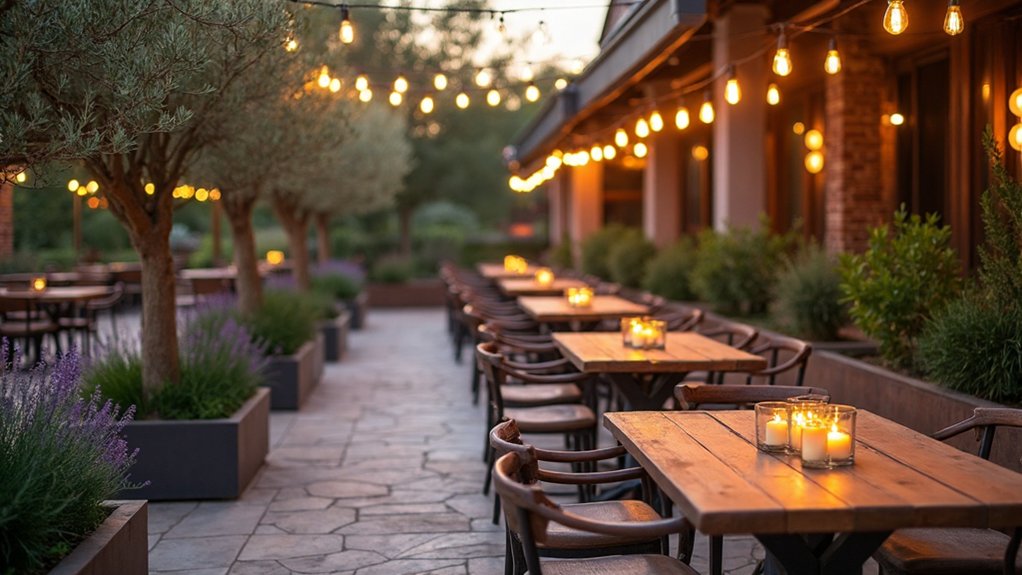
Picture the gentle flicker of string lights casting warm shadows across weathered wooden tables as diners linger over their meals, reluctant to leave your restaurant’s outdoor sanctuary. You’re not just designing a patio—you’re crafting an experience that transforms a simple meal into a memorable evening. The difference between a forgettable outdoor space and one that keeps customers coming back lies in understanding how landscape design elements work together to create irresistible ambiance that directly impacts your bottom line.
Key Takeaways
- Strategic outdoor lighting including string lights, pathway illumination, and fire pits creates intimate evening atmospheres that encourage extended dining stays.
- Climate-appropriate native plants in varied heights and textures establish welcoming ambiance while minimizing maintenance costs and water usage requirements.
- Weather-resistant furniture with heating solutions like fire pits extend patio usability year-round, maximizing revenue potential across all seasons.
- Efficient layout design with versatile seating accommodates different group sizes while ensuring smooth traffic flow and optimal space utilization.
- Automated technology for heating, cooling, and irrigation systems provides remote control convenience while maintaining consistent guest comfort levels.
Creating Inviting Outdoor Spaces That Drive Customer Engagement
While indoor ambiance sets the foundation for your restaurant’s atmosphere, your outdoor dining space holds untapped potential to dramatically boost customer engagement and revenue. Strategic outdoor seating design transforms casual visitors into loyal customers who linger longer and spend more.
Your outdoor dining area becomes a powerful revenue driver when you incorporate thoughtful elements. Comfortable seating encourages extended stays, while strategic outdoor lighting creates intimate evening atmospheres. Partnering with landscaping experts helps you integrate greenery that softens harsh architectural lines and provides natural cooling.
The key lies in creating cohesive dining areas that reflect your brand identity. When your outdoor space seamlessly connects with your interior aesthetic, customers experience immersive environments that resonate deeply, driving repeat visits and positive word-of-mouth recommendations.
Essential Design Elements for Year-Round Functionality
As seasons change and weather patterns shift throughout the year, your outdoor dining space must adapt to maintain consistent customer comfort and operational efficiency. Strategic heating solutions like fire pits and commercial-grade heaters extend your patio’s usability through colder months, while weather-resistant furniture and finishes guarantee durability against harsh conditions.
During warmer seasons, you’ll need all-encompassing cooling strategies including umbrellas, canopies, and misting systems to create comfortable seating areas. Smart layout design accommodates changing weather while maintaining safe guest flow throughout your commercial dining area.
Integrate automated technology for seamless operations – remote-controlled heating systems, smart irrigation, and programmable cooling features reduce maintenance demands. These essential elements transform your outdoor space into a year-round revenue generator that consistently delivers exceptional dining experiences regardless of weather conditions.
Lighting and Ambiance Strategies for Evening Dining
Strategic lighting design transforms your restaurant’s outdoor space from a daytime dining area into an enchanting evening destination that draws customers and extends operating hours. You’ll want to use string lights overhead to create a warm canopy effect that makes diners feel welcomed. Install pathway lighting to guide guests safely through your inviting area while highlighting key landscape features.
Consider adding a fire pit as a focal point that naturally draws people together and provides ambient warmth. Diners love the cozy atmosphere fire creates. Combine multiple lighting layers—task, accent, and ambient—to offer a sense of intimacy without sacrificing functionality. Add music strategically through weather-resistant speakers to complete the sensory experience. Your outdoor dining space should feel like an extension of your restaurant’s personality.
Plant Selection and Green Infrastructure for Commercial Patios
Three key factors determine the success of your commercial patio’s plant selection: durability, visual appeal, and operational compatibility. You’ll want climate-appropriate plant species that can handle the demanding patio environment while requiring minimal maintenance. Create compelling visual interest by incorporating varying heights, textures, and colors that establish a lush, welcoming atmosphere for guests.
Maximize your commercial patio’s limited space through strategic green infrastructure like planters, window boxes, and vertical gardens that bring nature directly into the dining area. Choose non-toxic plants that won’t attract bees or disruptive insects to your customers’ tables. Prioritize drought-tolerant, native varieties to minimize water usage and reduce ongoing maintenance costs while ensuring your landscape investment remains sustainable and cost-effective long-term.
Maximizing Space Efficiency and Revenue Potential
When you’re designing your commercial patio, every square foot directly impacts your bottom line through increased seating capacity and enhanced customer experience. Strategic layout optimization guarantees efficient traffic flow while maximizing the number of tables your outdoor patio can accommodate. You’ll want to incorporate versatile tables and chairs that can be rearranged for different group sizes, from intimate two-tops to larger communal seating arrangements.
Picnic tables work exceptionally well for commercial properties seeking casual dining atmospheres. Leverage vertical space through trellises and hanging gardens to create ambiance without sacrificing valuable floor area. Multi-functional planters serve as attractive barriers while defining distinct seating zones within your outdoor spaces.
Analyze historical sales data to determine the ideal mix of seating types that drives revenue and encourages repeat visits to your establishment.
Frequently Asked Questions
What Are the Typical Permitting Requirements for Restaurant Outdoor Dining Areas?
You’ll need zoning regulations approval, seating capacity permits, accessibility requirements compliance, lighting guidelines adherence, signage permits, landscaping approvals, and waste management plans. Contact your local municipality for specific requirements and application processes.
How Do Weather Protection Solutions Impact Overall Construction Costs?
Weather protection solutions noticeably increase construction costs through shade structure installation, outdoor HVAC systems, and drainage system design. You’ll face additional expenses for patio surface materials, landscape lighting planning, dining enclosure configurations, and ADA compliance concerns.
What Maintenance Schedules Are Recommended for Commercial Outdoor Dining Furniture?
You’ll need “furniture rehabilitation” monthly—cleaning schedules, pest control procedures, lighting maintenance requirements, surface repair considerations. Plan seasonal furniture storage, seating arrangement adjustments, and umbrella replacement timelines quarterly to preserve your investment’s longevity.
How Can Restaurants Handle Noise Complaints From Nearby Residential Properties?
You’ll need soundproofing options and landscaping sound barriers for noise reduction techniques. Guarantee sound ordinance compliance by scheduling dining hours appropriately, implementing crowd control measures, and using event noise mitigation strategies.
What Insurance Considerations Apply Specifically to Outdoor Dining Operations?
You’ll need thorough liability coverage for outdoor dining incidents, plus food contamination protection against weather exposure. Guarantee worker’s compensation covers outdoor staff, hazard insurance safeguards against natural disasters, and compliance with sanitation requirements and accessibility guidelines.
Conclusion
You’ve crafted more than just a dining space—you’ve built your own Field of Dreams where “if you build it, they will come.” Your thoughtful integration of lighting, greenery, and weather-resistant design doesn’t just extend your restaurant’s footprint; it creates an irresistible urban oasis. Like a master conductor orchestrating multiple instruments, you’re harmonizing elements that transform casual diners into loyal patrons who’ll return season after season, boosting your bottom line.