
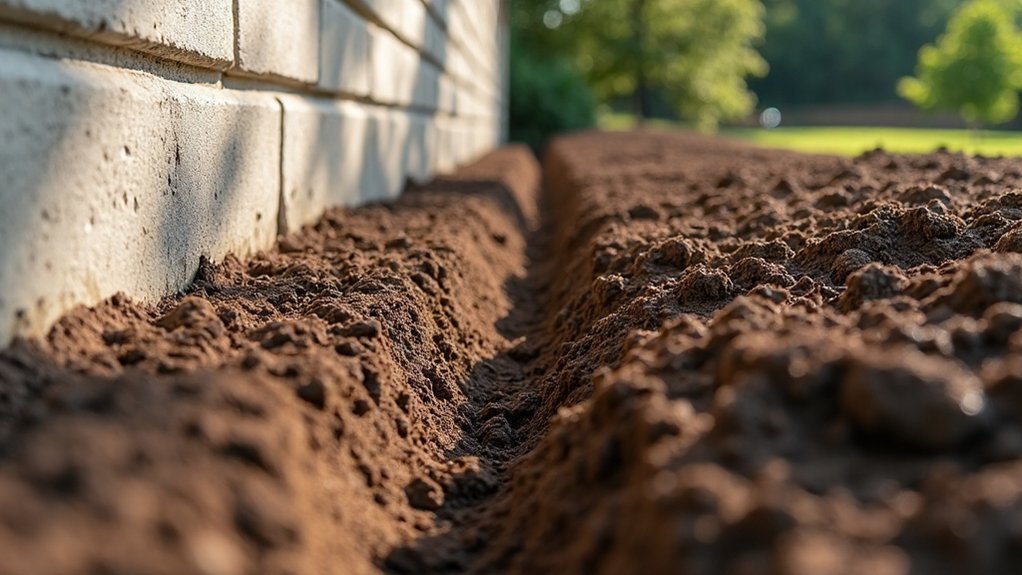
You’ve probably never considered how the gentle slope of your yard could be the difference between a dry basement and thousands of dollars in water damage. Most homeowners assume their property’s grading is adequate, yet subtle changes in soil settlement and landscaping over time can create invisible pathways that funnel water directly toward your foundation. What you can’t see happening beneath the surface might already be compromising your home’s structural integrity.
Key Takeaways
- Proper slope grading directs water away from foundation walls, preventing basement flooding and water infiltration issues.
- Effective grading can add up to $20,000 to market value by demonstrating reliable flood protection capabilities.
- Strategic drainage systems make properties 25% less likely to experience costly water-related damage and flooding problems.
- Well-executed grading and drainage deliver impressive returns of $3 to $5 per dollar invested in improvements.
- Maintaining proper drainage systems through strategic grading extends home lifespan by an average of 15 years.
Understanding the Fundamentals of Home Grading
One critical factor determines whether water flows away from your home or pools around your foundation: proper grading. Grading refers to the slope of your property and how it’s shaped to direct water flow. The grade of your land should create a gentle downward slope away from your house, typically dropping 6 inches over the first 10 feet.
Understanding the importance of proper drainage starts with examining the ground around your foundation. If soil around your home slopes toward the structure, you’re inviting water problems. Existing grading might seem adequate, but it can settle over time. Remember, grading refers to the slope that either protects or threatens your basement’s integrity.
The Role of Strategic Slope Design in Water Management
Strategic slope design transforms your property into a natural water management system that actively protects your basement from flooding. Proper grading creates controlled water flow patterns that consistently direct runoff away from your foundation, substantially reducing the risk of moisture penetration and structural damage.
Effective slope management requires careful attention to several critical elements:
- Optimal gradient: Maintain a 5-10% slope angled away from your home to guarantee efficient water drainage
- Strategic soil placement: Add or remove soil in identified low areas to create proper grading
- Water flow direction: Channel runoff toward appropriate drainage points, preventing pooling near your foundation
- Foundation protection: Create a protective barrier that actively prevents water from reaching vulnerable basement areas
Identifying Signs of Inadequate Property Grading
While proper grading serves as your foundation’s first line of defense, recognizing the warning signs of inadequate slope design can save you from costly water damage repairs. Watch for water pooling around your home’s foundation, which indicates the ground slopes towards rather than away from your structure. You’ll notice water flowing towards the basement when water flows around incorrectly graded areas.
Check for cracked foundation walls and soil erosion near your perimeter—these signal that your current grading can prevent proper drainage. Mold or mildew in your basement reveals ongoing moisture problems from water damage caused by improper directing rainwater systems. Additionally, settling ground near your foundation shows inadequate slope design that fails to channel water away effectively from your home’s structural elements.
Consequences of Improper Water Drainage Around Your Foundation
Poor water drainage around your foundation releases a cascade of destructive consequences that can devastate both your home’s structural integrity and your family’s health. When water doesn’t flow away from your foundation due to improper grading, the saturated soil creates hydrostatic pressure that compromises your basement’s defenses against flooding.
The damage extends beyond immediate water intrusion:
- Structural deterioration – Foundation cracks, shifts, and compromised stability threaten your home’s entire framework
- Material degradation – Persistent moisture destroys drywall, wood, and insulation, requiring expensive replacements
- Health hazards – Contaminated floodwater introduces sewage, chemicals, and debris into your living space
- Mold proliferation – Damp conditions foster toxic mold growth, compromising indoor air quality
Strategic grading modifications can prevent these devastating consequences by directing water away from vulnerable foundation areas.
Essential Steps for Correcting Slope Grading Issues
Tackling slope grading issues around your foundation requires a systematic approach that transforms problematic drainage into an effective water management system. First, assess your property’s current grading and establish a 5% to 10% slope away from your foundation. Remove obstacles that interfere with proper grading around your home, then add suitable soil to create the desired grade.
Compact the added soil thoroughly to prevent erosion and guarantee your properly graded surface remains stable. Grading prevents water from pooling near your foundation, which causes structural issues. Maintain gutters and downspouts to redirect water flow efficiently, and install deep-rooted plants for additional erosion control. Regular inspections, especially after heavy rains, help maintain your basement waterproofing efforts. For significant changes, consult professionals to ascertain grading around your home effectively prevents basement flooding.
Professional Assessment vs. DIY Grading Solutions
The decision between hiring professionals or tackling grading work yourself depends on your project’s complexity and your skill level. Simple adjustments like filling low spots where water tends to collect can be manageable DIY projects that help direct water flow around your home effectively. However, improper grading can lead to serious consequences that increase the risk of basement flooding.
Consider these key factors when choosing your approach:
- DIY suitability: Minor slope adjustments and adding soil to low-lying areas around homes
- Professional necessity: Complex drainage issues requiring extensive regrading and specialized equipment
- Cost considerations: Simple professional services start around $500, while major projects cost thousands
- Regulatory compliance: Consult local building codes and obtain permits to prevent water pooling that affects neighboring properties
Professional assessment offers the potential to identify underlying drainage problems you might miss.
Cost Considerations for Slope Modification Projects
Understanding the financial investment required for slope modification helps you make informed decisions about protecting your basement from flooding. Cost considerations for slope modification projects typically range from $2,000 to $10,000, depending on your property’s specific needs. Adding soil to low areas costs $5 to $20 per cubic yard, while professional labor runs $50 to $100 hourly. Equipment rental adds $200 to $500 daily to your project budget.
Grading guarantees proper water drainage away from your home’s foundation through strategic landscape features like shallow ditches. The land around your home requires careful assessment to determine necessary modifications. Flooding due to improper slopes can cause thousands in water damage repairs, making upfront investment worthwhile. Proper slope modification safeguards your property to prevent costly basement flooding issues.
Long-Term Maintenance Strategies for Optimal Water Flow
After investing in proper slope modification, maintaining your drainage system becomes your ongoing responsibility for preventing basement flooding. Managing water effectively requires consistent vigilance, as water tends to find the weakest points in your defense system. Regular inspections guarantee your grading continues directing rainwater away from your foundation, while water pools around your home signal immediate attention needs.
Essential maintenance tasks for defending your home include:
- Gutter and downspout cleaning – Clear debris quarterly to prevent water from entering basement areas
- Grading assessment – Verify soil still slopes away from foundation at 5-10% grade annually
- Erosion monitoring – Address settling or washout issues before they compromise directing water away effectiveness
- Professional evaluation – Schedule expert reviews every few years for protecting your home against grading issues
Maximizing Property Value Through Effective Drainage Systems
Beyond protecting your basement from water damage, well-executed drainage systems can considerably enhance your property’s market value and investment potential. Proper grading and detailed drainage systems can boost your home’s resale value by up to 10% while maintaining structural integrity. Smart basement waterproofing investments, including strategic swales, deliver an impressive return on investment of $3 to $5 for every dollar spent.
Your well-designed drainage system makes your property 25% less likely to experience water-related issues, attracting buyers who’ll pay premium prices. Effective grading can add up to $20,000 to your market value by demonstrating flood protection. Additionally, maintaining these systems extends your home’s lifespan by 15 years, substantially boosting long-term value and buyer appeal.
Frequently Asked Questions
How Can You Prevent a Basement From Flooding?
You’ll prevent basement flooding by installing proper gutters and downspouts, implementing water diversion techniques, applying foundation waterproofing, positioning drainage pipes strategically, analyzing soil permeability, adding sump pump installation, and creating effective landscape grading patterns.
How Do You Regrade a Yard to Prevent Flooding?
You’ll regrade your yard by establishing correct slope angles, implementing strategic yard contouring, and designing swales for effective surface runoff management. Focus on proper water drainage through landscape grading techniques while optimizing ground permeability.
Can Landscaping Prevent Basement Flooding?
You’ll find that proper drainage design and grading techniques effectively prevent basement flooding. Strategic landscape water diversion, French drain systems, and foundation perimeter drainage create thorough basement waterproofing solutions that protect your home.
How to Prevent Water Infiltration in Basement?
You’ll prevent water infiltration by implementing proper waterproofing techniques, installing effective drainage systems, sealing foundation cracks, using basement sump pumps, planning downspout extensions, and applying outdoor landscaping solutions with appropriate soil compaction methods.
Conclusion
You’ve learned how proper slope grading protects your basement and foundation from costly water damage. Consider this: according to the Insurance Information Institute, water damage claims account for nearly 29% of all homeowner insurance losses, with basement flooding being a leading cause. By implementing strategic grading now, you’re not just preventing immediate problems—you’re investing in your home’s future. Take action today to guarantee your property remains dry, valuable, and structurally sound for decades.