
You probably don’t realize that St. Louis trees face a unique winter challenge—rapid temperature swings that can cause more damage than consistently cold climates. While you’re focused on protecting your outdoor plants and winterizing your home, your trees are silently preparing for months of stress that could weaken or kill them. The good news? A few strategic steps taken now can mean the difference between thriving trees and costly spring removals.
Key Takeaways
- Conduct thorough tree health assessments before winter to identify disease, pest damage, or structural weaknesses requiring attention.
- Schedule pruning for late winter, focusing on dead or diseased branches while avoiding fall cuts that encourage vulnerable growth.
- Apply mulch around trees and wrap young bark to protect root systems and trunks from freezing damage.
- Water trees deeply before ground freezes, especially evergreens, to help roots survive harsh winter conditions.
- Gently remove snow accumulation from branches and apply anti-desiccant sprays to prevent breakage and moisture loss.
Assessing Tree Health Before Winter Arrives
How can you tell if your trees are ready to face St. Louis’s harsh winter conditions? Start by conducting a thorough assessment of each tree’s health before cold weather arrives. Carefully inspect for signs of disease, pest infestations, or physical damage, as stressed trees require extra winter care. Look for concerning symptoms like discolored leaves, unusual growths, or structural weaknesses that could worsen during freezing temperatures.
If you notice problematic areas or aren’t confident in your evaluation, consult a certified arborist for professional guidance. They’ll assess your trees’ overall vigor and recommend appropriate winterization measures. Document any dead, damaged, or diseased branches that need immediate attention before winter sets in. Healthier trees typically require less intensive preparation, while compromised specimens need specialized care strategies.
Proper Pruning Techniques for Dormant Season
Once you’ve identified which trees need attention, strategic pruning during the dormant season becomes your most powerful tool for winter preparation. You’ll want to schedule this work for late winter or early spring when your trees are naturally less susceptible to disease and pest problems.
Avoid heavy pruning during late fall, as this timing can trigger new growth that won’t survive winter’s harsh conditions. Focus on removing dead, damaged, or diseased branches first. Make clean cuts at slight angles to promote proper healing and prevent pathogen entry.
Your pruning efforts will strengthen remaining branches, reducing the risk of ice and snow damage. By timing your dormant season pruning correctly, you’re setting your St. Louis trees up for healthier winter survival.
Protecting Tree Bark and Root Systems
While pruning strengthens your tree’s structure, protecting its bark and root systems creates an extensive defense against St. Louis’s harsh winter winds and cold temperatures. Your tree care strategy should focus on shielding vulnerable areas from snow and ice damage.
Essential steps for protecting tree bark and root systems:
- Apply mulch around your tree, leaving several inches from the trunk to insulate roots from temperature fluctuations
- Monitor for exposed roots and cover them with soil to prevent winter damage
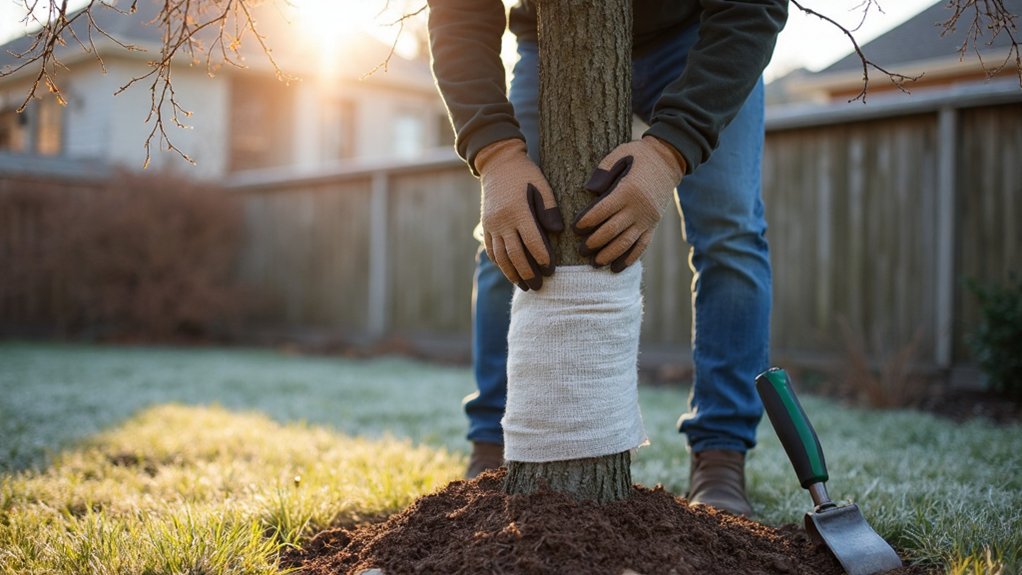
- Wrap young trees with tree wrap or fabric to protect bark from animal damage and winter winds
- Avoid ice melt near trees since chemicals damage sensitive root systems
Evergreens and young trees especially benefit from these protective measures during St. Louis winters.
Winter Watering Strategies for St. Louis Climate
Why do many St. Louis trees struggle during winter months? They’re often victims of desiccation, not just freezing temperatures. You’ll need to water before the ground freezes completely to help your trees survive the cold effectively.
Winter watering provides essential soil moisture that insulates root systems and prevents complete freezing. Deciduous trees benefit, but evergreens with active evergreen foliage require special attention since they’re most vulnerable to winter burn. You should apply long, slow soaks before temperature drops menace your landscape.
Proper soil moisture allows roots to continue growing through porous soil during the winter season. This preparation helps maintain your trees healthy and ready to defend against harsh conditions. Focus especially on broadleaf evergreens and other susceptible species that maintain active tissue throughout winter.
Managing Snow and Ice Damage Prevention
When heavy snow and ice accumulate on tree branches, the added weight can cause significant structural damage that threatens your trees’ long-term health. Professional tree service experts recommend proactive measures to protect your trees from harsh conditions and cold temperatures.
Here’s how to prepare your trees for winter ice and snow:
- Gently remove accumulated snow from branches using a broom to prevent breakage from excessive weight
- Maintain proper pruning through routine maintenance to reduce branch vulnerability during storms
- Apply anti-desiccant sprays to evergreens, helping reduce moisture loss from winter burn
- Focus on fall watering instead of winter irrigation when soil freezes
Make sure you complete these protective measures before severe weather arrives. Regular tree service consultations and preventive care will keep your trees healthy throughout winter’s most challenging months.
Frequently Asked Questions
How Do You Protect Trees in Cold Weather?
You’ll protect trees in cold weather through proper mulching techniques, trunk wrap installation, and young tree protection. Apply anti desiccant applications, guarantee root zone insulation, follow seasonal pruning schedules, and maintain cold weather monitoring for ideal survival.
What Steps Does a Tree Take to Prepare for Winter?
You’ll notice trees undergo dormant bud formation, nutrient storage, and leaf shedding. They’ll reduce photosynthesis and transpiration while enhancing frost tolerance. Root growth continues as bark thickening and branch hardening occur, preparing for winter’s harsh conditions.
Should I Cover My Trees for Winter?
Why risk winter’s wrath? You should cover young, thin-barked trees using tree wrap techniques and frost protection fabric. Focus on insulating young trees, preventing frost cracks, and mulching tree bases while safeguarding against rodents for ideal protection.
How Do You Winterize a Tree?
You’ll winterize trees by removing damaged branches first, then applying mulch around the base to insulate roots. Water thoroughly before freezing, wrap young trees, and regularly remove ice buildup to prevent damage.
Conclusion
You’ve learned the essential steps to protect your trees through St. Louis’s harsh winters. From evaluating health and pruning properly to shielding bark, roots, and managing ice damage, you’re now equipped with proven strategies. But here’s the real question: isn’t investing time now worth years of healthy, thriving trees in your landscape? Don’t wait until the first freeze hits—start implementing these protective measures today and you’ll thank yourself come spring.