
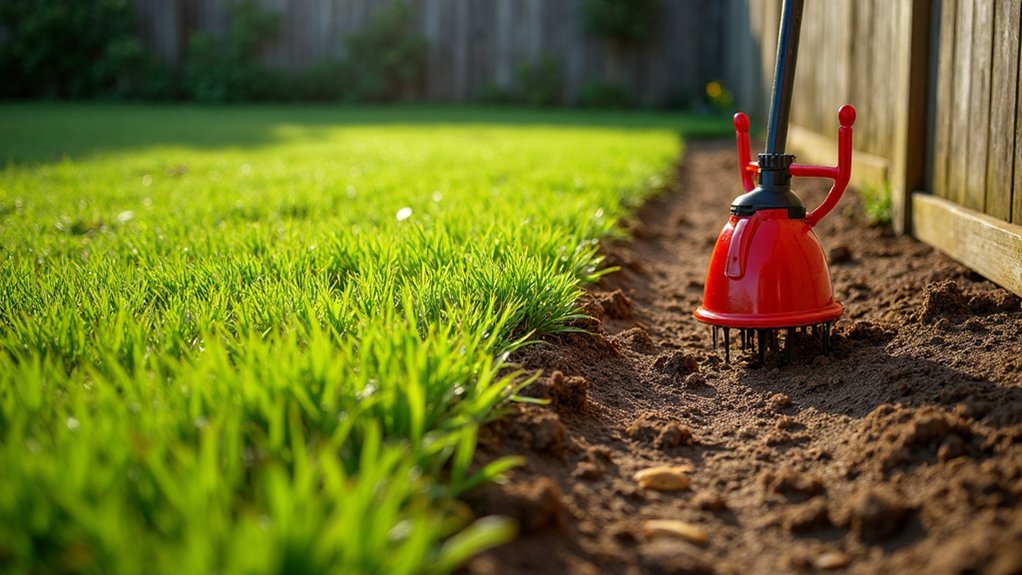
You’ve probably noticed those telltale brown patches and muddy trails crisscrossing your once-pristine lawn. Your dog’s daily routines are slowly transforming your yard into a compacted, waterlogged mess where grass struggles to survive. While you love your furry companion, you’re watching your landscaping investment deteriorate with each passing season. The good news? There’s a systematic approach to reversing this damage that doesn’t require choosing between a beautiful lawn and your beloved pet’s freedom.
Key Takeaways
- Core aeration twice yearly in spring and fall removes soil plugs, allowing air and water to penetrate compacted areas.
- Focus aeration efforts on high-traffic zones like gates, doors, and pet lounging spots where soil compaction is most severe.
- Make multiple passes with closely spaced tines over severely compacted areas to effectively restore proper drainage and root growth.
- Combine aeration with overseeding using durable sports turf varieties to strengthen grass in areas prone to pet traffic damage.
- Apply gypsum-based products after aeration to leach harmful salts from urine-damaged soil and improve grass recovery rates.
Understanding Soil Compaction From Pet Traffic
Every time your dog runs across your lawn, plays fetch, or follows the same path to their favorite spot, they’re gradually compacting the soil beneath their paws. This pet traffic creates lawn compaction by reducing pore space in the ground, making it harder for water to penetrate and grass roots to grow deep.
Compacted soil becomes dense and hard, preventing your lawn from recovering naturally. You’ll notice thin or bare patches where your dog frequently travels, especially near gates, doors, or favorite lounging areas. While you can’t completely eliminate soil compaction – it happens naturally even without pets – you can manage it effectively.
The solution lies in regular aeration. A core aerator removes small plugs of compacted soil, restoring proper drainage and giving grass roots room to flourish again.
Identifying Signs of Lawn Compaction and Pet Damage
Before you can tackle compaction issues, you need to recognize what compacted soil and pet damage actually look like in your yard. Compaction occurs when soil becomes so dense that water pools on the surface instead of absorbing. You’ll notice puddles lingering after rain or watering, even on relatively flat areas.
Pet damage appears in several distinct patterns. Urine spots create circular brown patches surrounded by dark green spots where nitrogen acts as fertilizer. These rings expand over time as your dog repeatedly uses the same areas. Lawn damage also manifests as worn pathways where your pet regularly walks or runs.
Test soil hardness by pushing a screwdriver into the ground—compacted areas resist penetration and feel rock-solid underneath your feet.
Core Aeration Techniques for Compacted Soil
Core aeration stands as the most effective solution for breaking up compacted soil beneath your dog’s favorite spots. This technique uses a machine with hollow tines to remove small plugs of soil, creating channels that allow air, water, and nutrients to penetrate deep into the ground. Unlike spike aeration, which simply punches holes, core aeration actually removes soil to relieve soil compaction more effectively.
For ideal lawn health, perform core aeration twice yearly during spring and fall seasons. Focus extra attention on high-traffic areas where your dog frequently runs and plays. These zones, along with spots damaged by dog urine, benefit from multiple aeration sessions throughout the year. Use closely spaced tines and make several passes over severely compacted areas to maximize grass recovery and growth.
Preventing Urine Burn Through Proper Hydration and Training
While core aeration addresses soil compaction, preventing urine burn requires a proactive approach focused on diluting your dog’s waste before it damages your lawn. You can increase your dog’s water intake by switching to wet food or ensuring constant access to fresh water. This dilutes urine concentration and prevents nutrient overload that burns grass roots.
Training your dog to urinate in designated areas simplifies maintenance and protects your main lawn. When accidents happen, immediately water the affected spot thoroughly to dilute nitrogen and flush the soil, preventing those unsightly dog urine spots.
Regular application of Lawn Cal provides calcium and sulfur that neutralize excessive salts in soil. Combined with proper hydration and training your dog, these strategies effectively prevent damage while maintaining your lawn’s health.
Managing Pet Waste to Protect Grass Health
Beyond prevention strategies, you’ll need to actively manage your pet’s waste to maintain grass health and prevent long-term damage. Promptly cleaning up pet feces prevents nitrogen overload that can devastate your lawn care efforts. Consider designating a specific relief area with mulch or gravel to contain the impact of dog urine rather than letting it spread across your entire yard.
When damage occurs, apply gypsum-based products to help leach harmful elements from the soil and promote grass recovery. Address soil compaction in high-traffic areas through regular aeration, then follow up with overseeding using durable sports turf blends containing perennial ryegrass. This proactive waste management approach, combined with strategic lawn treatments, will keep your grass healthy despite your pet’s natural behaviors and create a more resilient outdoor space.
Selecting High-Wear-Tolerance Grass Varieties for Pet Areas
Foundation planning for your pet-friendly lawn starts with selecting grass varieties engineered to handle constant paws, claws, and play sessions. You’ll want to prioritize high-wear-tolerance options that can withstand your dog’s daily activities while maintaining a beautiful outdoor space.
Consider these top-performing varieties for pet areas:
- Sir Walter DNA certified – Exceptional wear tolerance with superior recovery rates
- Couch (Tiff Tough Hybrid Bermuda) – Fast-growing with outstanding wear resistance
- Sports field turf varieties – Built to handle intense foot traffic and heavy use
- Local climate-adapted options – Consult lawn experts for region-specific recommendations
Faster-growing grass varieties offer dual benefits: they resist damage better and help seeded areas recover quickly from pet-related wear. When selecting grass seed, focus on varieties that’ll help your grass to grow back rapidly after any lawn damage occurs.
Creating Designated Relief and Play Zones
Even with the most durable grass varieties, you’ll achieve better lawn preservation by establishing specific zones where your dog can relieve themselves, play, and dig without damaging your primary grass areas. Create a designated relief area using mulch or gravel to contain urine damage and eliminate unsightly pee spots. This approach helps prevent dog urine from burning your grass and concentrates waste in manageable locations. Add a sandbox for natural digging instincts and establish a separate play zone for high-energy activities. These spots redirect destructive behaviors away from your main lawn. You can also place strategic obstacles along worn pathways to prevent compaction. This zoning system minimizes urine burn while maintaining your lawn’s overall health and appearance.
Seasonal Maintenance Schedule for Pet-Friendly Lawns
While designated zones protect your lawn from concentrated damage, maintaining a pet-friendly yard requires a strategic approach throughout the year. Timing your lawn care activities properly will help prevent extensive pet-related damage and keep your grass resilient.
Your seasonal maintenance should include:
- Early spring aeration and gypsum application – Core aerate to relieve winter compaction and apply gypsum-based products to guarantee urine damage
- Fall overseeding with wear-tolerant varieties – Choose perennial ryegrass or tall fescue for high-traffic areas around your lawn
- Strategic fertilizer timing – Avoid summer fertilization when pets are most active outdoors
- Consistent mowing height – Maintain recommended cutting height to promote deeper root systems
Following this schedule secures keeping your lawn dry, healthy, and better equipped to handle your dog’s daily activities year-round.
Frequently Asked Questions
How to Fix Grass Ruined by Dogs?
You’ll need soil amendment techniques using Primera Sports Field Conditioner, then apply grass seeding options at heavy rates. Consider pet friendly groundcover choices, follow lawn fertilizer recommendations with Lawn Cal, and evaluate grass variety considerations for durability.
Can Dogs Go on the Lawn After Aeration?
After 24 hours post-aeration, you’ll find proper timing essential for your dog’s safety. Consider soil condition and grass types when planning irrigation needs, as your pet’s walking patterns can impact newly aerated areas considerably.
What to Put on a Lawn to Neutralize Dog Urine?
You can neutralize dog urine using diluted vinegar solution, limestone application, or urine absorbing granules. Follow up with topsoil overseeding and dog safe fertilizers to restore damaged areas and promote healthy grass growth.
Does Aeration Help With Dog Urine?
Aeration reduces compaction, improves drainage, enhances recovery – it definitely helps with dog urine damage. You’ll benefit from combining it with soil pH adjustment, urine odor neutralization, strategic lawn reseeding, modified irrigation schedules, and pet-friendly grass selection.
Conclusion
You’ve learned to identify compaction signs, you’ve mastered aeration techniques, and you’ve discovered prevention strategies. Now you’ll maintain a thriving lawn despite pet traffic. You’ll aerate regularly, you’ll train your dog effectively, and you’ll choose resilient grass varieties. Remember: consistent care prevents major problems, proper hydration reduces urine damage, and designated zones protect your lawn. You’re equipped with the knowledge—now you’ll implement these solutions for lasting results.