
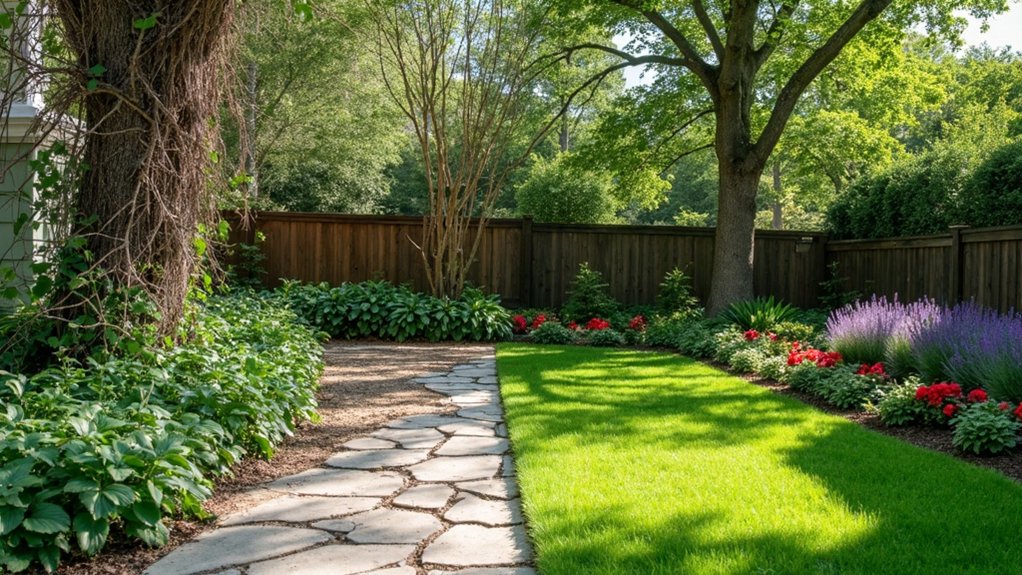
Like Sleeping Beauty’s castle overtaken by thorns, your overgrown property presents challenges that can’t be conquered with a simple weekend warrior approach. You’ll face invasive species, hidden hazards, and structural damage that require strategic planning and professional-grade techniques. The key lies in understanding which battles to fight first and selecting the right weapons for each phase of restoration. What you discover beneath that jungle of neglect might surprise you.
Key Takeaways
- Conduct thorough property assessment identifying structural damage, pest infestations, invasive species, safety hazards, and buried utilities before beginning restoration work.
- Budget comprehensively by considering property size, overgrowth severity, and frequency requirements while planning for multiple visits on heavily neglected landscapes.
- Use metal blade edgers with double-thick blades for severely overgrown properties, as they handle tough conditions better than string trimmers.
- Maintain full throttle speed and precise blade positioning within concrete grooves to achieve professional-quality edges on neglected lawn borders.
- Plan for regular equipment maintenance and blade replacements during initial cleanup visits due to increased wear from overgrown vegetation.
Assessing the Scope of Overgrown Property Challenges
When you first survey an overgrown property, you’ll quickly realize that what appears to be a simple cleanup job often involves multiple layers of challenges that aren’t immediately visible. Dense vegetation can hide structural damage, pest infestations, or hazardous materials requiring specialized removal. You’ll need to identify invasive plant species that demand different treatment approaches than native overgrowth.
Walk the entire perimeter to spot potential safety hazards like unstable trees, hidden debris, or uneven terrain. Document areas where utilities might be buried or overhead lines pose risks. Make sure you’re checking for property line markers to avoid encroaching on neighbors’ land during cleanup.
Consider soil conditions, drainage issues, and accessibility for equipment. This thorough assessment determines your cleanup strategy, timeline, and budget requirements.
Budget Planning for Comprehensive Yard Restoration
After completing your property assessment, you’ll need to establish a realistic budget that accounts for the full scope of restoration work ahead. Your property size, overgrowth severity, and required maintenance frequency will directly impact costs. If you’ve got a higher budget, you can opt for thorough services including debris removal and decoration clearing.
Keep in mind that rural properties with larger areas might benefit from biweekly maintenance schedules, which often prove more cost-effective long-term. You should also expect that heavily overgrown edges may require multiple visits to achieve complete cleanup, affecting your overall budget planning. Before finalizing any restoration plan, guarantee you’ve communicated your budget constraints clearly and obtained permission for all proposed work to avoid unexpected expenses.
Choosing Between Metal Blade Edgers and String Trimmers
The choice between metal blade edgers and string trimmers profoundly impacts both your cleanup efficiency and long-term maintenance costs. When tackling overgrown properties that haven’t been maintained since last year, understanding each tool’s strengths becomes critical.
Consider these key factors when selecting your equipment:
- Metal blade edgers excel on overgrown properties but require double-thick blades for durability
- String trimmers work best for residential properties with shorter edging runs under two inches
- Learning curve favors metal blade edgers for new employees due to easier operation
- Physical demands vary, with string trimmers requiring less effort from proficient users
- Edge quality depends on proper technique—maintain full blade speed in concrete grooves
Your property size and condition should ultimately guide this decision.
Proper Techniques for Metal Blade Edger Operation
Mastering metal blade edger operation requires understanding that blade speed is everything—you’ll need to maintain full throttle throughout each pass to prevent the engine from bogging down in thick growth. Keep your blade positioned precisely within the concrete groove to achieve that crisp, well-defined edge homeowners expect.
When you’re called upon to tackle severely overgrown properties, invest in double-thick blades that’ll withstand the punishment and last considerably longer than standard options. Remember that initial passes on neglected lawns will wear blades quickly, so plan for regular replacements during your first service visit.
The good news? These techniques are straightforward to master and easily teachable to your crew members, ensuring consistent, professional results across all your edging projects.
Mastering String Trimmer Skills for Precision Edging
While string trimmers demand more finesse than metal blade edgers, they’ll become your go-to tool for precision work once you’ve developed the proper technique. Though a little more challenging to master initially, string trimmers offer unmatched versatility for negotiating tight spaces and obstacles during overgrown yard cleanups.
Key techniques for precision string trimmer edging:
- Maintain full throttle speed on the trimmer head throughout operation
- Hold the tool at the proper angle against sidewalks and flower bed edges
- Use controlled movements to prevent creating divots in the lawn
- Practice maneuvering around obstacles and confined areas
- Focus on shorter edging runs to minimize physical fatigue
With consistent practice, you’ll achieve clean, professional results while efficiently handling smaller residential properties that require quick, precise edging work.
Managing Multiple Visit Cleanup Strategies
When tackling severely overgrown properties, you’ll often need to break the work into multiple visits to achieve professional results without overwhelming your schedule or your client’s budget. Start by prioritizing the most visible areas and safety concerns during your first visit. Corner lots and front-facing sections typically require more physical effort, so plan these strategically across your schedule.
Effective client communication is essential for setting realistic expectations about the phased approach. Explain which areas you’ll address first and why, helping them understand the restoration timeline. Before each visit, obtain permission to remove yard debris and decorations that might obstruct your work. Use proper techniques like running your metal blade edger at full speed to maximize productivity and avoid equipment bogging down in thick vegetation.
Maintaining Equipment and Blades for Optimal Performance
How can you maintain peak equipment performance during demanding overgrown property cleanups? Blade maintenance becomes critical when tackling neglected landscapes that’ll quickly dull your cutting tools.
Your equipment strategy should focus on these essential maintenance practices:
- Inspect blades and strings frequently – Overgrown properties wear out cutting components faster than regular maintenance
- Stock double-thick blades for metal edgers – They’ll last substantially longer on first-service overgrown properties
- Keep metal blade edgers at full speed to prevent bogging down in thick vegetation
- Maintain blades in concrete grooves when edging to preserve clean lines and extend blade life
- Replace worn components immediately – Dull blades create ragged cuts and increase operator fatigue
You’ll find that proper blade maintenance not only improves cut quality but reduces the physical strain on your crew during these demanding cleanup projects.
Frequently Asked Questions
How to Redo Overgrown Landscaping?
You’ll start by clearing weeds and debris, then aerate and enrich soil. Prune overgrown plants, install new vegetation suited to your climate, and consider alternative landscape design options like native plants or xeriscaping for easier maintenance.
How Much Does It Cost to Clear an Overgrown Yard?
Picture tangled weeds choking your once-pristine garden. You’ll pay $200-$1,500 for overgrown yard clearing, depending on severity and size. Hourly rates typically run $50-$100, while small residential cleanups average $300-$500 for initial restoration.
How to Reclaim an Overgrown Lawn?
You’ll start by clearing debris and weeds with edgers and trimmers. Establish mowing schedule optimization through biweekly maintenance initially, then adjust frequency based on your lawn’s recovery progress and growth patterns.
How to Rejuvenate Your Yard?
Like awakening a sleeping giant, you’ll rejuvenate your yard through consistent seasonal maintenance. Trim overgrown areas, edge walkways, adjust mowing heights, and clear debris regularly. You’ll transform your landscape by maintaining proper care schedules year-round.
Conclusion
You’ll watch tangled vines retreat and wild grasses bow as your restored landscape emerges from chaos. The crisp lines you’ve carved with proper edging techniques frame neat flower beds where weeds once ruled. Fresh mulch catches morning dew like scattered diamonds, while pruned shrubs stand at attention along your walkways. You’ve transformed an abandoned jungle into a welcoming sanctuary that’ll make neighbors pause and admire your hard-earned handiwork.