
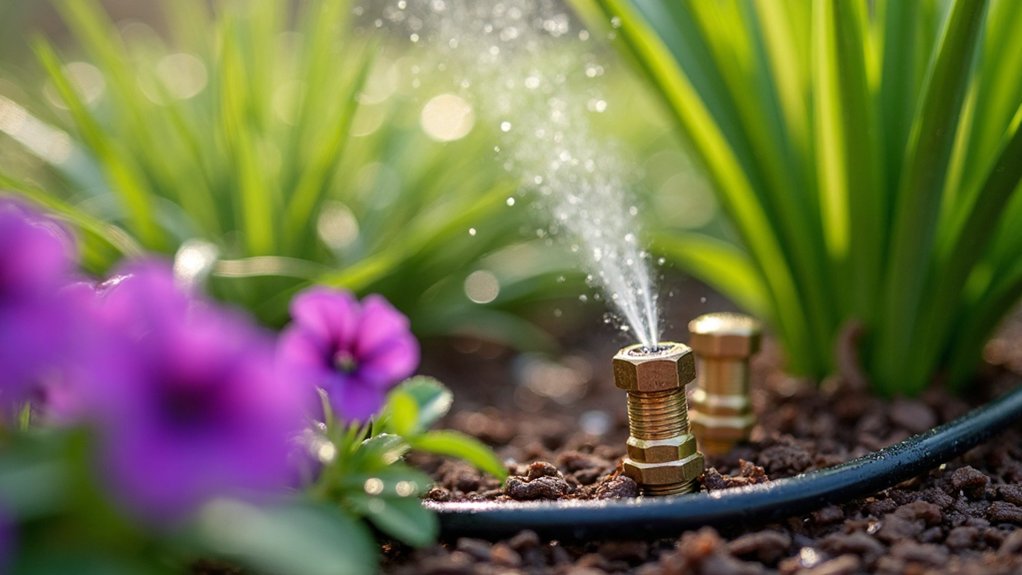
You’ve probably watched your water bill climb while your plants struggle with inconsistent moisture levels from traditional sprinklers. Micro-irrigation systems change this dynamic entirely, delivering water directly where your plants need it most at flow rates up to 90% more efficient than conventional methods. Whether you’re managing a small herb garden or extensive landscaping, these targeted solutions can transform how you approach plant care while dramatically reducing waste and costs.
Key Takeaways
- Drip irrigation systems deliver 90% water efficiency with emitters providing 0.5-4 gallons per hour directly to plant roots.
- DIY perforated hose systems offer durable, cost-effective micro-irrigation that connects to rain barrels for sustainable watering.
- Soaker hoses buried beneath soil provide precise root-level moisture delivery, ideal for raised beds and garden borders.
- Garden Grid technology enables modular, expandable coverage with plant-level precision and lightning-fast 1-minute setup.
- Micro-irrigation reduces water bills, prevents evaporation loss, and promotes healthier plants with stronger root systems.
Understanding Drip Irrigation Systems and Components
When you’re looking to maximize water efficiency in your garden or landscape, drip irrigation systems offer the most precise and economical solution available. These systems utilize distribution tubing networks with strategically placed emitters that deliver water directly to plant root zones. You’ll find emitters available in various configurations, including drippers and micro-sprays, with water flow rates ranging from 0.5 to 4 gallons per hour for customized watering based on specific plant requirements.
Essential components include pressure regulators that maintain consistent performance and specialized fittings connecting your system to water sources. This targeted approach achieves 90% water delivery efficiency while dramatically reducing water loss through evaporation compared to traditional overhead sprinklers. Proper emitter spacing and flow rate selection guarantee even distribution across your landscaped areas.
DIY Micro-Irrigation Setup Using Common Materials
Building your own micro-irrigation system doesn’t require expensive specialized equipment or professional installation. You can create an effective drip watering solution using a standard garden hose by simply poking small holes along its length. This homemade system has proven remarkably durable, withstanding harsh winter conditions while remaining functional for over two years.
Place your perforated hose over the garden area you want to water, then compare results with traditional watering methods. You’ll find this inexpensive system makes gardening vastly easier and proves worth the investment. You can expand it by adding branches to accommodate raised beds or larger areas. For enhanced sustainability, connect your DIY drip system to rain barrels, creating an efficient and reliable watering solution that benefits your entire garden.
Comparing Sprinkler Systems vs. Targeted Watering Methods
Most gardeners face a fundamental choice between sprinkler systems that cast water broadly across their landscape and targeted methods that deliver moisture directly where plants need it most. Your garden watering system choice substantially impacts both water efficiency and plant health.
Sprinkler systems provide convenient coverage but lose water through evaporation. Meanwhile, drip systems and soaker hoses connected to your garden hose deliver water straight to roots with minimal waste.
Consider these emotional benefits of targeted watering:
- Watch your water bills shrink dramatically
- Feel proud knowing you’re conserving precious resources
- Enjoy healthier plants with stronger root systems
- Reduce frustration from wilted, overwatered plants
- Experience satisfaction from precise garden care
You can even combine both approaches, using buried soaker hoses for targeted watering while maintaining sprinkler zones for broader coverage areas.
Benefits and Applications of Soaker Hoses
Soaker hoses transform your watering routine by delivering moisture precisely where it’s needed most. Unlike traditional sprinklers, these porous tubes direct water straight to plant roots, eliminating wasteful evaporation and overspray. You’ll find them particularly effective in raised beds and along garden borders where precision matters.
Installing your Garden Drip system is straightforward—simply bury the hoses just beneath the soil surface. This creates an efficient Garden Grid that guarantees water reaches root zones without saturating unnecessary areas. When you water a garden using this Grid Watering System, you’re maximizing efficiency while minimizing waste.
Exercise caution with sharp tools around buried hoses to prevent punctures. Consider adding one timer to automate watering schedules, maintaining consistent moisture levels while saving time and effort in your daily garden maintenance routine.
Garden Grid Technology and Coverage Solutions
While soaker hoses excel at targeted watering, Garden Grid technology takes precision irrigation to the next level with engineered coverage patterns that eliminate guesswork.
You’ll discover Garden Grids transform any raised bed into an efficiently watered space through precise square foot coverage. Simply connect to your hose end or rain barrel, and you’re ready for worry-free irrigation. The system’s modular design adapts from 22.5 to 110 inches, perfectly matching your garden bed dimensions.
Experience these compelling advantages:
- Lightning-fast setup – Just 1 minute to transform your watering routine
- Expandable coverage – Connect multiple grids using manifolds for larger areas
- Plant-level precision – Water reaches roots exactly where needed
- Built-to-last durability – U.S.-made LLDPE tubing withstands seasons
- Rapid delivery – Ships within 1-6 business days
Make sure you’re maximizing every drop while minimizing effort.
Automated Watering With Timers and Smart Controls
Once you’ve established your micro-irrigation layout, timers and smart controls transform your system from manual operation into a hands-free watering powerhouse. Electronic timers offer precise scheduling that prevents over-watering during rainy periods, while cheaper mechanical timers provide basic automation by attaching directly to your spigot.
Smart controllers elevate your automated systems by adjusting schedules based on weather forecasts and specific plant requirements. You’ll achieve ideal results by monitoring soil moisture levels to fine-tune your watering intervals. These automated systems deliver significant water conservation benefits compared to manual watering methods, reducing both water waste and energy consumption.
Whether you choose basic mechanical timers or advanced smart controllers, automation guarantees consistent watering while eliminating the guesswork from your irrigation routine.
Design Considerations for Plant Layout and Water Distribution
When planning your micro-irrigation system, you’ll need to group plants with similar water requirements together to maximize efficiency and prevent waste. This strategic approach guarantees every plant receives optimal hydration while conserving water resources.
Consider these essential design elements for maximum impact:
- Create zones – Separate thirsty vegetables from drought-tolerant herbs in each planting area
- Plan gentle streams – Position emitters to deliver soft water flow that won’t disturb delicate roots
- Maximize raised bed potential – Install drip lines along elevated growing spaces for superior drainage control
- Scale appropriately – Design your small garden layout to accommodate future expansion needs
- Balance coverage – Ensure uniform water distribution across all planted areas without oversaturating soil
Proper planning transforms ordinary irrigation into precision plant care.
Durability and Maintenance Requirements for Long-Term Use
Although initial installation requires careful planning, your micro-irrigation investment will pay dividends through years of reliable operation with minimal upkeep. Garden Grid systems constructed from UV-resistant LLDPE tubing and ABS plastic fittings outlast traditional options by 5-10 times. Unlike systems installed in existing raised beds years ago that required constant emitter replacements, these durable grids have no fragile components to break or clogged spray nozzle mechanisms to clean.
The robust design means less pressure on your maintenance schedule. Original systems from 2013 continue working effectively today, proving their longevity. Your raised bed installations will work well season after season without tangled tubes or frequent repairs. With proper winter protection, you’ll enjoy hands-free garden hydration for many years while spending minimal time on system upkeep.
Frequently Asked Questions
What Are the Disadvantages of Micro Sprinkler Irrigation?
You’ll face limited coverage area requiring more units, high installation costs, potential clogging issues, susceptibility to wind affecting spray patterns, increased maintenance needs, and risk of uneven distribution creating dry spots in your irrigation system.
What Type of Irrigation Is Best for Flower Beds?
Why settle for wasteful overhead sprinkler systems? You’ll find drip irrigation systems excel for flower beds, offering superior water conservation benefits. Consider installation considerations, maintenance requirements, and soil moisture sensors for ideal results.
What Is the Best Irrigation for Garden Beds?
You’ll find drip irrigation best for garden beds because it targets plant root systems directly, maximizes water usage efficiency, monitors soil moisture levels effectively, provides precise application coverage, has simple installation requirements, and minimal maintenance considerations.
What Are Two Different Types of Micro Irrigation Methods?
Drip irrigation uses 20-50% less water than traditional sprinklers. You’ll find drip irrigation delivers water directly to roots through emitters, while micro mist irrigation provides gentle spray coverage for delicate plants and seedlings.
Conclusion
You’ve discovered dynamic drip systems and savvy soaker solutions that deliver decisive water savings. Whether you’re crafting custom configurations with common components or implementing intelligent irrigation infrastructure, these targeted techniques transform traditional watering waste. Your garden’s growth will greatly benefit from precise placement and consistent coverage. Don’t delay—design your dedicated micro-irrigation method today. Smart systems save significant water while supporting spectacular plant performance through focused, efficient delivery that directly reaches roots.