
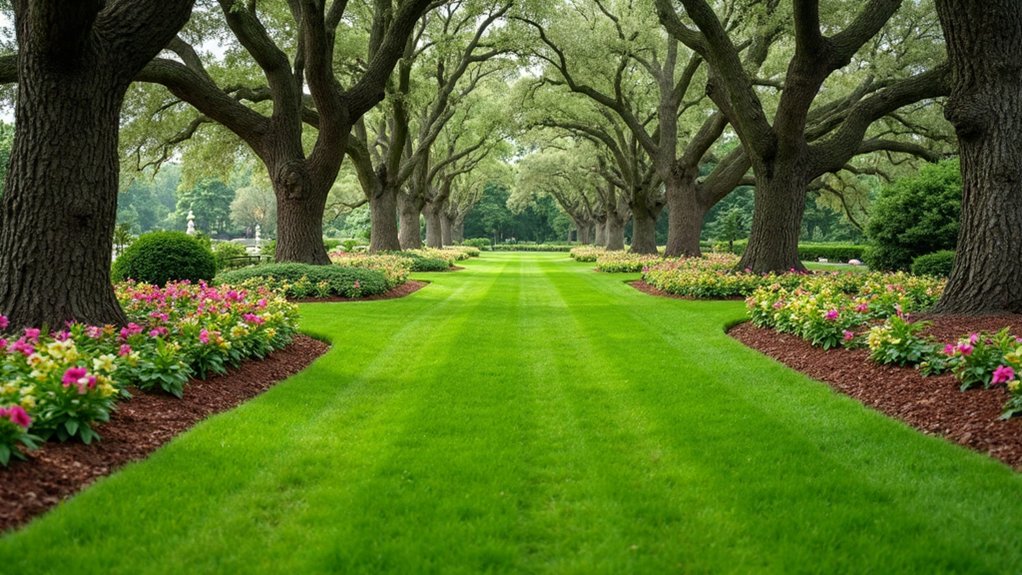
It’s funny how you’ve probably walked past countless perfectly manicured lawns without noticing the precise trimming work around trees and flower beds—until you’re standing in your own yard wondering how to achieve that same polished look. You’ll quickly discover that trimming near landscape features isn’t just about aesthetics; it’s a delicate balance between protecting your plants and creating those crisp, professional edges that separate amateur yard work from truly exceptional lawn care.
Key Takeaways
- Keep mowers and string trimmers 2-3 feet away from tree trunks to protect bark and root systems from damage.
- Create clean edges around flower beds using manual edgers and maintain 3-6 inch buffer zones between lawn and gardens.
- Apply 2-4 inches of organic mulch around trees and plants, extending to the drip line without piling against trunks.
- Use manual tools like hand pruners when working close to tree bases and within delicate flower bed areas.
- Install permanent edging materials such as stone, brick, or plastic barriers to define landscape borders and reduce maintenance.
Essential Tools and Equipment for Precision Lawn Trimming
When maintaining lawns around delicate landscape features, you’ll need specialized tools that offer both power and precision control. A high-quality string trimmer with adjustable speed settings lets you carefully navigate around trees and flowers without causing damage to bark or stems. You’ll want a manual edger to create sharp, professional lines along walkways and tree bases, instantly elevating your landscaping design.
For shrub maintenance, invest in a hedge trimmer with interchangeable blades to shape ornamental plants around your landscape space. A pole saw attachment eliminates ladder risks when pruning high tree branches, ensuring safer operation. Finally, choose a lawn mower featuring a vertical-lift deck design – this allows closer cutting around trees and landscape elements, reducing your manual trimming workload substantially.
Trimming Techniques Around Tree Bases and Root Systems
Although tree roots extend far beyond what’s visible above ground, most homeowners make the critical mistake of trimming too close to the trunk and damaging these essential systems. You’ll need proper techniques to protect your yard’s valuable trees while maintaining clean edges.
When trimming around your tree, follow these essential steps:
- Create protective boundaries – Install landscape edging around your tree to prevent mower encroachment and define the protected zone clearly.
- Hand-trim carefully – Use manual tools near the tree trunk instead of mechanical equipment to avoid severing tree roots or causing bark damage.
- Maintain proper mulch coverage – Apply 2-4 inches of mulch extending to the drip line, suppressing weeds naturally. Avoid piling mulch around the trunk, which causes moisture problems and pest issues.
Managing Grass Growth Near Flower Beds and Garden Borders
While trees require careful root protection, flower beds and garden borders present their own unique trimming challenges that demand equally precise techniques. You’ll need a lawn edger or string trimmer to create clean lines along your garden perimeters, preventing grass encroachment into cultivated areas. Maintain a 3-6 inch buffer zone between your lawn and garden edges to eliminate competition for water and nutrients.
Apply 2-4 inches of organic mulch like wood chips around your plants to naturally suppress grass growth while retaining moisture. Keep mulch properly distributed for maximum effectiveness. When outdoor maintenance reveals persistent weeds within beds, carefully hand-pull them to protect plant roots. Consider installing permanent edging materials such as stone, brick, or plastic barriers. This landscape design approach creates defined borders that contain grass growth while enhancing your overall landscaping around trees and garden features.
Safety Considerations When Working Around Mature Trees
Creating pristine lawn edges around garden beds requires skill, but working near mature trees demands heightened awareness of potential hazards. Trees often have extensive root systems extending far beyond their canopy, making lawn care around them particularly challenging. Following proper safety protocols will help your trees stay healthy while maintaining your landscape’s overall beauty.
Essential safety measures include:
- Maintain proper distance – Keep lawn mowers and string trimmers 2-3 feet away from tree trunks to protect bark and sensitive roots
- Use manual tools – Switch to loppers or hand pruners when working inches away from the base instead of power equipment
- Preserve mulch barriers – Keep mulch in place around trees to improve airflow and create a protective buffer zone
Adjust mowing height to prevent scalping grass near trunks, which exposes roots to damaging sunlight.
Seasonal Timing for Optimal Lawn Maintenance Results
Since proper timing can make the difference between a thriving lawn and a struggling one, you’ll want to align your maintenance schedule with your grass’s natural growth cycles. Plan your yard work during spring and summer’s active growing seasons for optimal results. You’ll create better curb appeal by raising mowing heights during summer’s hottest months, reducing grass stress while preventing weeds from establishing a focal point in your landscape.
Schedule dethatching and aeration for early spring or fall when you can make adjustments without damaging growth. Circle around trees and flowers carefully during these maintenance windows. Fall’s ideal for overseeding cool-season grasses when soil temperatures support establishment. Add a layer of mulch after trimming, and guarantee landscape lighting illuminates your well-maintained areas for maximum visual impact.
Creating Clean Edge Lines Around Landscape Features
Beyond timing your maintenance activities correctly, you’ll need sharp, defined boundaries to showcase your landscaping investments. Creating clean edge lines transforms your outdoor living space from ordinary to professionally maintained. Use a lawn edger or spade to cut crisp boundaries between grass and flower beds, preventing encroachment into planted areas.
Essential edging techniques for your outdoor space:
- Trace consistent lines – Follow the same path 2-3 times per growing season to reinforce uniform boundaries around the trees and landscape features
- Angle your blade properly – Cut at a slight angle and remove excess soil debris for ideal-looking results
- Maintain plant health zones – Keep grass away from mulch volcano areas and tree bases to promote excellent growing conditions
Regular edging elevates any landscaping services investment while maintaining tidy, defined boundaries.
Protecting Plants While Achieving Professional-Looking Results
When you’re trimming around delicate landscape features, precision becomes your most valuable tool. Set your trimmer’s cutting height to 3-4 inches and use flexible plastic line to protect plants while maintaining professional results. Make slow, controlled passes with the trimmer head parallel to the ground, avoiding direct contact with tree bark at the base of the tree. This prevents disease and insect damage that can ruin your landscaping design.
Apply organic mulch like wood chips around trimmed areas to create a beautiful, finished appearance. Whether you’re working near a water feature or plants that attract wildlife, keep your equipment well-maintained by replacing line regularly and cleaning the guard. These careful techniques guarantee your landscaping projects achieve that coveted professional look without compromising plant health.
Maintenance Schedules for Different Landscape Elements
Achieving those professional results requires following specific maintenance schedules tailored to each landscape element. Different types of plants demand varying attention levels, and understanding these requirements prevents common mistakes that can damage your home’s architecture integration.
Your maintenance calendar should include:
- Weekly lawn mowing during growing season, adjusting blade height around trees and flowers to avoid scalping damage
- Monthly edging around landscape features to maintain clean borders that even provide enhanced curb appeal
- Seasonal deep care including pruning shrubs every 1-2 years and annual tree trimming in late winter
Many landscaping ideas require little maintenance when planned correctly. Perennial beds need attention 2-3 times per season, including mulch replenishment applied 2-3 inches deep for ideal plant health and weed suppression.
Frequently Asked Questions
What Is the Rule of 3 in Landscaping?
You’ll use the Rule of 3 by grouping plants in odd numbers for visual appeal. Consider mulch depth recommendations, soil aeration techniques, and root protection methods when arranging three trees or shrubs together for balanced landscape design.
Should You Cut Grass Around Trees?
Like Goldilocks finding “just right,” you shouldn’t cut grass directly around trees. Instead, apply tree mulch for root zone considerations and use low maintenance groundcovers, avoiding tree damage from soil compaction issues while ensuring proper tree bark protection.
What Are Examples of Landscape Features?
You’ll find various landscape features in yards including hardscaping elements like walkways and decorative stones, water features such as birdbaths, raised beds for planting, and artistic garden sculptures that enhance your outdoor space’s beauty.
What Is Best for Landscaping Around a Tree?
You’ll want to create tree wells with proper mulch depth for root protection. Edge trimming prevents soil compaction in the root zone while meeting irrigation needs. Maintain adequate spacing to avoid resource competition.
Conclusion
You’ve probably heard that frequent trimming damages trees and plants—but that’s only half true. The real culprit isn’t frequency; it’s poor technique. When you’re trimming too close to bark or cutting at wrong angles, you’ll cause harm regardless of timing. Master the proper distance, use sharp tools, and maintain consistent schedules, and you’ll discover that regular maintenance actually strengthens your landscape rather than weakening it.