
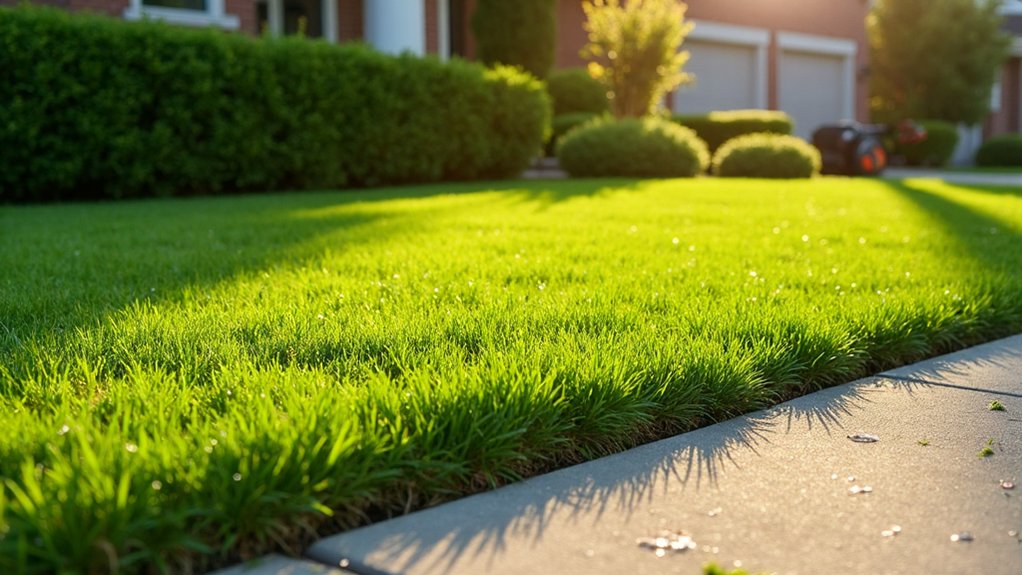
You’ve probably noticed how some lawns immediately catch your eye while others blend into the background. The difference isn’t always the grass itself—it’s those crisp, defined edges that separate professional-looking landscapes from amateur attempts. When you master the art of proper trimming and edging, you’ll transform your property’s entire appearance with surprisingly little effort. But there’s more to achieving those magazine-worthy results than simply running a trimmer along your walkways.
Key Takeaways
- Crisp, uniform lawn edges create visual contrast and prevent grass encroachment, significantly boosting your home’s curb appeal and perceived value.
- Choose string trimmers for curved areas, wheeled edgers for straight borders, and edging shears for tight spaces to match tools with terrain.
- Mark boundaries with stakes and string, then work from the lawn’s perimeter inward while wearing essential safety gear like gloves and eye protection.
- Use steady, parallel-to-ground movements with string trimmers and slow, controlled passes with wheeled edgers for professional-looking results on different edge types.
- Perform weekly touch-ups with string trimmers and manual edgers in high-traffic areas to maintain clean edges between major trimming sessions.
Understanding the Impact of Professional-Looking Lawn Edges
Why do some lawns instantly catch your eye while others fade into the background? The answer often lies in professional-looking lawn edging that creates clean, defined boundaries between your grass and landscape elements. When you properly edge along sidewalks, driveways, and garden beds, you’ll prevent grass encroachment while achieving that polished, manicured appearance that vastly boosts curb appeal.
Crisp, uniform edges contribute to a cohesive look that increases your home’s perceived value and creates positive first impressions. You’ll also improve water management by containing grass growth to designated areas, reducing your overall lawn maintenance demands. Additionally, edging around trees, shrubs, and landscape features creates visually appealing contrast while preventing unsightly overgrowth from detracting from your property’s aesthetic appeal.
Selecting the Right Tools for Your Trimming and Edging Project
Achieving those professional-looking edges requires selecting the right combination of tools that match your lawn’s specific layout and your physical capabilities. String trimmers come in gas, electric, and cordless models, providing versatility for different situations. You’ll find they excel at maneuvering, traversing, or negotiating curves and following existing paths where precision matters most.
For straight, defined borders, wheeled lawn edgers work quickly and efficiently. If you need precise border shaping, consider bed edgers with zero-turn steering capabilities. These edging tools handle larger projects with professional results.
Don’t overlook hand tools like edging shears, which prove invaluable for tight, awkward spaces where power tools can’t reach effectively. The key is matching each tool’s strengths to your specific lawn edger needs and terrain challenges.
Planning Your Edging Strategy for Maximum Results
Before you fire up your trimmer or edger, developing a systematic approach will transform your edging project from haphazard cleanup into precise lawn artistry. Start by marking areas with stakes and string to establish clear boundaries that’ll guide your work. This preparation prevents costly mistakes and guarantees consistent results.
Begin edging at your lawn’s perimeter and work inward for maximum efficiency. When edging around curved areas, reach for your string trimmer, while straight paths require edging shears for clean lines. Don’t forget essential safety gear—gloves and eye protection are non-negotiable when operating power tools.
Plan to start and end at the same point to create seamless continuity. This strategic approach helps you edge your lawn like a professional, delivering the crisp edges that elevate your property’s curb appeal.
Step-by-Step Techniques for Different Edging Tools
Each edging tool requires a specific technique to deliver professional results, and mastering these methods will transform your lawn’s appearance. For string trimmers, maintain steady movement along curved flower beds and driveways, keeping the cutting head parallel to the ground. When using wheeled lawn edgers, guide them slowly along straight edges for clean cuts that complement your lawn mower’s work. Manual rotary edgers demand firm downward pressure while rolling the spiked wheel along desired lines. Edging shears work best with quick, precise snips in tight spaces your lawn mower can’t reach. Exercise caution around obstacles like rocks and mailboxes to protect your edging equipment. Bed edgers with zero-turn steering allow detailed border shaping through controlled, deliberate movements that enhance overall lawn edging precision.
Safety Precautions When Operating Trimming Equipment
While mastering proper edging techniques enhances your lawn’s appearance, prioritizing safety protects you from serious injuries that can occur with powerful trimming equipment. Before starting any trimming project, conduct a thorough equipment inspection to verify sharp blades and functioning safety guards.
Essential protective gear includes:
- Safety glasses to shield your eyes from flying debris
- Closed-toe shoes with good traction for stable footing
- Work gloves to protect your hands from cuts and vibrations
Keep children, pets, and bystanders at a safe distance during operation. Maintain proper posture and recommended grip positions when using handheld trimmers for better control. Always contact utility marking services before edging new areas to avoid damaging underground cables or pipes.
Timing Your Edging Sessions Throughout the Growing Season
Strategic timing transforms edging from a random chore into a systematic approach that maximizes your lawn’s visual impact throughout the year. Start at the growing season’s beginning when grass actively grows to establish crisp perimeters around your lawn edges. You’ll need to re-edge midway through the season, maintaining consistently clean, defined borders that enhance your property’s appearance.
Schedule edging sessions after mowing to remove stray grass clippings along the edges of your lawn. Before hosting outdoor events or entertaining guests, edge your lawn to guarantee a polished, tidy look that impresses visitors. Complete a final edging session in fall, preparing your lawn for dormant winter months while maintaining sharp lawn edges until spring returns.
Maintaining Clean Edges Between Major Trimming Sessions
Between your scheduled major edging sessions, you’ll maintain those sharp, professional-looking borders through simple weekly maintenance routines. These quick touch-ups prevent grass from creeping onto sidewalks and driveways while keeping your landscape looking professionally maintained.
Your midseason maintenance strategy should include:
- Weekly string trimmer touch-ups along established edge lines to catch new grass growth
- Quick manual edger passes in high-traffic areas where grass grows fastest
- Spot treatments around flower beds and hardscape changes that show early encroachment
Consistent maintenance between major sessions guarantees your property’s polished appearance throughout the growing season. A manual edger works perfectly for these lighter touch-ups, requiring minimal effort while delivering maximum visual impact. This approach prevents grass overgrowth and maintains the crisp boundaries that define professional landscaping.
Frequently Asked Questions
What Is the 1/3 Rule for Lawns?
The 1/3 rule means you shouldn’t cut more than one-third of your grass blade’s height when mowing. This lawn height adjustment protects your turf, encourages healthy growth, and maintains proper mowing frequency patterns throughout seasonal trimming guidelines.
How to Improve Curb Appeal With Landscaping?
You’ll enhance curb appeal by applying landscape design principles: create focal points, maintain symmetry, and incorporate sustainable gardening practices. Choose drought tolerant plant selection, add colorful perennials, and frame your home strategically.
Are You Supposed to Edge First or Mow First?
You should edge first, then mow. Proper edging technique requires ideal edging frequency of every other mowing session. Using proper edging equipment beforehand creates clean boundaries, preventing grass clippings from covering your freshly defined edges.
How to Edge Your Yard Like a Pro?
Cut to the chase—you’ll achieve professional results through proper tool selection, maintaining consistent technique along marked lines, and setting ideal edge height. Use systematic patterns, wear safety gear, and edge regularly for that crisp, manicured finish.
Conclusion
You’ve mastered the art of lawn perfection—like painting the Sistine Chapel, but with grass. Your edges now slice through landscapes with surgical precision, creating boundaries that’d make Robert Frost proud. You’ve transformed from weekend warrior to suburban artist, wielding trimmers like Michelangelo held his brush. Those crisp lines don’t just define your property; they’re your signature on the neighborhood canvas. Keep that momentum flowing—your lawn’s now poetry in motion, demanding nothing less than perfection.