
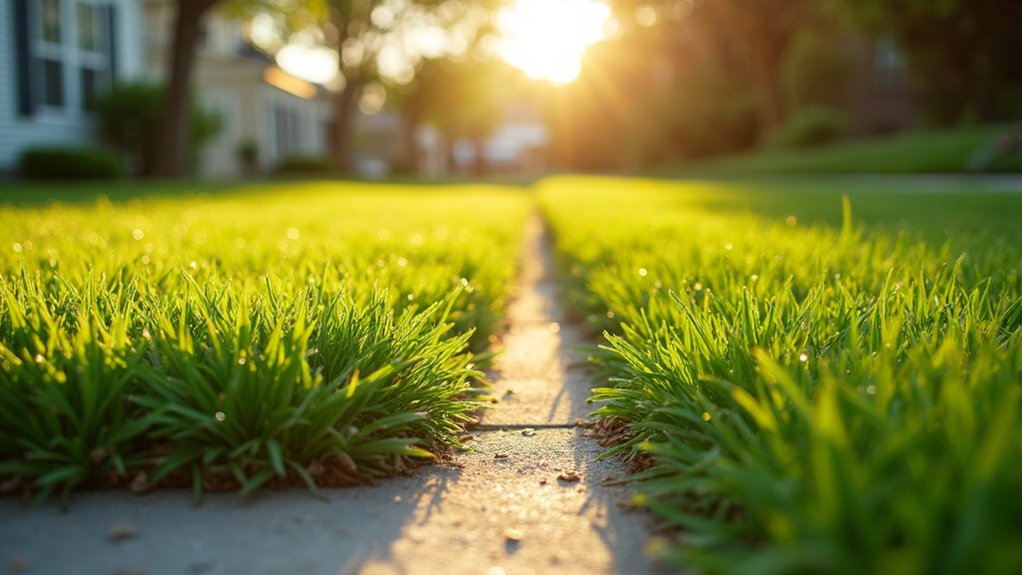
You probably don’t realize that most homeowners confuse lawn edging with trimming, treating them as interchangeable tasks when they’re actually distinct techniques serving different purposes. While both contribute to a polished landscape, edging creates sharp, defined borders along hardscapes, and trimming addresses areas your mower can’t reach. Understanding when and how to use each method will transform your yard maintenance routine and deliver the professional-looking results you’ve been missing.
Key Takeaways
- Edging creates precise vertical cuts along boundaries while trimming targets grass around obstacles mowers can’t reach.
- Edging establishes clean lines and separates grass from walkways, improving drainage and creating a polished appearance.
- Trimming fills mowing gaps and stops weed spread to maintain uniform coverage throughout the yard.
- Edging requires specialized tools and occurs every 4-6 weeks, while trimming uses string trimmers weekly.
- Combined edging and trimming transforms ordinary lawns into picture-perfect outdoor spaces with defined boundaries and consistent coverage.
What Is Lawn Edging and Its Primary Purpose
While lawn care encompasses many different techniques, edging stands out as one of the most impactful for creating visual definition. Edging creates precise vertical cuts along walkways, driveways, and garden beds, establishing clean lines that separate your grass from other surfaces. Unlike trimming, which involves horizontal cuts to maintain grass height, edging focuses on defining boundaries with sharp, perpendicular cuts into the soil.
The primary purpose of lawn edging is to give your landscape a uniform look and professional appearance. You’ll prevent grass and weeds from spreading into unwanted areas while making maintenance easier. Proper edging also improves drainage by keeping mulch and soil contained. This technique transforms an ordinary lawn into a polished outdoor space with crisp definition.
What Is Lawn Trimming and Why It Matters
Every homeowner knows that mowing alone won’t create the polished lawn you’re after. Lawn trimming fills the gaps your mower can’t reach, cutting grass around trees, fence posts, and tight corners using a string trimmer. This precision work keeps your yard looking uniform and professional.
The Difference Between Lawn Trimming and other maintenance tasks lies in its finishing role. While mowing handles the bulk area, trimming targets specific spots where weeds flourish unchecked. Without this indispensable step, your yard appears uneven and messy, undermining all your mowing efforts.
String trimmers excel at stopping weed spread while improving visual appeal. When you combine lawn trimming and edging with regular mowing, you’ll achieve that picture-perfect result. Remember, edging and trimming work together as essential components of thorough lawn care.
Key Differences Between Edging and Trimming Techniques
Though both edging and trimming enhance your lawn’s appearance, they serve distinctly different purposes in your maintenance routine. Edging creates precise boundaries along walkways, driveways, and flower beds using specialized tools that cut clean lines. You’ll typically perform this task every few months to safeguard grass from creeping into unwanted areas. Trimming, however, targets grass and weeds around obstacles where your mower can’t reach, using string trimmers for regular weekly care.
Professional edging services can transform your outdoor space by defining clear perimeters, while trimming guarantees consistent coverage throughout your yard. Take care to understand that larger properties benefit more from regular edging, keeping your lawn looking pristine and well-maintained year-round.
Essential Tools and Equipment for Each Task
Having the right tools makes all the difference when executing proper edging and trimming techniques. String trimmers excel at cutting the grass around obstacles and tight spaces, while dedicated edging tools create precise borders along walkways and flower beds. For trimming services, you’ll find battery-powered models perfect for small yards, but gas or corded options handle larger areas more efficiently. Using an edger guarantees your lawn makes clean, professional-looking boundaries that regular trimming can’t achieve.
Essential equipment considerations:
- String trimmers – Choose cordless for mobility or corded for consistent power
- Mechanized edgers – Best for regular edging along driveways and sidewalks
- Safety gear – Eye protection, closed-toe shoes, and long pants are mandatory
- Manual edgers – Rotary or half-moon styles work well for smaller gardens
- Maintenance tools – Keep blades sharp and be sure to keep equipment properly stored
Regular edging and trimming help your lawn look neat year-round.
Optimal Timing and Frequency for Edging Vs Trimming
Understanding when and how often to edge versus trim your lawn determines whether you’ll achieve that polished, professional appearance homeowners desire. You’ll need to edge every 4-6 weeks during growing season to create sharp boundaries along sidewalks and around trees. This prevents weeds in areas where grass meets pavement or landscaping features. Trimming requires more frequent attention—weekly or bi-weekly when your lawn looks overgrown and cut grass appears uneven around trees and shrubs.
Edging vs. trimming schedules depend on your climate, grass type, and growth rates. Taking care to time both tasks with your lawn’s growth cycle while wearing proper eye protection keeps everything looking its best. Consult local landscaping experts to determine ideal frequencies for your specific area and maintain professional results.
Benefits of Combining Both Practices for Lawn Health
When you implement both edging and trimming as part of your regular lawn care routine, you’ll create a synergistic effect that goes beyond simple aesthetics. Understanding the differences between these practices helps you maximize their combined benefits. Edging creates sharp, defined borders that prevent grass from invading areas where you might install a new flower bed, while trimming keeps overgrown areas tidy.
- Enhanced pest control: Trimming keeps weeds at bay while edging eliminates hiding spots for insects
- Improved drainage: Clean borders and trimmed areas promote better water flow throughout your landscape
- Professional appearance: The overall appearance becomes cohesive when both practices are done with a string trimmer and edging tools
- Healthier growth patterns: Regular maintenance involves cutting grass to ideal lengths consistently
- Easier maintenance: Combined practices keep it looking neat with less frequent interventions required, especially when wearing long pants for protection
Frequently Asked Questions
What Is the Difference Between Edging and Trimming?
You’ll find edging creates clean lawn borders around landscaping features, while trimming cuts grass in tight spots. Proper lawn edging technique prevents lawn encroachment, requiring less frequency than trimming for aesthetic appeal.
What Are the Disadvantages of Lawn Edging?
Edging’s a double-edged sword—you’ll face costly maintenance, time-consuming processes, and potential lawn damage. There’s risk of uneven edges, aesthetic disruptions, soil compaction, increased labor, blade damage, and you’ll need specialized equipment with limited flexibility.
What Are Common Mistakes When Edging?
You’ll create uneven edging with inadequate tool maintenance and incorrect edging technique. Overaggressive edging causes inconsistent depth, while insufficient preparation leads to irregular patterns. Don’t overlook safety precautions or forget disposing debris after cutting into your lawn.
What Is the Point of Edging Your Lawn?
Perfectly precise boundaries create crisp lines that’ll give your lawn a professional finish. You’ll achieve a manicured look with tidy edges, defined borders, and sharp shifts that deliver a clean aesthetic and neat appearance throughout your landscape.
Conclusion
You’ve discovered the secret to lawn perfection – but will you take action? Edging and trimming aren’t just chores; they’re your gateway to neighborhood envy. When you combine these powerful techniques, you’re not simply cutting grass – you’re crafting a masterpiece that whispers quality with every clean line. Don’t let another weekend pass watching your lawn’s potential fade. Pick up those tools and transform your ordinary yard into extraordinary outdoor art.