
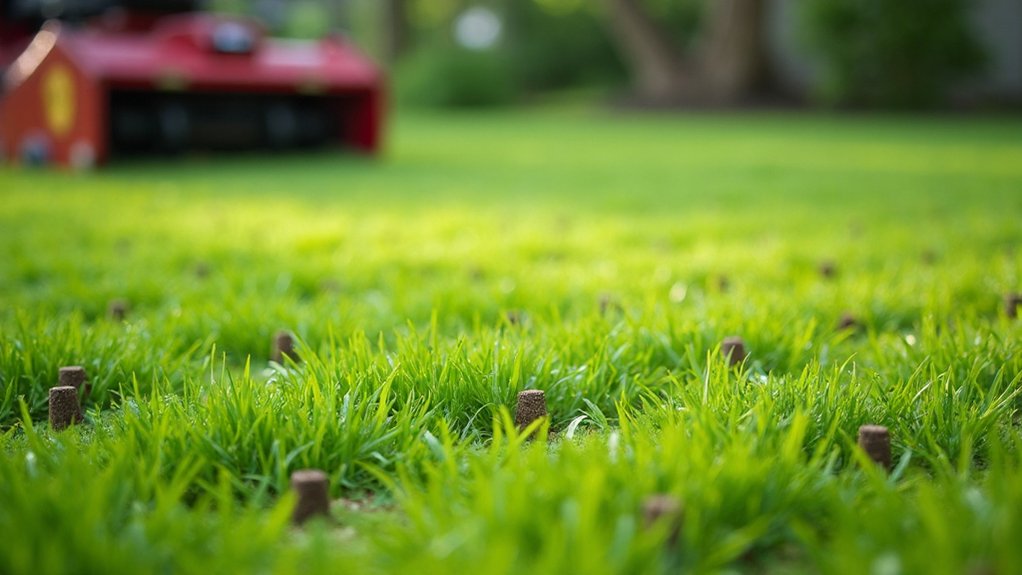
You’ve probably never considered that compacted soil can reduce your grass’s oxygen intake by up to 50%, slowly suffocating your lawn from below. While you’re focused on watering and fertilizing, your turf’s root system might be struggling to access the very nutrients you’re providing. Most homeowners don’t realize they’re watching their investment deteriorate until brown patches and persistent weeds signal deeper problems that could’ve been prevented with one simple maintenance practice.
Key Takeaways
- Regular aeration prevents soil compaction, allowing water and nutrients to reach grass roots for stronger, healthier turf development.
- Strategic seasonal timing strengthens root systems before weeds establish and prevents moss formation during wet periods.
- Enhanced water penetration reduces irrigation needs by up to 30% while improving drainage and preventing waterlogged soil conditions.
- Consistent aeration practices reduce long-term maintenance costs by up to 25% by preventing expensive lawn renovations.
- Improved nutrient absorption maximizes fertilizer effectiveness, creating thicker turf that resists disease, drought, and heavy foot traffic.
How Lawn Aeration Strengthens Root Systems and Turf Health
When your lawn’s soil becomes compacted from foot traffic and weather, it creates a barrier that prevents essential elements from reaching grass roots where they’re needed most. Aeration solves this problem by punching strategic holes that allow nutrients and water to penetrate deeper into the soil, dramatically improving water absorption and nutrient uptake.
This process strengthens root systems by providing direct access to oxygen, fertilizers, and moisture. Healthy turf develops when roots can grow deeper and stronger, creating resilience against drought and heavy use. Regular aeration maintains soil health by preventing compaction that leads to bare patches and poor drainage.
The result is healthy growth that naturally resists disease, stress, and unwanted weeds. Your well-maintained lawn becomes fuller, greener, and more durable year-round.
Preventing Soil Compaction and Improving Water Penetration
Because compacted soil acts like a concrete barrier beneath your lawn’s surface, water runs off instead of soaking in where grass roots desperately need it. Regular aeration creates pathways that transform your landscape’s water absorption capacity, ensuring proper care for your outdoor property investment.
Professional lawn maintenance services recommend understanding these key benefits of preventing soil compaction:
- Enhanced water penetration – Aeration allows moisture to reach deeper root zones
- Improved nutrient delivery – Fertilizers penetrate effectively rather than washing away
- Better drainage – Prevents waterlogged conditions that create unhealthy growing environments
- Reduced pest problems – Healthy, dense turf leaves little room for moss and weeds
You’ll notice your lawn becomes more resilient to damage while maintaining that lush, green appearance. Effective pest control starts with proper aeration, creating conditions where grass thrives and unwanted plants struggle to establish themselves.
Enhanced Nutrient Absorption for Year-Round Lawn Vitality
While water penetration creates the foundation for lawn health, your grass can’t achieve its full potential without proper nutrient absorption. Aeration creates essential pathways that allow fertilizers to reach grass roots effectively, maximizing your lawn care plan’s impact. When you’re investing in professional lawn care services, aeration guarantees nitrogen, phosphorus, and potassium penetrate compacted soil layers. This enhanced nutrient uptake produces thicker, more vibrant turf that strengthens your property’s curb appeal year-round. Regular maintenance safeguards your healthy lawn becomes more resistant to disease, drought, and heavy foot traffic. Through proper irrigation management and strategic aeration timing, you’ll ensure your lawn utilizes applied nutrients efficiently. This thorough property maintenance approach lets you enjoy peace of mind knowing your landscape investment delivers lasting results.
Weed and Moss Prevention Through Strategic Aeration Timing
Strategic aeration timing serves as your most powerful weapon against invasive weeds and unsightly moss patches that threaten your lawn’s health. When you give your lawn proper aeration at ideal times, you’ll create conditions that favor grass growth while discouraging unwanted invaders.
A proactive approach through strategic timing helps your lawn remains competitive against weeds:
- Spring aeration strengthens root systems before weeds establish dominance
- Fall timing prevents moss formation during wet seasons
- Pre-summer aeration reduces compaction that weeds exploit
- Coordinated overseeding fills gaps where weeds typically emerge
Your maintenance plan should include professional team consultation for best scheduling. This lawn maintenance strategy helps prevent fungal diseases while creating dense turf coverage. You’ll reduce the need for chemical treatments when healthy grass naturally crowds out competitors, preventing costly issues that damage your lawn.
Long-Term Cost Savings From Consistent Aeration Practices
When you invest in consistent aeration practices, you’ll reveal significant financial benefits that compound over years of lawn ownership. Regular aeration reduces long-term maintenance costs by up to 25% through improved drainage and nutrient absorption. You’ll avoid expensive treatments for thatch buildup, fungal diseases, and weed invasions that plague neglected lawns. Annual aeration prevents major renovations every 5-7 years, saving thousands while keeping your landscape beautiful and functional.
Your outdoor space becomes more efficient, helping you conserve water by reducing irrigation needs up to 30%. Property owners benefit from services tailored to maintain ideal soil conditions, requiring fewer fertilizer and pesticide applications. This proactive approach protects property value while creating a sustainable landscape that makes an excellent first impression. Contact us today to develop cost-effective aeration strategies for your investment.
Frequently Asked Questions
Should Lawn Aeration Be Done Every Year?
You should aerate annually for soil compaction reduction and thatch layer removal. This promotes oxygen infiltration enhancement, root zone access improvement, and nutrient uptake boost, ensuring lawn health optimization and overall lawn quality enhancement.
What Are the Cons of Lawn Aeration?
You’ll face lawn damage potential from improper timing, core hole appearance that’s temporarily unsightly, and it’s a time consuming process requiring specialized equipment. There’s also disruption to existing lawn and potential for weed growth afterward.
Is Lawn Aeration Profitable?
You’ll find lawn aeration’s a cost effective strategy with strong seasonal demand fluctuations. Through targeted marketing campaigns, operational efficiency improvements, and client retention strategies, you can optimize profitability despite equipment maintenance expenses and market competition.
What Time of Year Is Best for Lawn Aeration?
Your lawn’s “breathing treatment” works best during fall aeration for cool-season grass, spring aeration for warm varieties. Ideal aeration timing considers soil compaction effects, lawn condition impact, and aeration frequency factors for maximum cost effectiveness.
Conclusion
You’ve read about aeration’s miraculous powers – stronger roots, perfect drainage, weed warfare, and magical cost savings. Now you’re probably thinking, “Great, another chore for my weekend!” But here’s the twist: you’ll actually enjoy watching your neighbors’ patchy, compacted disasters while you’re sipping lemonade on your perfectly aerated throne of grass superiority. Sometimes the best investments are the ones that make you feel smugly superior.