
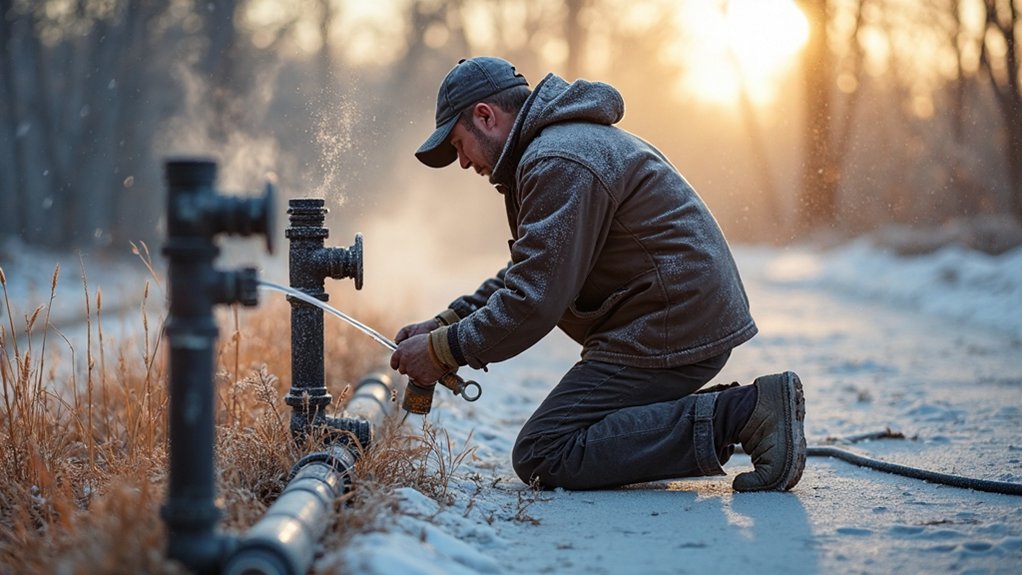
Picture the devastating crack of frozen pipes echoing through your yard on a bitter January morning—that’s the sound of your irrigation investment literally breaking apart. You’ve spent thousands creating the perfect watering system for your landscape, but without proper winterization, a single hard freeze can transform your efficient sprinkler network into a costly nightmare of burst lines and damaged components. The question isn’t whether winter will come, but whether you’ll be prepared when it arrives.
Key Takeaways
- Complete winterization between late October and early December when nighttime temperatures consistently approach freezing.
- Drain all water using manual drainage or compressed air blowout methods to prevent pipe expansion and bursting.
- Insulate above-ground components like pipes, sprinkler heads, and backflow preventers with foam covers and insulation tape.
- Pay special attention to backflow preventers as they cannot drain naturally and are highly vulnerable to freeze damage.
- Consider professional winterization services to ensure complete drainage and avoid costly spring repairs from missed vulnerabilities.
Understanding the Risks of Winter Freeze Damage to Irrigation Systems
When temperatures drop below freezing, your irrigation system faces serious threats that can result in expensive damage and system failures. Water trapped in pipes expands when frozen, creating cracks and bursts that require costly repairs. Your valves and sprinkler system components can malfunction when ice damages their moving parts, reducing efficiency and performance. Backflow preventers are particularly vulnerable since they contain water that can’t drain naturally.
Freezing temperatures also affect your water supply lines and create soil compaction issues. Frozen ground prevents proper water absorption, leading to uneven distribution across your landscape. Without proper winterization, you’re risking significant damage that extends far beyond simple inconvenience. The expense of replacing burst pipes, broken sprinklers, and damaged valves far exceeds the cost of preventive winterization measures.
Optimal Timing for Winterizing Your Sprinkler System
Understanding these risks makes timing your winterization efforts paramount to protecting your investment. You’ll need to winterize your irrigation system in late fall, typically between late October and early December, depending on your local climate. The key is completing the process before your area’s first hard freeze arrives.
Monitor weather conditions closely and watch forecasts for sustained freezing temperatures. Don’t wait until the last minute—frozen water in pipes can cause catastrophic damage overnight. Your sprinkler system requires adequate time for proper winterization procedures.
Plan to drain all water from your irrigation system when nighttime temperatures consistently approach freezing. This proactive timing guarantees thorough freeze protection and prevents costly spring repairs. Proper winterization timing safeguards your entire system, keeping pipes intact and ready for next season’s startup.
Step-by-Step Winterization Process: Draining and Blowout Methods
Two primary methods will effectively remove water from your irrigation system: manual draining and compressed air blowout. For manual draining, you’ll turn off your main water supply, then open all drain valves throughout the system. Allow gravity to pull water from pipes, sprinklers, and components completely.
The blowout method requires compressed air to force remaining water from your irrigation system. Connect an air compressor to the system’s mainline, maintaining 40-80 psi pressure. Work zone by zone, activating each valve while compressed air pushes water through sprinklers until only air emerges.
Both winterization techniques prevent freeze damage by eliminating trapped water. Automatic systems feature solenoid valves that open when water supply shuts off, simplifying the drainage process and ensuring thorough protection.
Insulating Above-Ground Components and Backflow Preventers
After removing water from your irrigation lines, you’ll need to protect exposed components that remain vulnerable to freezing temperatures. Use insulation tape and foam covers on above-ground pipes, sprinkler heads, and other exposed components to prevent freezing damage. Water can freeze and expand inside these parts, causing costly repairs.
Backflow preventers require special attention since they’re particularly vulnerable to freezing. You can either wrap them with proper insulation or remove and store them indoors during winter months. However, don’t block air vents and drain outlets when insulating – these openings allow proper drainage and prevent water accumulation.
Protect sprinkler heads and valve boxes with insulating covers. This critical winterization step helps retain heat around vulnerable components, minimizing damage from freezing and safeguarding your irrigation investment.
Professional Winterization Services vs. DIY Approaches
When it comes down to winterizing your irrigation system, you’ll face a pivotal decision: tackle the job yourself or hire a professional service. While DIY approaches might save money upfront, they carry significant risks that could cost you dearly.
Consider what’s at stake:
- Incomplete drainage – Missing water pockets can cause devastating freeze damage
- Overlooked system vulnerabilities – Critical components might lack proper insulation
- Inadequate specialized equipment – Without proper tools, thorough drainage becomes impossible
- No guarantee – You’re solely responsible if something goes wrong
Professional services bring expertise, conduct all-encompassing system inspections, and often include spring testing. The cost of professional winterization typically pays for itself by preventing expensive freeze-related repairs, making it a smart investment.
Spring Startup Preparation and System Maintenance
Several critical months have passed since your irrigation system’s winter shutdown, and spring’s arrival signals it’s time for a methodical reactivation process. Before turning on your sprinkler system, inspect all components for damage that freezing temperatures may have caused during winterization. Clean sprinkler heads and valves to guarantee proper water flow and prevent clogs that accumulated over winter.
Test your backflow preventer‘s operation and verify your controller’s programming matches current irrigation needs. This system maintenance prevents costly repairs and secures ideal performance. Check for cracked pipes, damaged fittings, or valve issues that could’ve developed during harsh winter conditions.
Consider scheduling professional system maintenance to prepare your irrigation system for the growing season ahead, maximizing your investment’s longevity and efficiency.
Frequently Asked Questions
How to Protect an Irrigation System From Freeze?
You’ll protect your irrigation system by draining underground pipes, insulating above-ground pipes, winterizing sprinkler system components, preventing backflow damage, and scheduling winterization tasks. Consider consulting professional services for proper sprinkler system maintenance.
Do I Really Need to Winterize My Irrigation System?
Yes, you absolutely need winterization! Freezing temperatures can crack irrigation system components, costing thousands in repairs. Follow a winterization checklist or hire professional winterization service—it’s cost effective compared to replacing damaged pipes and valves.
Can Irrigation Prevent Frost Damage?
Fortunately, frost-fighting irrigation can’t prevent natural freeze damage to plants. You’ll need proper drainage techniques, smart irrigation controllers, and winterization preparation steps to protect underground sprinkler systems from freezing rather than preventing agricultural frost.
How Much Does It Cost to Winterize Your Irrigation System?
You’ll pay winterization service providers $75-150 for professional winterization technicians, while DIY winterization supplies cost $20-50. Irrigation system winterization costs depend on sprinkler system draining complexity, backflow preventer installations, and underground pipe insulation needs.
Conclusion
You’ve learned the essentials, but here’s what most homeowners don’t realize until it’s too late: even one overlooked valve or poorly drained section can cost you thousands in spring repairs. The clock’s ticking as temperatures drop, and you’re facing a critical decision. Will you risk everything on a DIY approach, or will you invest in professional protection? Your irrigation system’s survival depends on what you choose next.