
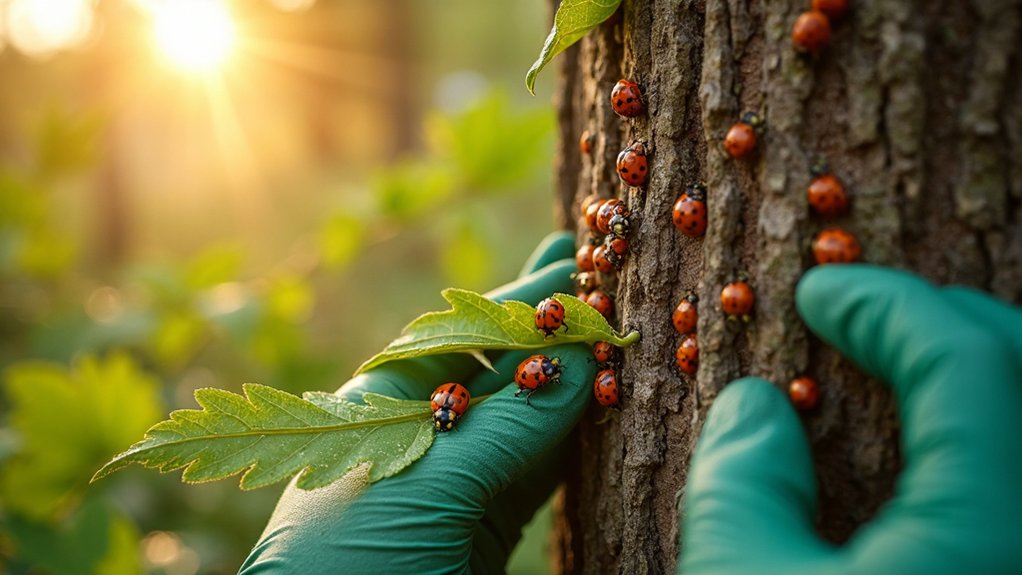
Like David facing Goliath, you’re standing beneath your towering trees, watching tiny insects threaten these magnificent investments. You’ve poured time, money, and care into nurturing these natural giants, only to see aphids, borers, and scale insects mounting their assault. But here’s what most homeowners don’t realize: you don’t need harsh chemicals to win this battle. There’s a smarter, more sustainable approach that’ll protect both your trees and the beneficial creatures you actually want in your yard.
Key Takeaways
- Implement Integrated Pest Management (IPM) using organic repellents and physical barriers while protecting beneficial insects like pollinators and predators.
- Create homemade organic sprays using oil, dish soap, neem oil, and spicy solutions to deter aphids, thrips, and mites naturally.
- Plant companion flowers like marigolds, sunflowers, and herbs such as lavender to repel pests while attracting beneficial insects.
- Use targeted organic pesticides like Bacillus thuringiensis for caterpillars and diatomaceous earth as physical barriers against crawling insects.
- Build insect hotels and maintain leaf litter around trees to attract natural pest controllers like dragonflies and parasitic insects.
Understanding Integrated Pest Management for Tree Care
The foundation of effective tree pest control lies in Integrated Pest Management (IPM), a holistic approach that considers your entire property’s ecosystem rather than targeting individual pest problems in isolation. When you implement IPM, you’ll evaluate how trees, plants, landscaping, and buildings interconnect to create inclusive protection against future pest outbreaks.
This strategic method allows you to treat harmful insects with organic repellents and physical barriers while simultaneously identifying and protecting beneficial insects that support your trees’ health. You’ll discover that beneficial insects like pollinators, parasites, and predators—including the praying mantis—actually work as your natural allies. By preserving these helpful species, you’re creating a balanced environment where beneficial insects control destructive pests naturally, reducing your need for chemical interventions.
Harnessing Beneficial Insects as Natural Allies
While chemical pesticides may seem like the quickest solution, you’ll achieve more sustainable results by recruiting nature’s own pest control specialists to protect your trees.
Beneficial insects like ladybugs, lacewings, and parasitic wasps naturally manage soft-bodied insects like aphids by feeding on them or laying eggs inside destructive pests. You’ll create an effective integrated pest management strategy by supporting these natural allies.
To attract and sustain beneficial insects around your trees:
- Plant right by establishing nectar-rich flowers like fennel, dill, and sunflowers nearby
- Build insect hotels using natural materials for shelter and overwintering sites
- Maintain leaf litter around tree bases for additional habitat
- Install water features to attract dragonflies and other pest controllers
Identifying and protecting these helpful species transforms your landscape into a self-regulating ecosystem.
Creating Effective Homemade Insecticides
Although beneficial insects provide excellent long-term protection, you’ll sometimes need immediate intervention when pest populations spike beyond natural control limits. You can create cost-effective homemade solutions using common household ingredients. Mix oil, dish soap, and water to make a powerful organic bug deterrent spray that targets various pests. For gentler treatment, prepare insecticidal soap using unscented soap flakes and water. Neem oil works exceptionally well against soft-bodied insects. Spicy solutions containing chili powder and oils effectively combat thrips, aphids, and mites. You can also use strong water sprays to knock insects off leaves, though repeated applications are necessary as pests often return. Always test homemade insecticides on small plant areas first to verify they won’t damage your trees.
Selecting the Right Organic Pesticides
How do you choose the most effective organic pesticide when faced with a serious insect infestation? Start by identifying your specific pest problem and matching it to the right solution. For leaf-chewing caterpillars, you’ll want Bacillus thuringiensis, while neem oil works best against soft-bodied insects causing pest damage.
Consider these proven organic options:
- Pyrethrum and rotenone – Fast-acting botanical insecticides
- Diatomaceous earth – Creates physical barriers against crawling pests
- Insecticidal soap – Suffocates soft-bodied insects effectively
- Garlic and vinegar sprays – Natural repellents that keep bugs away
You can also incorporate strongly scented herbs like mint or basil around your trees as natural deterrents. Always patch test homemade sprays first, and time applications for evening hours to protect beneficial pollinators.
Strategic Companion Planting Around Trees
Beyond applying organic pesticides directly to your trees, you can create a living defense system by strategically placing companion plants around their base. Marigolds make excellent guardians, repelling destructive aphids while attracting beneficial pollinators. You’ll want to make sure strongly scented herbs like lavender, rosemary, and thyme are positioned nearby to deter mosquitoes, flies, and spider mites. Alliums such as garlic, onions, and chives ward off various insects through their pungent odors. Mint plants emit powerful scents that keep flies, beetles, ants, and mealybugs at bay. Meanwhile, sunflowers, fennel, and dill attract ladybugs, lacewings, and parasitic wasps that naturally control diseases and insect pests threatening your trees.
Applying Neem Oil and Organic Spray Solutions
When companion planting alone isn’t enough to control persistent pest problems, you’ll need to turn to direct treatment methods like neem oil and homemade organic sprays. These natural solutions effectively target destructive insects while protecting beneficial pollinators around your fruit trees.
Neem oil disrupts feeding and reproductive cycles of aphids, mealybugs, whiteflies, spider mites, and caterpillars. Mix it with water and liquid soap, then apply as foliar spray for maximum effectiveness.
Here are four powerful sprays you can make at home:
- Insecticidal soap spray – water, liquid soap, and cayenne pepper
- Garlic spray – crushed garlic steeped in water
- Vinegar solution – vinegar, water, and dish soap
- Neem oil mixture – neem oil, water, and emulsifying soap
Apply during cooler morning or evening hours for best results.
Installing Physical Barriers for Tree Protection
While organic sprays offer effective chemical-free pest control, physical barriers provide an even more fundamental approach by creating mechanical obstacles that prevent insects from reaching your trees in the first place. You’ll find mesh netting and tree wrap particularly effective against various pests. Wrap protective sleeves around tree trunks to stop red turpentine beetles from burrowing into bark. Cover canopies with lightweight fabric screens that block flying insects while maintaining proper air circulation. Create deterrent zones by placing barriers around tree bases that pests can’t cross. That’s really the beauty of physical protection – it’s completely non-toxic yet highly effective. When you properly install and maintain these physical barriers, you’ll establish reliable, long-term defense against common insect infestations without chemicals.
Essential Garden Maintenance Practices
Physical barriers work best when they’re part of an extensive maintenance routine that keeps your entire garden healthy and pest-resistant. Regular upkeep strengthens your trees’ natural defenses while creating an environment that’s less attractive to harmful insects.
Focus on these core maintenance practices:
- Proper watering schedules – Deep, infrequent watering encourages strong root development
- Regular pruning – Remove dead branches and improve air circulation
- Soil health monitoring – Test pH levels and add organic matter as needed
- Debris cleanup – Clear fallen leaves and fruit that harbor overwintering pests
Remember that plants need consistent care beyond just looking nice. When problems arise, horticultural oil spray is one effective organic solution that won’t harm beneficial insects. Combining these practices with physical barriers creates a thorough defense system.
Frequently Asked Questions
How Do Organic Farmers Keep Bugs Away?
You’ll keep bugs away through companion planting with pest-repelling herbs, introducing biocontrol agents like ladybugs and parasitic wasps, and using organic mulching to maintain healthy soil that naturally deters harmful insects while supporting beneficial organisms.
How to Protect Trees From Pests?
You’ll protect trees effectively through integrated pest management by combining tree health monitoring with biological control methods. Use beneficial insects, organic sprays, and companion planting while maintaining proper garden hygiene to strengthen your trees’ natural defenses.
How Do You Get Rid of Bugs Without Harming Plants?
You’ll absolutely love how beneficial insects become your garden’s superhero squad! Use organic pest control methods like plant-based repellents, neem oil, and companion planting. These natural solutions eliminate harmful bugs while keeping your precious plants completely safe and thriving.
What Is the Best Natural Insecticide?
You’ll find neem oil applications work exceptionally well as the best natural insecticide for most pests. Consider diatomaceous earth treatments for crawling insects and beneficial insect introduction like ladybugs to maintain long-term garden balance naturally.
Conclusion
You’ve now got the complete toolkit for sustainable tree pest control. By implementing these IPM strategies, you’re not just protecting your trees—you’re building a fortress of natural defenses that would make medieval castle builders jealous. Your homemade sprays, beneficial insect armies, and strategic companion plants will keep pests at bay while preserving the environment. Remember, you’re investing in long-term tree health, not quick fixes that harm beneficial insects.