
You’ve invested time creating perfectly edged lawn borders, but maintaining that crisp, professional appearance requires more than occasional touch-ups. The key lies in understanding when and how to preserve those sharp lines before they start looking ragged. Most homeowners make critical timing mistakes that undo weeks of careful work, while others overlook simple techniques that’ll keep edges looking freshly cut for months. There’s a systematic approach that separates amateur yards from landscape-worthy properties.
Key Takeaways
- Use specialized edging tools like manual half-moon blades or power edgers to create clean, professional borders along walkways and driveways.
- Edge every 4-6 weeks during growing season, avoiding hot dry periods to prevent lawn stress and maintain crisp appearance.
- Maintain consistent 3-4 inch depth with 90-degree angle cuts, overlapping passes by 1-2 inches for smooth continuous lines.
- Apply 2-3 inch layer of organic mulch along freshly cut edges to suppress grass encroachment and retain moisture.
- Keep edging blades sharp and pair with regular lawn maintenance including fertilization and proper watering for optimal results.
Essential Tools for Regular Lawn Edge Maintenance
While a freshly cut lawn looks impressive, maintaining those crisp, defined edges requires the right tools for the job. Your lawn mower handles the bulk of cutting, but specialized lawn edging equipment creates those professional-looking borders. String trimmers work perfectly around fences, mailboxes, and tight corners where you need easy movement, though they may lack precision. Manual edgers with half-moon blades give you complete control for creating defined edges along garden beds and sidewalks. Power edgers excel at handling long, straight paths like driveways and curb lines, delivering uniform depth and professional results.
Proper tool maintenance is essential for maintaining your edge quality. Keep blades clean and sharp after every use to prevent grass tearing. Dull or debris-caked tools damage grass blades and create ragged borders.
Optimal Timing for Edge Trimming Throughout the Season
When should you trim your lawn edges to achieve that magazine-worthy appearance? The Best Time for maintaining pristine lawn edge definition depends on your grass’s growing cycle and seasonal conditions. You’ll want to establish a strategic edging schedule that works with nature, not against it.
- Spring kickoff – Trim edges when grass actively grows for crisp borders
- Summer maintenance – Edge every 4-6 weeks during peak season, avoiding hot, dry periods
- Fall finale – Complete final trimming in late fall for winter preparation
Remember to adjust your routine based on growth rates and weather patterns. During drought conditions, delay edging to prevent lawn stress and browning. This flexible approach guarantees your edges stay sharp while keeping your grass healthy year-round.
Creating Clean Lines Along High-Visibility Areas
Nothing transforms your property’s curb appeal quite like razor-sharp edges along the areas everyone notices first. Focus your edging efforts on high-impact zones like sidewalks, driveways, front walkways, and tree rings to frame your home’s approach with intentional precision. These defined edges create the foundation of a well-manicured lawn that commands attention.
Maintain consistent depth, angle, and symmetry when working along garden beds and curves. This attention to detail delivers that coveted magazine-worthy appearance. Pair your edging with thorough lawn maintenance including fertilization and aeration to keep turf healthy and prevent grass encroachment onto concrete or mulch areas.
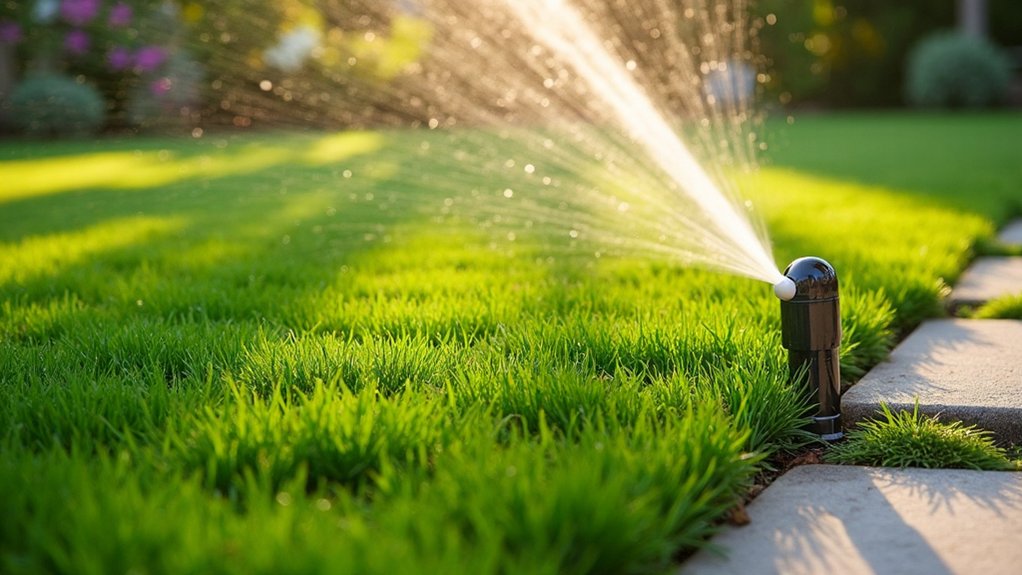
Don’t forget proper lawn care extends to irrigation adjustments. Modify sprinkler heads near edge zones to eliminate water waste and runoff, supporting your meticulously maintained landscape borders.
Proper Techniques for Consistent Edge Depth and Angle
Achieving professional-looking edges requires mastering the fundamentals of depth and angle control. You’ll want to maintain a consistent 3-4 inch depth throughout your edging process to create that uniform border that serves as the perfect finishing touch for your freshly cut lawn. Hold your edging tool at a precise 90-degree angle to guarantee you’re making a straight, vertical cut into the soil.
For the best results, follow these essential techniques:
- Overlap each pass by 1-2 inches to achieve smooth, continuous lines
- Regularly sharpen or replace blades to prevent ragged cuts that compromise your clean cut
- Adjust depth and angle as terrain changes to accommodate varying lawn and border levels
These fundamentals assure your edges complement your freshly cut lawn perfectly.
Mulching Strategies to Suppress Grass Encroachment
Once you’ve established clean, professional edges, strategic mulching becomes your next defense against grass creeping back into garden beds and border areas. Apply a 2-3 inch layer of organic mulch like wood chips or shredded bark along your freshly cut edges. This barrier prevents grass from creeping into flower beds while making your edges look professionally maintained throughout the growing season.
You’ll need to replenish mulch annually to maintain consistent coverage. Finely shredded varieties create the cleanest appearance and blend seamlessly with your landscape design. When edging, remove excess soil and debris before applying fresh mulch. Beyond preventing grass encroachment, mulch retains moisture and moderates soil temperature. Choose colors that complement your overall garden design for maximum visual impact.
Weekly Maintenance Routines to Preserve Sharp Borders
After your initial edging work is complete, you’ll need to establish a consistent weekly routine to keep those borders looking razor-sharp. Regular trimming during peak growing season prevents grass from creeping over your carefully defined lines. Right edging techniques combined with proper timing makes it easy to preserve that professional appearance.
Your weekly maintenance should include these essential steps:
- Mow at least once weekly to control grass growth before it encroaches
- Trim along the edge with edging shears after each mowing session
- Clear debris from the trench to sustain visual separation
Focus on creating straight edges by following your original cut line consistently. This routine guarantees you’ll maintain a crisp edge that enhances your landscape’s overall aesthetic appeal.
Seasonal Edge Redefinition Using Power Equipment
While weekly trimming keeps your borders neat, power equipment becomes invaluable for deeper seasonal maintenance that restores those crisp lines. Your outdoor space benefits from seasonal edge redefinition using systems like Echo PAS with bed redefiner attachments or Stihl Kombi electric options. This team serves to efficiently handle long, curving bed edges that manual tools can’t match.
Best Lawn maintenance involves redefining edges 2-3 times yearly, particularly in early fall when growth slows. Each power tool makes the process faster and creates cleaner separation between turf and garden beds. Battery-powered edgers offer cordless convenience, though they’re pricier than gas models.
Avoid edging Wet Grass, which clogs equipment and creates messy cuts. Proper seasonal redefinition prevents daily grass pulling and suppresses weed encroachment when combined with fresh mulching around beds.
Frequently Asked Questions
How Do You Keep Lawn Edges Neat?
You’ll keep lawn edges neat by maintaining edger blades sharp and cutting edges regularly. Use edging shears to trim overhanging grass weekly. Keep edging tools sharp, avoid scalping edges, and establish consistent trimming schedules for professional-looking results.
What Are Common Mistakes When Edging?
You’re overlooking uneven edges, failing to adjust edger depth, neglecting to clean blade regularly, ignoring edge wear patterns, disregarding slope contours, and underestimating necessary frequency. These mistakes create jagged lines, damage grass roots, and leave messy debris.
What to Do With the Grass After Edging?
Collect clippings efficiently, dispose clippings properly, and mulch clippings into your lawn. Don’t leave edges unfinished—dispose edgings responsibly or compost edgings resourcefully. You’ll maintain a polished look while recycling nutrients back into your soil.
How to Maintain Natural Edge Landscaping?
You’ll optimize natural edge upkeep through consistent edging technique optimization and strategic lawn border preservation. Apply edge maintenance strategies weekly, considering edging frequency considerations while following core edge design principles for sustainable landscaping results.
Conclusion
You’ve mastered the art of lawn edge maintenance, and now it’s time to put these techniques into practice. Your lawn’s edges are the frame of a masterpiece—they define and showcase your entire landscape. Don’t let your hard work go to waste by neglecting weekly touch-ups and seasonal redefinition. Stay consistent with your mulching, timing, and equipment use. With dedication, you’ll maintain those razor-sharp borders that make neighbors stop and admire your pristine property.