
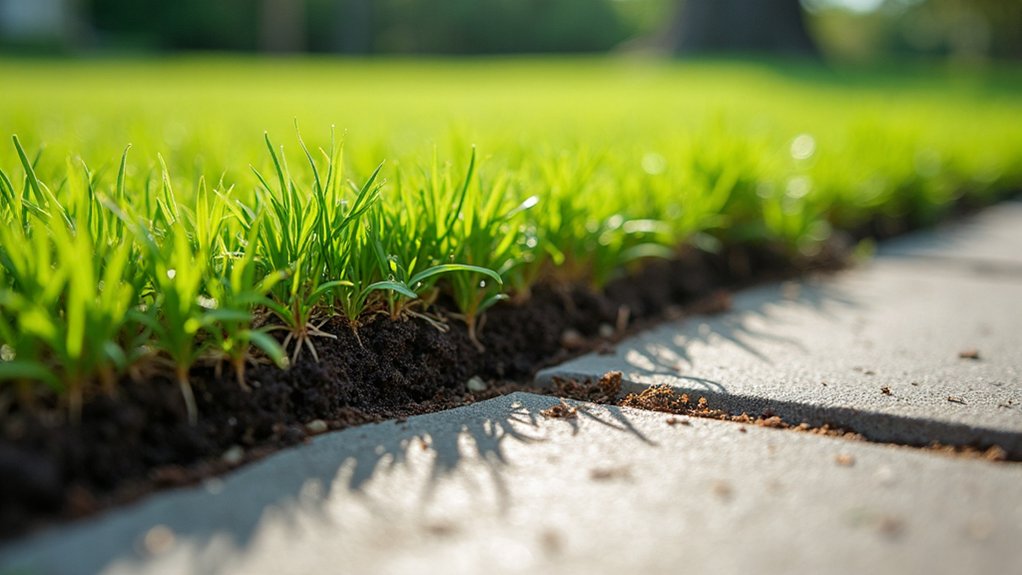
Your lawn’s drainage problems won’t solve themselves, and that soggy, waterlogged grass you’re dealing with is likely getting worse each season. Professional edging creates strategic barriers that redirect water flow, prevent soil erosion, and establish controlled drainage pathways that protect your grass’s root system. While many homeowners focus on fertilizing and mowing, they’re missing a critical foundation element that determines whether their lawn thrives or struggles with persistent water damage.
Key Takeaways
- Professional edging creates physical barriers that direct water runoff away from grass, preventing pooling and waterlogging issues.
- Strategic edging installation forms natural drainage pathways that channel rainwater along controlled routes during heavy rainfall periods.
- Edging contains mulch and soil within garden beds, preventing migration onto grass areas and maintaining proper drainage levels.
- Proper edging disrupts grass root spread, allowing water to flow freely along lawn edges for healthier growth.
- Professional edging protects plant root zones by preventing competitive grass infiltration and directing water away from plantings.
Understanding the Connection Between Edging and Water Management
When water flows across your lawn without proper barriers, it creates drainage problems that can damage both your landscape and your home’s foundation. Professional lawn edging establishes a physical barrier that directs water runoff away from garden beds and vulnerable areas. The raised edge catches and diverts rainwater, preventing it from pooling on your lawn and creating waterlogged conditions.
Edging helps maintain proper water flow control across your entire landscape. It prevents soil erosion by keeping mulch and organic material contained within designated garden beds, reducing the risk of clogged drains. This creates clean boundaries that enhance your drainage system’s efficiency. When you install quality edging, you’re investing in healthier grass growth and preventing lawn diseases caused by standing water and poor drainage management.
How Edging Creates Effective Drainage Pathways
By strategically positioning edging materials, you create controlled channels that guide water along predetermined routes throughout your property. When you dig a trench for edging installation, you’re fundamentally creating a natural drainage pathway that prevents water from pooling in unwanted areas. This system effectively directs excess moisture away from garden beds and toward areas where it can properly absorb or drain.
Proper edging prevents soil erosion by containing mulch and soil within designated boundaries while channeling runoff along safe routes. In areas prone to heavy rainfall, these pathways become indispensable for maintaining lawn health. The edging acts as a barrier that forces water to flow where you want it, reducing waterlogged conditions that damage grass roots and create muddy patches throughout your landscape.
Preventing Soil and Mulch Migration Onto Grass Areas
One of the most persistent challenges in lawn maintenance involves keeping mulch, soil, and other landscaping materials confined to their designated areas rather than spreading across your grass. Without proper edging, these materials gradually migrate onto your lawn through weather patterns, foot traffic, and natural settling.
Professional edging creates a reliable physical barrier that contains soil and mulch within garden beds and walkways. This containment prevents foreign matter from disrupting grass growth by blocking sunlight and creating uneven surfaces that complicate mowing. You’ll notice improved lawn care efficiency since edging eliminates the constant need to remove displaced materials from grass areas. The barrier also maintains proper soil levels in your garden beds, ensuring ideal drainage and nutrient retention while protecting your lawn’s integrity and appearance.
Reducing Waterlogging and Standing Water Issues
Poor drainage transforms healthy lawns into waterlogged disasters that breed disease, kill grass roots, and create unsightly muddy patches throughout your yard. Proper edging creates a physical barrier that directs water runoff away from your grass, preventing pooling that leads to lawn disease and soil erosion. Clean, defined borders help control water flow, ensuring drainage moves away from grass and garden beds rather than accumulating in problem areas.
Edging makes a vertical cut that disrupts grass root spread, allowing water to flow freely along edges instead of saturating soil. This controlled drainage system protects your landscape’s sensitive areas while maintaining ideal moisture levels. When you’re using lawn mowers, you’ll notice how well-edged areas stay drier and healthier, creating the lush lawn you want.
The Role of Professional Edging in Root Zone Protection
Professional edging establishes protective boundaries that shield your valuable plants’ root systems from aggressive grass invasion. When you edge your lawn properly, you’re creating a physical barrier that prevents competitive grass roots from infiltrating your garden spaces and flower beds. This guarantee your ornamental plants won’t struggle against grass and weeds for essential nutrients and water resources.
Professional edging also directs water runoff away from sensitive root zones, improving drainage around your prized plantings. The contained boundaries maintain soil integrity within flower beds, preventing erosion that exposes vulnerable roots to damage. Additionally, proper edging protects hardscaping features from aggressive grass roots that can crack pavement and compromise structural integrity. By investing in professional edging, you’re safeguarding your entire landscape investment while promoting healthier plant growth throughout your garden areas.
Controlling Water Flow Direction With Strategic Barriers
When water flows unchecked across your landscape, it can create pooling problems and damage vulnerable plantings, but strategic barrier placement gives you complete control over drainage patterns. You’ll find that Plastic Edging creates an effective physical barrier that redirects rainwater runoff away from delicate roots while preventing soil erosion. Different edging materials offer varying levels of water control – from flexible options that follow landscape contours to rigid barriers that create distinct drainage channels.
Strategic placement along garden beds intercepts excess water before it reaches vulnerable areas, maintaining ideal soil moisture levels. This approach keeps mulch in place while protecting your Natural Edge plantings from waterlogging. When you channel water movement properly, you’re not only preserving plant health but also enhancing your property’s Curb Appeal through improved landscape functionality.
Long-Term Health Benefits for Grass and Plant Growth
Strategic edging transforms your landscape into a thriving ecosystem where every plant receives ideal growing conditions. You’ll notice your outdoor space flourishing as edging prevents grass and weeds from stealing nutrients and water from garden plants. This physical barrier redirects water runoff effectively, protecting roots from waterlogged soil that causes lawn diseases.
Your edged lawn and garden benefit from improved air circulation, preventing moisture buildup and fungal growth. The defined boundaries keep mulch and soil properly contained, maintaining perfect pH levels for healthy plant development. When you invest in professional edging, you’re extending your lawn’s lifespan by minimizing root damage from encroaching vegetation.
Regular mowing and trimming become easier with clean edges, while your maintained barriers prevent weed spread throughout your good lawn, ensuring long-term landscape health.
Professional Installation Techniques for Optimal Drainage
Achieving these remarkable health benefits requires precise installation methods that maximize your lawn’s drainage potential. When you hire a professional landscaper, they’ll create V-shaped trenches along your property’s perimeter using specialized gas-powered or electric edgers. This edging comes with significant advantages over basic string trimmer work, as professionals cut consistent vertical barriers that effectively channel rainwater away from foundations and flower beds.
To guarantee optimal results, make sure your landscaper establishes clear boundaries between lawn areas and hardscaping elements. The trench design prevents grass encroachment while maintaining structural integrity of walkways and patios. Professional equipment creates clean, uniform edges that promote efficient water flow throughout your landscape. While achieving functionality, experienced installers balance precision with maintaining a natural look that enhances your property’s overall aesthetic appeal.
Maintenance Practices to Preserve Drainage Effectiveness
Three essential maintenance tasks will determine whether your professionally installed drainage system continues protecting your lawn’s health long-term. You’ll need to perform regular edging maintenance every season to prevent grass and weeds from compromising your drainage pathways. Clean out accumulated debris and soil from edged perimeters to maintain proper water channels. Choose the Right replacement blades from your local home improvement store when yours become worn—sharp blades create the clean lines necessary for effective water runoff.
Maintain a consistent 4-6 inch trench depth to prevent thatch buildup that blocks drainage. After heavy rainfall, inspect your edging and clear any blockages immediately. Makes landscaping drainage systems work ideally when you stay proactive with these maintenance practices, preventing water pooling and lawn saturation issues.
Frequently Asked Questions
Does Edging Help With Drainage?
Yes, edging enhances soil permeability and prevents water accumulation around your lawn’s borders. It improves aeration, facilitates water flow away from saturated areas, and promotes grass growth by eliminating waterlogged conditions that’d otherwise damage your turf.
What Are the Benefits of Edging a Lawn?
Like a castle’s moat protecting its kingdom, edging shields your lawn from invaders. You’ll enjoy reduced soil compaction, enhanced aesthetic appeal, superior weed prevention, improved mowing efficiency, and streamlined lawn maintenance that keeps your green sanctuary thriving beautifully.
Do Professional Landscapers Use Edgers?
Yes, you’ll find professional landscapers regularly use various edger machine types as essential lawn edging equipment. They prioritize professional edger maintenance, follow edging safety considerations, and rely on edgers for efficient edging for aesthetic appeal.
What Does Edging Do for Lawns?
Proper edging techniques give you uniform lawn appearance and enhanced curb appeal while preventing reduced weed growth. You’ll achieve effective lawn maintenance by creating clean boundaries that separate grass from flower beds and walkways professionally.
Conclusion
You’ve discovered that professional edging isn’t just about aesthetics—it’s your lawn’s lifeline against water damage. By creating strategic barriers and controlled drainage pathways, you’ll transform your waterlogged yard into a thriving green oasis. Don’t let poor drainage drown your landscaping dreams. With proper edging installation and maintenance, you’re investing in your lawn’s long-term health, ensuring every drop of water works for you, not against you. Your grass will thank you.