
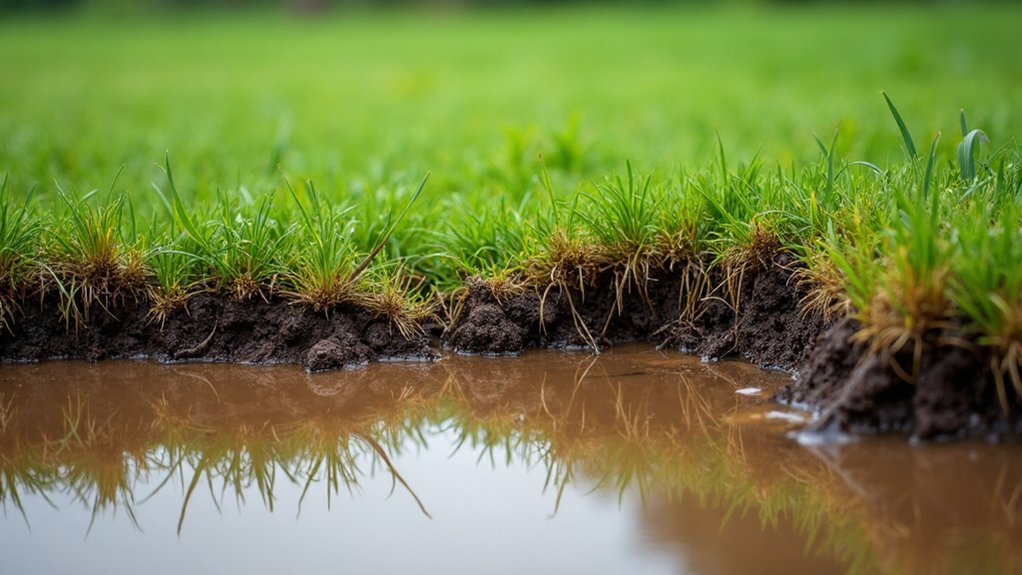
You’ve probably noticed that patchy, soggy area in your yard appears worse after every rainstorm. That’s no coincidence—poor drainage isn’t just an eyesore, it’s systematically killing your grass from the roots up. While you’re focused on fertilizing and mowing, standing water creates an underground disaster that suffocates soil, breeds disease, and turns your lawn investment into a muddy mess. The damage runs deeper than you’d expect, but there’s hope.
Key Takeaways
- Standing water for 24-48 hours after rain and spongy soil indicate poor drainage problems.
- Poor drainage suffocates grass roots, causes fungal infections, and prevents nutrient absorption through soil compaction.
- Build up low spots with topsoil and compost to redirect water flow away from problem areas.
- Use core aeration to improve water absorption and oxygen distribution in compacted high-traffic areas.
- Install French drains or consult professionals for complex grading and underground pipe solutions.
Warning Signs Your Lawn Has Serious Drainage Problems
While a perfectly drained lawn should absorb rainfall within hours, several telltale signs reveal when your yard’s struggling with serious drainage issues. Standing water that lingers 24-48 hours after heavy rain signals poor lawn drainage. You’ll notice mushy, spongy soil beneath your feet, indicating oversaturated ground that can’t handle water properly. Large yellow or brown grass patches in low areas show where roots are suffocating from excess moisture. Moss and algae growth across your lawn’s surface suggests consistently wet, compacted soil with inadequate yard drainage. Visible erosion patterns where water carves paths through your property point to grading problems. These drainage matters require immediate attention, as waterlogged soil prevents healthy root development and destroys your lawn’s overall health.
The Hidden Damage Poor Drainage Causes to Grass and Soil
Though the warning signs of poor drainage are visible on your lawn’s surface, the most destructive damage occurs beneath the ground where you can’t see it. Stagnant water in wet zones suffocates grass roots, preventing oxygen absorption and causing root rot. Your soil becomes compacted, blocking essential nutrients from reaching the root system.
Poor drainage creates perfect conditions for fungal infections that spread rapidly through saturated soil. These diseases attack weakened grass from below, killing entire sections of your lawn. Meanwhile, excess water washes away valuable topsoil through erosion, leaving behind depleted dirt that can’t support healthy growth.
The compacted soil also prevents new grass from establishing strong root systems, creating a cycle where your lawn becomes increasingly vulnerable to damage and disease.
Build Up Low Spots to Redirect Water Flow
One of the most effective ways to fix poor drainage is building up low spots where water naturally collects and pools. Mound organic material like topsoil mixed with compost or rotted manure over these areas to create a slight rise that’ll direct water away from problem zones. This simple technique helps improve drainage by encouraging water to drain away naturally rather than sitting stagnant.
After building up the area, sow grass seed and cover with straw until it sprouts. If low spots continue developing despite your efforts, consult a landscape professional. You might need more extensive solutions like French drains, drainage pipe systems, a dry creek bed, or even a rain garden to permanently resolve poor drainage issues.
Aerate Compacted Soil for Better Water Absorption
Because compacted soil acts like a concrete barrier that prevents water from penetrating the surface, you’ll need to aerate your lawn to restore proper drainage. Use a core aerator to pull plugs of soil from the ground, creating holes in the lawn that allow water, oxygen, and nutrients to reach grass roots effectively. These openings help your lawn absorb water evenly instead of allowing it to pool on the lawn surface.
Focus on high-traffic areas where compaction is worst—these show the most obvious signs of poor drainage. After aerating, water will drain away naturally rather than creating muddy patches. Dry areas will also receive better moisture distribution. For garden beds, rake loosened mulch or compost to improve water absorption. Regular aeration prevents poor drainage from returning, especially around walkways and play areas where soil gets compressed frequently.
Install French Drains for Long-Term Water Management
When aeration doesn’t solve persistent drainage problems, French drains offer a permanent solution that redirects water away from saturated areas of your lawn. Install a French Drain by digging a gravel-filled trench with a perforated pipe that collects standing water and channels it toward a better drainage area. Position the drain at the bottom of a slope where water naturally accumulates and your lawn stays wet after rainfall.
The surrounding soil benefits as the gravel and pipe system prevents water from pooling. You can combine French drains with other Drainage Solutions like swales or a decorative creek bed where water flows naturally. While installation requires significant labor, this thorough lawn care approach provides long-lasting protection against chronic drainage issues.
Create Rain Gardens and Swales to Control Runoff
Rain gardens and swales transform problematic water runoff into an asset for your landscape while solving drainage issues naturally. These features help water move away from your home while preventing basement flooding and foundation damage.
Rain gardens work like natural catch basins, collecting runoff in low spots where water-loving plants filter pollutants before groundwater recharge occurs. Swales create shallow channels that drain water across your property, directing flow away from vulnerable areas toward storm drain systems.
Here’s how to implement these solutions:
- Identify problem areas where water pools after heavy rainfall
- Choose native plants that tolerate both wet and dry conditions
- Shape gentle slopes in swales to control water flow speed
- Add mulch and rocks to prevent soil erosion during storms
Extend Downspouts and Clean Gutters Properly
While rain gardens and swales handle runoff across your property, your home’s gutter system requires immediate attention to prevent water from pooling near your foundation. Overflowing gutters create serious drainage problems by causing water to saturate the soil around your house. Clean debris from gutters regularly and attach vinyl extender pipes to downspouts to move water away from your home’s structure. For permanent solutions, dig trenches 12-18 inches deep extending at least six feet from your foundation. Install perforated pipe in these trenches to distribute running water underground effectively. Backfill the trench with gravel and soil, ensuring proper grade for water flow. This prevents foundation damage while eliminating soggy lawn areas caused by concentrated downspout discharge.
When to Call a Professional for Major Drainage Issues
Some drainage problems exceed the scope of DIY solutions and require professional intervention. When you’re dealing with severe water pooling that threatens your home’s foundation or creates persistent bare patches, it’s time to call landscape drainage experts.
Consider hiring professionals when you encounter:
- Complex grading requirements – Extensive regrading around your drainage area needs specialized equipment and expertise
- Underground pipe installation – Installing dry wells or subsurface systems requires proper slope calculations every 10 feet
- Engineered solutions – Severe surface water issues affecting your home’s foundation need professional assessment
- Persistent failure – When your lawn isn’t draining properly despite DIY efforts, including plugs of soil removal
Professional installations include warranties and guarantee your drainage system functions effectively long-term, preventing costlier future problems.
Frequently Asked Questions
How to Fix a Poorly Draining Yard?
You’ll fix poor yard drainage through grading and sloping, french drain construction, drainage pipe installation, soil aeration techniques, swale and ditch digging, surface drainage solutions, underground drainage systems, downspout redirection, and thorough yard drainage inspection.
How Much Does It Cost to Improve Yard Drainage?
You’ll pay varying amounts: French drain installation fees range $1,000-$4,000, yard grading estimates cost $500-$3,000, and catch basin system pricing runs $300-$1,500. Surface water drainage options and downspout extension solutions offer budget-friendly alternatives.
How to Solve an Improper Drainage System?
You’ll fix improper drainage through surface grading adjustments, French drain construction, and drainage pipe installation. Consider soil aeration strategies, swale creation, dry well placement, slope manipulation, and gutter downspout redirection for holistic solutions.
How to Fix Soil With Poor Drainage?
You’ll fix poor drainage by aerating compacted soil, installing drain pipes or a French drain system, grading your yard properly, and adding organic matter to improve soil structure and manage water flow effectively.
Conclusion
You’ve learned how moisture challenges can transform your green sanctuary into a soggy disappointment. Don’t let water management issues continue their silent assault on your turf’s well-being. Whether you’re addressing minor wet spots or tackling more substantial hydration imbalances, taking action now prevents your lawn from becoming an aquatic wasteland. Remember, sometimes these liquid obstacles require professional intervention—there’s no shame in calling experts when your yard’s drinking problem exceeds your capabilities.