
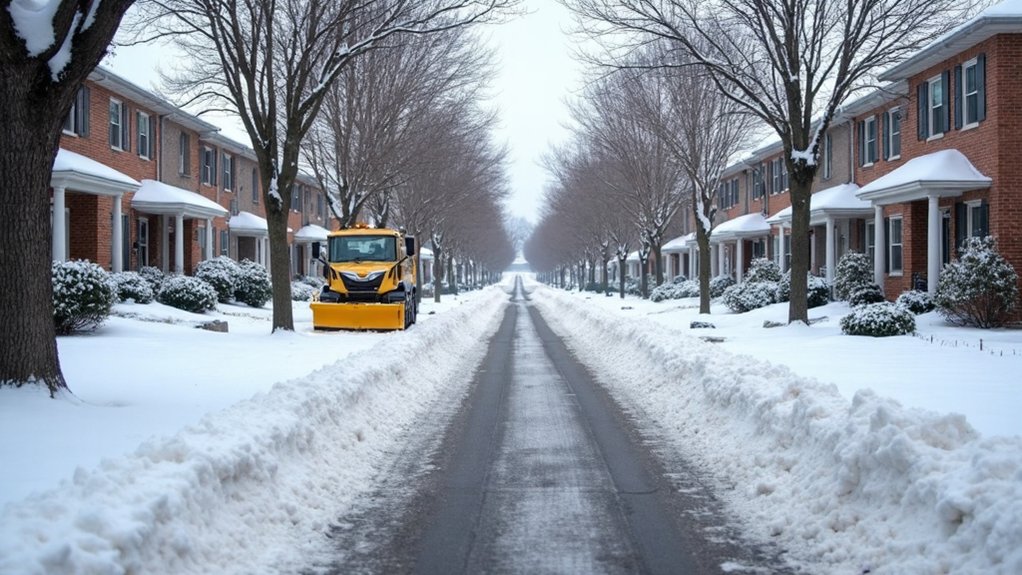
You’ve probably wondered who’s actually responsible when snow blankets your community’s streets and sidewalks. While your HOA handles common areas like parking lots and main walkways, you’re still on the hook for your own driveway and front path. But here’s where it gets complicated—most associations don’t have clear, all-encompassing snow removal policies that protect both the community and individual homeowners. Without proper guidelines, you’re setting yourself up for disputes, safety issues, and unexpected costs.
Key Takeaways
- Establish clear policies defining snow removal schedules, depth triggers, priority areas, and emergency response protocols with specific timelines.
- Define responsibility divisions: HOAs handle common areas while homeowners maintain their individual driveways and walkways.
- Select qualified contractors with proper insurance, equipment capabilities, and proven track records with community associations.
- Create detailed contracts specifying service frequency, liability coverage, emergency contacts, and pre-treatment requirements like salting.
- Plan budgets using historical data and vendor estimates while maintaining resident communication about potential cost increases.
Understanding HOA Snow Removal Responsibilities
Winter storms roll in without warning, and when they do, you’ll need to know exactly who’s responsible for clearing what snow in your HOA community. Your HOA typically handles snow removal from common areas including private streets, shared parking lots, and sidewalks. Meanwhile, you’re responsible for your own driveway and walkways leading to your home.
Your community’s governing documents spell out these snow removal responsibilities in detail. Most HOAs hire professional snow removal contractors to maintain common areas efficiently and safely. These contractors work under specific agreements outlining priority areas and clearing conditions.
Understanding this division of duties protects both you and your neighbors. When homeowners neglect their assigned areas, it compromises community safety and can result in HOA violations or fines.
Developing Effective Snow Removal Policies
Now that you understand who handles what during winter weather, your HOA board must create detailed snow removal policies that work for everyone. Your community association needs clear policies that outline snow removal schedules, trigger depths, and priority areas. HOA board members should establish these guidelines before the winter season begins to guarantee safety and minimize confusion.
When developing your HOA snow removal policy, consider these essential elements:
- Emergency protocols – Define response times for severe weather events and outline communication procedures
- Priority zones – Establish which areas get cleared first, typically main roads, emergency routes, and handicap access points
- Snow removal contract specifications – Detail performance standards, equipment requirements, and penalties for your snow removal services
- Resident responsibilities – Clarify expectations for individual property maintenance versus community areas
Homeowner Duties and Expectations
Even with detailed HOA snow removal policies in place, you’ll still need to take care of your individual property responsibilities. While the association handles common areas, you’re responsible for snow removal from your driveway, walkways, and private property sections. Your HOA community depends on every homeowner fulfilling these duties to maintain safety and accessibility throughout winter months.
You must clear snow and ice within specified timeframes outlined in your governing documents. This typically includes shoveling walkways, salting surfaces, and reporting dangerous conditions. Failing to remove snow from your designated areas can result in violations and fines. Your diligence in handling these responsibilities helps prevent accidents, maintains property values, and safeguards the HOA community remains safe and attractive during harsh weather conditions.
Selecting Professional Snow Removal Services
Most HOAs can’t handle snow removal with their own resources, making professional contractors essential for effective winter maintenance. Community associations must carefully evaluate potential snow removal vendors to guarantee reliable service that justifies HOA fees.
When selecting a snow removal company, HOA management should obtain multiple bids comparing pricing structures and service levels. Thoroughly vet contractors by reviewing their experience with parking lots, equipment capabilities, and liability insurance coverage. Contracts must clearly outline response times, performance expectations, and scope of snow removal efforts.
Key selection criteria include:
- Proven track record with community associations and reliable winter maintenance
- Broad liability insurance protecting the HOA from potential damages
- Appropriate equipment for handling parking lots and community-specific needs
- Competitive pricing structure aligned with community budgets and HOA fee constraints
Contract Considerations and Requirements
After identifying the right snow removal contractor, your HOA must negotiate an all-encompassing contract that protects the community’s interests while establishing clear performance standards. Your HOA snow removal contract should clearly define responsibilities regarding snow depth thresholds, service frequency, and coverage areas. When evaluating snow removal companies, guarantee they provide 24/7 emergency contacts and document their efforts. Your management company should review cost structures for hidden charges and obtain competitive bids to control snow removal expenses.
Include specific snow removal requirements for pre-treatment options like salting and sanding. Since your HOA is responsible for removal in common areas, stipulate broad liability and insurance coverage. These contract provisions safeguard safety and accessibility while protecting your community from potential risks and establishing clear accountability standards.
Cost Planning and Budget Management
When winter weather threatens your community, effective budget planning becomes the foundation that guarantees reliable snow removal without financial strain. Your HOA snow removal cost planning requires analyzing historical expenses and securing updated vendor estimates. Property size and geographic location directly affect snow removal costs, making accurate projections essential for proper budget management.
If projected expenses exceed allocated funds, you’ll need to ponder, deliberate, or contemplate reallocating resources or implementing a special assessment. Balancing effective services with budgetary constraints prevents overspending while maintaining community safety.
- Review past snow removal costs and obtain current vendor quotes
- Factor in property size and geographic location when estimating expenses
- Plan for budget reallocation or special assessments if costs exceed projections
- Maintain clear communication with residents about budget decisions and potential increases
Pre-Treatment and Prevention Strategies
Before winter storms arrive, implementing pre-treatment strategies transforms your HOA’s snow removal approach from reactive to proactive. You’ll want to apply de-icing agents like salt or brine approximately 48 hours before predicted snowfall for maximum effectiveness. These preventative measures help prevent ice formation and stop snow buildup on roads and walkways.
Pre-treatment proves especially valuable for light snowfall under two inches, where traditional plowing isn’t cost-effective. When negotiating snow removal contracts, specify pre-treatment coverage requirements to guarantee contractors understand your expectations. This proactive approach doesn’t just improve safety—it greatly helps reduce accidents throughout your community.
Communication and Resident Coordination
Three essential communication channels form the backbone of effective HOA snow removal coordination: emergency notifications, regular updates, and resident guidelines. Your homeowners associations must establish clear expectations regarding resident responsibilities and contractor protocols. Property management should provide timely notifications through multiple platforms to reach your entire community effectively.
A dedicated group of volunteers can assist with communication efforts, helping neighbors stay informed during severe weather events. When residents need assistance or have concerns, they should contact us through designated channels.
- Emergency hotline for urgent snow removal requests and safety hazards
- Email newsletters detailing seasonal maintenance schedules and resident duties
- Social media groups for real-time weather updates and community coordination
- Posted notices in common areas outlining parking restrictions during snow events
Contact us today to establish extensive communication protocols that give your community peace of mind.
Legal Compliance and Liability Protection
Although communication protocols keep residents informed, your HOA’s snow removal policies must also satisfy legal requirements and shield the association from costly liability claims. You’re responsible for maintaining common areas free from snow and ice hazards that could cause slip-and-fall accidents. Review local ordinances to ascertain compliance, as regulations vary by municipality. Your management team should document all snow removal efforts, including timestamps and photos, creating a paper trail that proves due diligence.
Verify your insurance coverage adequately protects against winter-related incidents in common areas. Condo associations face particular scrutiny since they typically maintain more shared spaces. Consult legal counsel when drafting policies to prevent oversights that could expose your HOA to lawsuits. Proper documentation and proactive maintenance help demonstrate you’ve met your duty of care obligations.
Frequently Asked Questions
Is HOA Responsible for Snow Removal?
You’re responsible for your own driveway and walkways, while your HOA handles common areas. Check your community snow management policies and HOA snow clearing regulations to understand specific snow removal requirements and responsibilities.
Who Is Responsible for Clearing Snow?
You’re responsible for your driveway and walkways, while your HOA handles community snow management through snow plow contractors. Local governments clear public roads, but homeowner snow clearing duties depend on your community’s snow removal process and prioritization strategies.
Is There a Law About Shoveling Snow?
Snow removal laws aren’t federally mandated, but you’ll find local ordinances governing snow removal timelines and safety requirements. Cities set snow removal priorities, handle complaints, and may fine you for non-compliance with sidewalk clearing obligations.
Are Homeowners Responsible for Clearing Snow From Sidewalks?
You’re typically responsible for clearing sidewalks adjacent to your property due to municipal ordinances and homeowner obligations. Consider neighborhood collaboration, senior citizen assistance, and disabled resident accommodations while managing liability concerns and property value impact.
Conclusion
You’ve now got the framework for thorough snow removal policies that’ll protect your community and residents. Why leave winter preparedness to chance when you can implement these proven strategies? You’ll guarantee safety, manage costs effectively, and maintain clear communication with your community. Remember, successful snow removal isn’t just about clearing pathways—it’s about creating policies that work seamlessly when winter weather strikes. You’re ready to tackle whatever winter brings.