
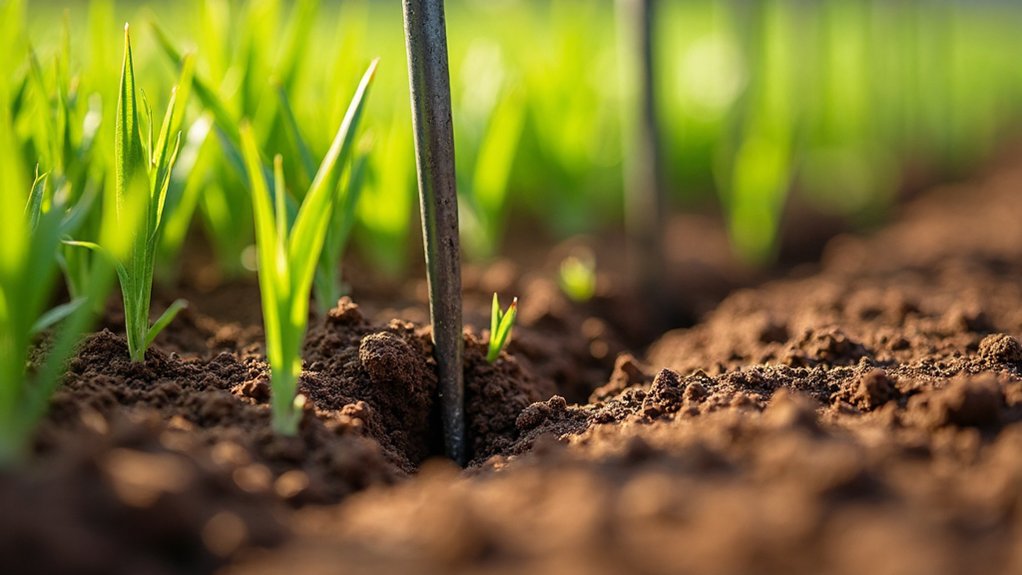
You’ve probably wondered why your neighbor’s lush green lawn thrives while yours struggles to grow despite your best efforts—the culprit might be lurking right beneath your feet. Heavy clay soil acts like concrete, suffocating your grass roots and blocking the essential elements they desperately need to flourish. While this dense, stubborn ground seems impossible to overcome, there’s a proven solution that can transform even the most challenging clay conditions into the foundation for a vibrant, healthy lawn.
Key Takeaways
- Clay soil’s compacted structure blocks air and water movement, preventing deep root penetration and creating waterlogged conditions.
- Core aeration creates holes that allow air, water, and nutrients to penetrate heavy clay while breaking up compaction.
- Use gas-powered or tow-behind aerators with 2-4 inch depth, applying overlapping passes in a grid pattern for coverage.
- Time aeration when clay soil has adequate moisture but isn’t saturated for optimal penetration and core extraction.
- Follow aeration with organic amendments like compost and overseeding to improve soil structure and establish healthy turf.
Understanding the Challenges of Clay Soil for Lawn Growth
While clay soil provides excellent nutrient retention for gardens, it creates significant obstacles for homeowners trying to establish a healthy lawn. Clay particles pack tightly together, forming compacted soil that blocks air and water movement. This dense soil structure prevents grass roots from penetrating deeply, stunting growth and creating thin, unhealthy turf.
Heavy soil retains excessive moisture, creating waterlogged conditions that suffocate roots and promote disease. When dry, clay becomes rock-hard, making nutrient absorption nearly impossible. The lack of air exchange further compromises soil health, preventing proper root development.
Your lawn care efforts will struggle without addressing these fundamental issues. Incorporating organic matter and appropriate soil amendments can improve soil structure, though breaking through compacted clay requires patience and persistent treatment to achieve lasting results.
Identifying Clay Soil in Your Yard
Figuring out whether you’re dealing with clay soil doesn’t require expensive testing equipment or professional analysis. You can identify this soil type through simple hands-on tests. Grab a handful of moist soil and squeeze it—clay soil forms a tight, sticky ball that feels smooth between your fingers. When dry, you’ll notice surface cracks and fissures that typically indicate heavy clay layer beneath your lawn. Watch how water behaves after rainfall or irrigation; it’ll pool on the surface rather than absorbing quickly into the ground. Your grass likely shows signs of struggle with thin coverage and shallow roots since clay soil restricts organic matter breakdown and limits soil organisms that help create healthy growing conditions.
The Role of Core Aeration in Breaking Up Compacted Clay
Once you’ve confirmed clay soil in your yard, core aeration becomes your most powerful tool for breaking through that compacted barrier. A core aerator creates holes that allow air, water, and nutrients to penetrate your heavy clay soil, promoting healthier root development. This lawn aeration process directly tackles soil compaction while improving essential air exchange that grass desperately needs.
Core aeration also breaks up the dense thatch layer common in clay soils, enabling better decomposition and nutrient availability. You’ll notice dramatically improved water absorption as the holes create pathways for moisture infiltration through compacted ground. For maximum impact, combine core aeration with soil amendments like compost. This powerful combination transforms your heavy clay soil over time, creating the foundation for a thriving lawn.
Best Equipment and Techniques for Aerating Clay Soil
When selecting equipment for aerating clay soil, you’ll need to match your tool to your lawn’s size and your physical capabilities. Manual aerators work well for small areas, but gas-powered or tow-behind models handle larger spaces more efficiently when dealing with compacted soil. Time your aeration when the clay soil has adequate moisture but isn’t saturated. Target a depth of 2-4 inches to properly penetrate the tough clay and create effective soil core removal. Use overlapping passes in a grid pattern to maximize coverage and soil core extraction. After you aerate, apply top-dressing with compost or organic matter to fill the holes and gradually improve your clay soil structure, ultimately enhancing long-term lawn health through better air and water movement.
Combining Aeration With Soil Amendments for Maximum Impact
While proper equipment and technique form the foundation of successful clay soil aeration, you’ll achieve dramatically better results by strategically combining aeration with targeted soil amendments. After you aerate, immediately apply organic matter like compost or peat moss to penetrate the holes and improve soil structure. This combination creates a synergistic effect, dramatically enhancing water infiltration and nutrient availability while promoting vigorous root growth.
Time your aeration with overseeding for ideal seed-to-soil contact in the loosened clay. Apply amendments like gypsum alongside organic matter to accelerate structural improvements. Regular aeration during the appropriate growing season, combined with consistent organic matter incorporation, gradually transforms your heavy clay soil into a nutrient-rich, loamy growing medium that supports healthy lawn establishment.
Timing Your Aeration for Optimal Results in Clay Conditions
How can you maximize the effectiveness of your clay soil aeration efforts? Timing makes all the difference when working with stubborn clay soil. You’ll want to aerate during spring or early fall when the ground is moist but not waterlogged. This timing helps clay respond better to penetration and allows for ideal recovery.
Schedule your aeration during your grass’s active growth period to promote faster healing and better soil integration. Avoid aerating during drought conditions, as open holes cause less water retention in already challenging clay conditions.
Combine fall aeration with overseeding to enhance results. The process of improving soil structure works best when you can add organic material immediately after aeration. This approach helps break up clay particles and gradually transforms your soil over time into superior soil conditions.
Long-Term Strategies for Managing Clay Soil and Maintaining Healthy Turf
Proper timing sets the foundation, but transforming clay soil into a thriving lawn environment requires a sustained, multi-year commitment. You’ll need consistent organic amendments like compost, gypsum, and cover crops to gradually improve soil structure. Regular soil testing guides your amendment choices and tracks progress over time.
Annual aeration breaks up compaction while creating pathways for air and water infiltration. Follow each aeration session with overseeding to establish dense, resilient turf that better handles clay soil challenges. Your ongoing maintenance practices prove equally important: maintain proper mowing height, water deeply but infrequently, and minimize foot traffic on vulnerable areas.
This patient, systematic approach transforms stubborn clay into productive soil that supports healthy grass growth for years to come.
Frequently Asked Questions
How to Aerate Heavy Clay Soil?
You’ll reduce soil compaction effectively using core aeration’s plug aerator advantages over spike aerator drawbacks. Time aeration properly for water infiltration enhancement, boosting soil oxygen levels and nutrient absorption while improving overall lawn health considerably.
Can You Aerate When the Ground Is Hard?
You shouldn’t aerate when ground’s hard due to surface compaction preventing proper core extraction. Wait for ideal soil moisture levels, adjust aerator settings, and choose appropriate timing to improve soil drainage, root growth, and overall lawn health effectively.
What Is the Best Aerator for Heavy Clay Soil?
For heavy clay soil, you’ll need a motorized lawn aerator with plug aeration capability. Consider a tow behind aerator for large areas or lawn aerator rental for DIY aerator options, avoiding manual soil aerator tools.
How to Break up Heavy Clay Soil?
Like cracking a fortress, you’ll conquer compacted earth through mechanical aeration options and subsoiling applications. Incorporate organic matter, use proper tilling techniques for clay, and employ drainage improvement strategies. Cover cropping benefits and mulching enhance soil structure naturally.
Conclusion
You might think clay soil means you’re stuck with a patchy, struggling lawn forever, but that’s simply not true. With regular core aeration and the right soil amendments, you’ll transform even the toughest clay into thriving turf. Don’t let compacted ground discourage you—each season of proper aeration breaks down those barriers, creating the deep root system your grass craves. Your patience and persistence will reward you with the lush, resilient lawn you’ve always wanted.