
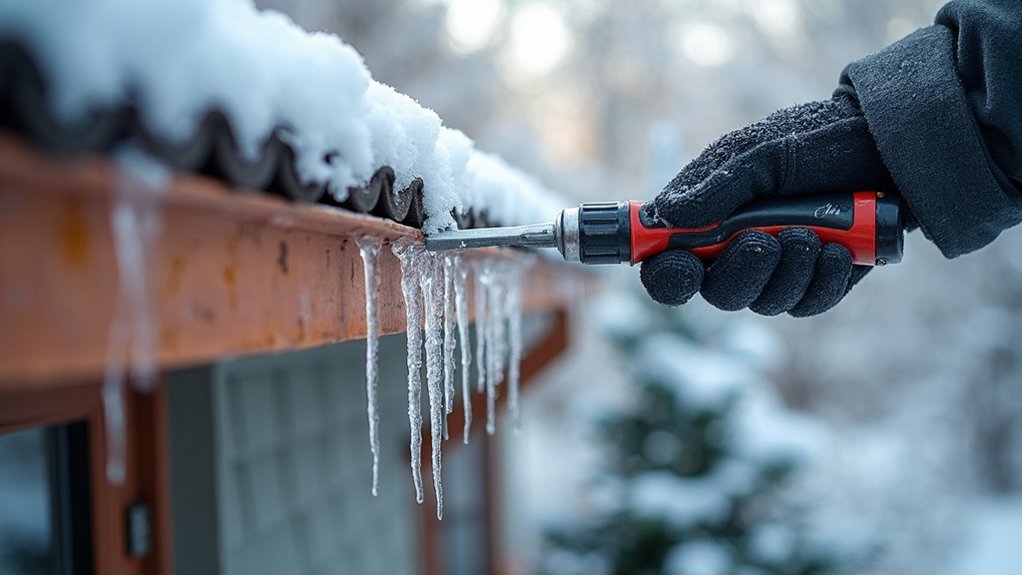
Winter’s arrival brings a hidden threat that most homeowners don’t notice until it’s too late. You’ve probably seen those dramatic icicles hanging from your neighbor’s gutters, but what you can’t see is the silent damage occurring behind your home’s exterior. Ice dams form gradually, blocking your drainage system and forcing water into places it shouldn’t go. The consequences extend far beyond a few frozen gutters, and the repair bills can devastate your budget if you don’t act first.
Key Takeaways
- Clear gutters of leaves and debris before winter to prevent blockages that worsen ice formation.
- Install adequate attic insulation (R-49 to R-60) and ventilation to reduce roof melting that creates ice dams.
- Seal air leaks around fixtures and chimneys to prevent warm air from reaching the roof deck.
- Consider heat cables for gutters and rooflines in areas with severe winter weather and frequent ice buildup.
- Watch for warning signs like icicles, sagging gutters, and water stains indicating potential ice dam damage.
Understanding Ice Dam Formation in Gutter Systems
When warm air from your home escapes through the roof, it creates a dangerous cycle that leads to ice dam formation in your gutters. This heated air melts snow on your roof’s surface, sending water flowing toward the edge of the roof where it refreezes. Poor attic ventilation exacerbates this problem by allowing more warm air to reach the roof deck.
As melting snow continues to flow down and refreeze, thick ice barriers develop along your roof’s edge and throughout your gutter system. These ice formations block normal water flow, forcing melted water to back up under shingles. Understanding what causes ice dam formation helps you identify vulnerable areas before winter weather strikes, allowing you to take preventive measures that stop ice dams from forming.
Warning Signs of Ice Buildup and Gutter Damage
Although ice dams form gradually, they produce distinct warning signs that you can spot before serious damage occurs. Look for icicles hanging from your gutters and roof edges – these aren’t just winter decorations but clear indicators of ice dam formation. You’ll also notice ridges of snow and ice building up along your roof’s perimeter where gutters meet the roofline.
Even with proper attic insulation, clogged gutters can still cause ice dam problems. Watch for sagging or damaged gutters, water stains on exterior walls, and peeling paint around eaves. Inside your home, check for water spots on ceilings or walls near the roof edge. These warning signs signal that ice dam prevention measures are needed immediately to avoid costly gutter damage and structural issues.
The Role of Attic Insulation and Ventilation in Prevention
While spotting warning signs helps you catch problems early, preventing ice dams starts with addressing the root cause inside your home. Proper attic insulation and ventilation control attic temperatures, stopping warm air from melting roof snow unevenly.
Here’s how to prevent future ice buildup:
- Install adequate insulation with R-49 to R-60 values to maintain uniform roof temperatures and eliminate heat loss patterns.
- Improve ventilation systems using ridge, gable, or soffit vents to prevent warm air accumulation in your attic space.
- Seal air leaks around fixtures, chimneys, and access points to block moist indoor air from reaching your roof.
- Schedule professional assessment for homes with cathedral ceilings or complex designs that complicate insulation efforts.
This approach reduces reliance on roof rake usage and gutter cleaning while protecting your drainage system long-term.
Essential Gutter Maintenance Before Winter Arrives
Since proper insulation and ventilation address the root cause of ice dams, you’ll want to complement these efforts with thorough gutter maintenance before winter weather arrives. Start by removing leaves, twigs, and debris from your gutters to prevent clogged gutters that contribute to ice formation. Inspect your gutter system for cracks, holes, or loose connections, then make necessary repairs to guarantee proper drainage.
Consider installing Gutter Guards to minimize debris accumulation and reduce cleaning frequency. Trim overhanging tree branches that shed materials onto your roof, keeping gutters clear year-round. Apply silicone-based sealant to seams and joints, creating watertight barriers against leaks. This comprehensive Winter Gutter Maintenance approach prevents costly damage to your gutters while working alongside your insulation and ventilation improvements for maximum ice dam prevention.
Heat Cable Installation for Gutters and Rooflines
When preventive maintenance alone isn’t enough to combat severe ice dam conditions, heat cables offer a proactive solution that directly addresses ice formation along your rooflines and gutters.
These self-regulating heating systems maintain temperatures above freezing along roof edges, guaranteeing continuous water flow through your gutter system even during harsh winter conditions.
Consider these key factors when planning heat cable installation:
- Climate assessment – Evaluate your local winter severity and typical ice formation patterns
- Roof size calculations – Determine cable length requirements based on your roofline dimensions
- Gutter design compatibility – Ensure cables integrate seamlessly with your existing drainage configuration
- Professional installation – Have qualified technicians install and configure optimal cable spacing and wattage
Proper heat cable installation prevents ice dams while protecting your home from costly water damage and structural issues.
Safe Snow and Ice Removal Techniques
Beyond preventive measures like heat cables, you’ll eventually face situations where existing ice dams require immediate removal to protect your home from water damage. Never attempt dangerous DIY techniques using hammers, chisels, or pressure washers—these methods risk structural damage and personal injury. Professional removal using steam or calcium chloride represents the safest approach to preserve warranties and guarantee proper solutions.
Call for emergency assessment when you notice water stains, icicles, or frozen barriers. Roof ice removal requires experienced professionals who can safely eliminate dams without causing additional harm. Temporary protection measures must be followed by permanent solutions like improved insulation and ventilation to prevent future occurrences. Exhaust systems and proper airflow help maintain consistent attic temperature levels, reducing ice dam formation throughout winter months.
Professional vs. DIY Ice Dam Removal Methods
Although the temptation to tackle ice dam removal yourself might seem cost-effective, this approach often creates more problems than it solves. DIY methods like chipping ice can damage gutter systems and create excess weight that leads to structural issues. Snow covering your roof requires careful removal to prevent water damage.
Professional services offer superior solutions:
- Specialized Equipment – Steam and chemical treatments safely eliminate ice without damaging your roof or gutters
- Root Cause Analysis – Experts identify attic insulation problems causing ice dam formation
- Warranty Protection – Professional removal includes guarantees for peace of mind
- Long-term Prevention – Proper techniques safeguard against recurring issues that’d need to replace damaged components
While DIY approaches provide a temporary solution, professional ice dam removal secures lasting protection for your home’s drainage system.
Gutter System Upgrades for Winter Weather Protection
Professional ice dam removal addresses immediate winter challenges, but upgrading your entire gutter system provides thorough protection against future weather-related problems. K-Guard’s curved hood design helps prevent ice dams by eliminating debris accumulation that typically leads to blockages. The system’s strength allows it to withstand extreme weather conditions while maintaining proper air circulation that reduces ice formation.
You’ll protect your home from ice dams through K-Guard’s innovative engineering that handles snow and ice effectively. The curved design prevents snow buildup while ensuring water flows freely, preventing ice formation that damages traditional gutters. This upgrade offers long-term winter protection with minimal maintenance requirements.
K-Guard provides a three-step installation process with free estimates, plus a lifetime warranty ensuring your investment delivers lasting protection against winter weather challenges.
Long-Term Solutions for Chronic Ice Dam Problems
When ice dams repeatedly form on your roof each winter, you’re dealing with a chronic problem that requires more than temporary fixes. While proper insulation and ventilation systems in your attic space help prevent formation, upgrading your entire gutter system provides the most thorough solution.
K-Guard’s curved hood design prevents ice dams from forming on your roof by ensuring gutters drain properly without debris accumulation. This advanced system offers four key advantages:
- Elimination of regular cleaning and maintenance requirements
- Protection against extreme weather conditions and accumulated ice weight
- Prevention of gutters and roof damage through engineered durability
- Enhancement of home value while solving chronic drainage issues
With lifetime warranty coverage and professional installation, you’ll have peace of mind knowing your drainage system won’t cause damage during harsh winters.
Frequently Asked Questions
Should You Remove Ice From Gutters?
You shouldn’t attempt manual ice removal tools yourself due to safety risks. Instead, hire professional ice dam services, install heated gutter cable systems, or use gutter protection devices. Follow proper gutter cleaning schedule and downspout inspection tips for icicle prevention methods.
Does Homeowners Insurance Cover Ice Dam Damage?
Your homeowners policy coverage typically includes ice dam damage, but you’ll face deductible requirements and potential policy exclusions. Follow proper claim documentation and mitigation steps during the insurance claim process to maximize restoration costs coverage.
Is Ice Dam Removal Worth It?
Picture icicles cascading dangerously—ice dam removal’s absolutely worth it. You’ll prevent costly structural damage through roof raking techniques, gutter heating cables, and insulation improvements. Safe ladder usage and snow removal strategies protect your investment better than ignoring ice dam formation risks.
How Much Does Ice Dam Removal Cost?
Professional ice removal services typically cost $200-$800 depending on severity. You’ll pay less for temporary ice dam solutions and ice melt application, while thorough roof snow removal methods increase gutter cleaning costs considerably.
Conclusion
You’ve spent months preparing your gutters for winter’s assault—installing heat cables, upgrading insulation, and clearing every last leaf. Yet here’s the irony: Mother Nature doesn’t care about your meticulous planning. She’ll still test your system with unexpected ice storms and record snowfall. But that’s exactly why you’ve prepared. When your neighbors are dealing with costly ice dam damage, you’ll be the one watching winter’s fury from your warm, dry home.