
You probably don’t realize that St. Louis’s historic homes sit on some of the most challenging soil conditions in the Midwest—expansive clay that can shift dramatically with moisture changes. If you own one of these architectural treasures, you’re likely dealing with drainage issues that weren’t even considered when your home was built decades or centuries ago. The foundation problems you’re experiencing aren’t just about water; they’re about preserving irreplaceable history while meeting modern standards.
Key Takeaways
- Install French drain systems with perforated pipes and gravel that integrate seamlessly with historic home aesthetics.
- Address clay soil drainage issues through corrective grading that directs water away from foundation structures.
- Replace deteriorating gutters and downspouts while preserving the property’s original architectural character and design.
- Use natural stone retaining walls and period-appropriate materials that match the historic home’s vintage appearance.
- Implement quarterly drainage inspections and maintenance schedules to protect structural integrity and historical value.
Understanding the Unique Challenges of Historic Home Drainage
When you own a historic St. Louis home, you’re dealing with drainage challenges that modern properties don’t face. Your foundation sits atop clay-based soil that doesn’t absorb water efficiently, creating pooling issues around your home’s base. The hilly terrain common throughout St. Louis compounds this problem by directing water flow toward your property.
Your historic home likely has outdated or improperly installed drainage systems that can’t effectively channel water away from the foundation. Complex underground infrastructure—including old utility lines, forgotten cisterns, and deteriorated drainage pipes—creates additional complications when addressing water issues.
These unique circumstances require specialized approaches that preserve your home’s architectural integrity while solving modern drainage problems. Understanding these challenges is essential before implementing any foundation drainage solutions.
Recognizing Warning Signs of Foundation Drainage Problems
Before water damage becomes irreversible, your historic St. Louis property will display telltale warning signs that demand immediate attention. Watch for persistent water pooling around your foundation, which signals an inadequate drainage system that’s compromising your home’s structural integrity. You’ll notice soil erosion and shifting pavers as clear indicators of drainage issues affecting the foundation of your home.
Look for cracking or bowing walls and foundation damage caused by water seeping into surrounding soil. Musty odors, mold growth, and basement water stains reveal excessive moisture intrusion from failing drainage systems. Uneven concrete slabs on driveways and walkways suggest poor grading problems. Frequent flooding or standing water in your yard, even after heavy rain, highlights the urgent need for extensive drainage solutions.
How Aging Infrastructure Affects Water Management
These warning signs often stem from a deeper issue: St. Louis’s aging infrastructure creates a perfect storm for foundation water problems. Your historic property’s outdated sewer system wasn’t designed for today’s rainfall patterns, causing dangerous backflow into basements during storms. The original drainage systems around older homes lack proper grading, allowing water to pool against foundations instead of flowing away.
You’ll find that deteriorating gutters and downspouts compound these issues by directing water toward your home’s base. Without modern French drains or an effective sump pump system, your property can’t handle excess moisture. The brick and mortar construction typical of historic St. Louis homes becomes increasingly vulnerable as constant water exposure causes cracking and deterioration, making your drain system inadequate for protecting your foundation.
French Drain Systems for Heritage Properties
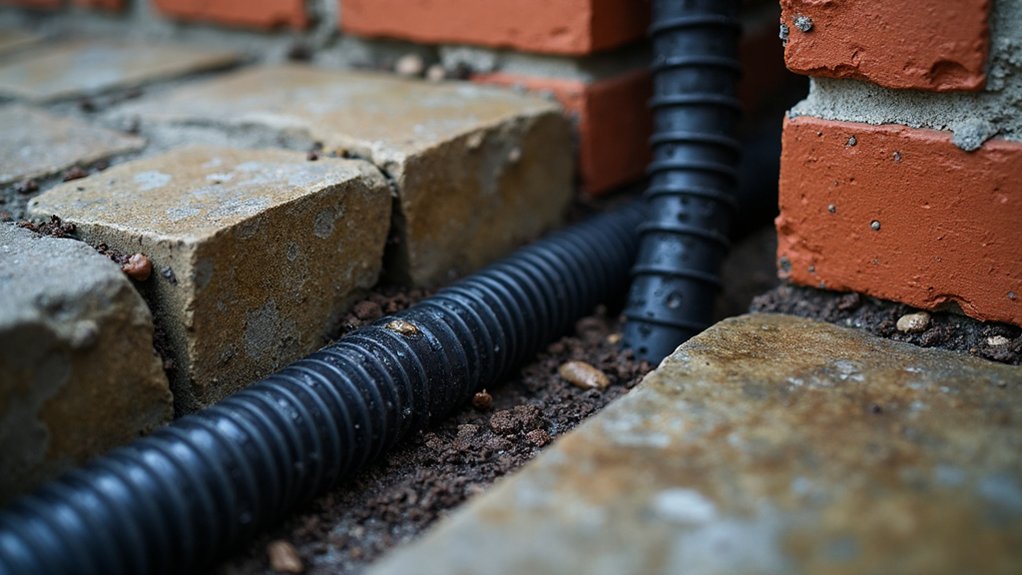
Although your historic St. Louis property faces unique drainage challenges, French drain systems offer an effective solution for protecting your foundation’s structural integrity. These systems use perforated pipes surrounded by gravel in below-grade trenches to channel water away from your home’s vulnerable foundation. When properly installed around your heritage property’s perimeter, they’ll prevent moisture buildup that damages older building materials and guard against seasonal flooding.
You’ll need specialized expertise to integrate these drainage systems without compromising your home’s original design. Unlike standard channel drains, French drains can be customized to blend seamlessly with your vintage home’s aesthetic. This foundation repair approach preserves your property’s architectural character while enhancing long-term durability against soil erosion and water damage.
Corrective Grading Techniques for Historic Foundations
When water consistently pools around your historic St. Louis property, corrective grading offers one of the best drainage solutions available. You’ll need to strategically reshape your landscape to move water away from the foundation, preventing costly damage to your home’s structural integrity.
Here are four essential corrective grading techniques:
- Establish proper slope – Create a minimum 1% grade that directs water away from your homes foundation
- Regrade around landscaping – Carefully shape soil around trees and flowerbeds to control water flow
- Combine drainage methods – Integrate French drains or channel drains with grading for maximum effectiveness
- Hire experienced contractors – Work with professionals familiar with historic properties who understand unique challenges
This approach prevents water from flowing toward your home while preserving your property’s historic character.
Retaining Wall Solutions That Preserve Architectural Character
Three key considerations will guide your retaining wall project for historic St. Louis properties: material selection, structural engineering, and aesthetic integration. You’ll want natural stone or custom-crafted masonry that matches your home’s century-old character while creating stable solutions to direct water away from vulnerable foundations.
Experienced contractors understand how to safeguard your property’s safety without compromising historical integrity. They’ll design custom systems that seamlessly blend with your architectural style, preserving curb appeal while addressing drainage challenges around your home.
Properly engineered retaining walls don’t just manage water flow – they enhance your landscape while maintaining the integrity of your home. When you choose materials and designs that complement your historic property, you’ll keep your home dry while honoring its original character.
Dry Creek Beds and Natural Drainage Features
Dry creek beds blend seamlessly into St. Louis’s historic landscapes while providing exceptional foundation protection. These excavated trenches filled with washed river gravel offer both beauty and function, capturing excess rainwater before it threatens your home’s foundation.
You can strategically position dry creek beds to divert water away from vulnerable areas, integrating them with walkways and patios for cohesive design. Professional drainage services maintain proper slope calculations and perforated pipe connections that leverage gravity effectively.
Consider these natural drainage enhancements:
- Swales – Shallow channels that improve water absorption
- Gravel selection – Choose appropriate stone sizes for optimal flow
- Gutters and downspouts integration for complete water management
- Strategic placement to keep water away from foundations
Contact professionals for a free estimate on custom Dry Creek solutions.
Professional Assessment and Custom Drainage Planning
Since historic St. Louis properties present unique drainage challenges, you’ll need experienced professionals who understand these complexities. Take a look at how expert assessments work: drainage specialists thoroughly evaluate your property’s soil composition, landscape features, and existing infrastructure. They’ll examine whether natural creek beds can be incorporated or if a channel drain system better suits your needs.
During detailed inspections, professionals develop customized plans that align with your home’s architectural style and maintenance preferences. These inclusive solutions address both above-ground and below-ground drainage issues, preventing water damage through innovative techniques like French drains and strategic grading. The consultation process guarantees your selected drainage system effectively manages water flow while preserving your historic property’s character and providing long-term foundation protection.
Long-Term Maintenance Strategies for Historic Property Drainage
After implementing your custom drainage solution, maintaining these systems becomes your primary responsibility for protecting your historic St. Louis property. Regular upkeep secures your investment continues safeguarding your building’s structural integrity while preserving its historical value.
To protect your property effectively, focus on these essential maintenance practices:
- Schedule quarterly inspections of gutters, downspouts, and drainage systems to prevent clogging and water damage around your foundation
- Monitor foundation conditions by checking for cracks or water infiltration signs that could compromise structural stability
- Consider sustainable upgrades like permeable pavement or rain gardens to manage stormwater runoff more efficiently
- Partner with experienced contractors who understand historic building challenges to develop all-encompassing maintenance strategies
St Louis business owners should make sure these proactive measures become routine to maintain ideal drainage performance year-round.
Frequently Asked Questions
How Much Does a Foundation Drainage System Cost?
You’ll find affordable drainage options ranging $5,000-$15,000 for professional installation costs. Budget friendly drainage alternatives like French drains cost $3,000-$8,000, though DIY drainage system installation reduces costs but increases maintenance requirements considerably.
How to Fix Poor Foundation Drainage?
You’ll fix poor foundation drainage by implementing proper grading techniques, installing underground pipe systems, and using water diversion techniques. Consider permeable pavement options and soil erosion prevention methods to redirect water away from your foundation effectively.
What Are the Four Types of Drainage Systems?
You’ll find four main drainage systems: French drains for subsoil moisture control, downspout extensions managing surface runoff, dry creek beds requiring yard grading considerations, and channel drains supporting basement waterproofing efforts.
What Is the Best Drainage Around House Foundation?
While water threatens your foundation, you’ll protect it best through proper grading, adequate downspouts, French drain installation, waterproofing options, and sump pump necessity. Don’t let moisture win—combine these solutions for maximum protection.
Conclusion
Picture your historic St. Louis home standing strong against Missouri’s unpredictable storms, its century-old foundation dry and secure beneath your feet. You’ve invested in proper drainage solutions that honor your property’s architectural heritage while channeling water away like invisible guardians. Don’t let another rainy season threaten your home’s legacy. You’ll sleep soundly knowing your foundation’s protected by modern engineering that respects the craftsmanship of generations past.