
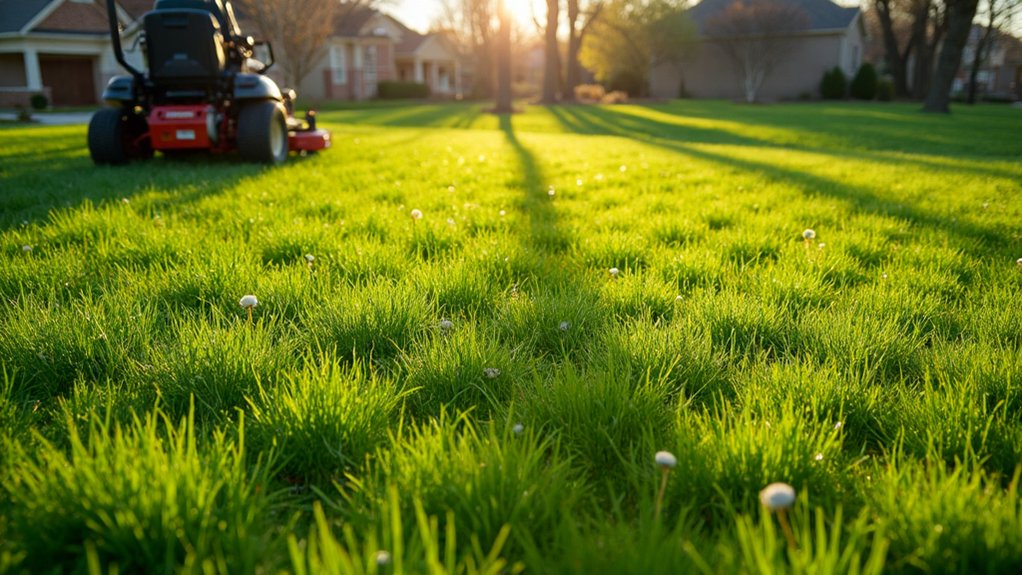
While winter’s harsh grip slowly loosens, your lawn remains vulnerable beneath that deceiving green surface. You’ve probably noticed some grass blades poking through, tempting you to fire up the mower for that satisfying first cut. But here’s what most homeowners don’t realize: timing this initial mow incorrectly can undo months of your lawn’s natural recovery process. The difference between a thriving yard and a struggling one often comes down to these pivotal first decisions.
Key Takeaways
- Wait for soil temperatures to reach 50-55°F and grass to be 3-4 inches tall before mowing.
- Remove all winter debris and hard objects from the lawn to prevent equipment damage.
- Service your mower by checking oil, air filter, spark plug, and sharpening blades beforehand.
- Set cutting height to 2.5-3.5 inches for cool-season grasses and 1.5-2.5 inches for warm-season varieties.
- Follow the one-third rule by never removing more than one-third of grass blade height.
Wait for the Right Temperature and Soil Conditions
While your lawn may look ready for cutting after winter’s end, rushing into that first mow can actually harm your grass’s health and growth potential. You’ll want to wait until soil temperatures are consistently between 50-55°F before you mow your lawn. Even after snow melts, cold soil can make timing tricky, making it harder for grass to recover from cutting stress.
Don’t mow until the grass has grown to 3-4 inches tall, and it’s time to wake up from dormancy naturally. Check for snow mold or other winter diseases first—these conditions require patience. Taller grass helps protect the crown during this vulnerable period. Wait until the grass is completely dry before cutting, as wet conditions cause soil compaction and uneven cuts that stress your recovering lawn.
Prepare Your Lawn and Remove Winter Debris
Before you start your mower, you’ll need to clear your lawn of winter’s leftover debris and potential hazards. Conduct a thorough walk-through to identify and remove hard objects like stones, sticks, or pet toys that could damage your mower or cause injury during your first cut. Use a garden rake or cordless leaf blower to gather fallen leaves and soft debris—don’t leave grass clippings or other materials scattered across the lawn.
Since grass doesn’t grow when ground temperatures drop below 5 degrees Celsius, it’s easier to spot objects that need removal. Properly dispose of collected debris through composting or council collection. This preparatory step helps prevent soil compaction and potential mowing issues, setting the stage for a successful lawn care routine.
Check and Service Your Mower Equipment
After clearing your lawn of debris, you’ll want to confirm your mower is ready for the season ahead. Start by inspecting your lawn mower’s engine oil, air filter, and spark plug. Replace or clean these components as needed for effective performance during your first mow.
Next, examine your mower blades carefully. Dull blades tear grass rather than cutting it cleanly, causing brown tips and stress. Make sure to maintain sharp blades for a clean cut that promotes proper lawn health. Sharpen or replace them before the mow of the season begins.
Check your mower’s fuel system and clean the deck thoroughly. This preparation secures efficient operation when mowing your lawn. Proper lawn care starts with well-maintained equipment, setting the foundation for successful spring lawn maintenance.
Set the Proper Mowing Height for Spring
Once your mower is properly serviced, you’ll need to set the correct cutting height for your first spring mow. For cool-season grasses, aim for 2.5-3.5 inches, while warm-season varieties should be cut at 1.5-2.5 inches. This First Cut requires special attention—start with a higher setting and gradually decrease the cutting height over subsequent mowings throughout the season.
Never remove more than one-third of the grass blades during any single cutting session, as this prevents shocking your lawn. Maintaining taller grass during this time helps prevent soil exposure and promotes deeper root development. Avoid scalping your lawn for the first cut of the season, as exposed soil leads to moisture loss and encourages weed growth. This approach guarantees a healthy lawn foundation.
Follow the One-Third Rule for Grass Length
The one-third rule stands as the golden standard for healthy mowing practices, ensuring you don’t stress your grass during its vulnerable spring recovery period. Never remove more than one-third of each grass blade’s height in a single session. If your lawn’s grown tall over winter, resist cutting grass too short by raising your mower to its highest setting initially. Reduce height gradually over multiple sessions instead of making drastic cuts.
Cutting the grass too aggressively shocks the root system and weakens your lawn’s defense against weeds and diseases. Mowing when the grass is dry produces cleaner cuts and better results. A mulching mower helps return nutrients to the soil by chopping clippings finely. Wet grass clogs equipment and creates uneven cuts, so wait for dry conditions before mowing.
Choose the Best Mowing Pattern and Direction
While many homeowners stick to the same back-and-forth pattern week after week, varying your mowing direction prevents soil compaction and promotes healthier grass growth. For your first mow of spring, alternate mowing patterns between diagonal, circular, and straight lines. This approach distributes clippings evenly and creates an attractive striped appearance.
Mow in a different direction each time you cut throughout the season. During the first few cuts, mow at a slower pace to guarantee clean, even trimming after winter dormancy. Avoid using the same wheel tracks repeatedly, as this creates ruts and depressions in your lawn.
Before beginning your mowing routine, aerate compacted areas in early spring. This improves air and water infiltration, setting the foundation for successful seasonal maintenance.
Handle Grass Clippings Appropriately
Proper clipping management makes the difference between a thriving lawn and one struggling with bare spots and disease. Use a mulching mower to finely chop clippings and distribute them evenly. Leave thin layers to give your lawn natural nutrients, but collect excessive clippings to prevent smothering.
Timing is crucial. Avoid mowing when grass is wet, as clippings clump together and create uneven coverage. Wait for grass to dry completely before cutting. During spring’s first two weeks, consider mowing more frequently as warm weather accelerates growth. Help keep your lawn healthy by never covering grass blades entirely with thick clippings.
When you must collect clippings on the lawn, compost them properly rather than leaving piles that create unsightly messes and promote thatch buildup.
Establish a Regular Spring Mowing Schedule
Once soil temperatures consistently reach 50-55°F, you’ll know it’s time to establish your spring mowing routine. Your first time mowing in early spring sets the foundation for success throughout the growing season. Start when cool-season grass reaches 3-4 inches tall, cutting to 2.5-3.5 inches. Never remove more than one-third of the blade height – following this rule for your first mow is a great way to avoid stressing your lawn throughout the season.
These key tips will keep your lawn throughout spring looking healthy: alternate mowing directions each cut of the year, maintain sharp blades, and adjust warm-season grass height gradually. Consistent scheduling prevents issues like weeds from taking hold. Apply these lawn care tips regularly for ideal results.
Frequently Asked Questions
What’s the First Thing You Should Do to Your Lawn in the Spring?
You’ll want proper lawn preparation by thoroughly inspecting and clearing debris like leaves, sticks, and stones. Remove all hazardous objects that could damage your mower before implementing soil aeration techniques and other spring maintenance procedures.
When Should You Mow for the First Time in the Spring?
You should start your first spring mow when soil temperatures reach 50-55°F and grass hits 3-4 inches tall. Check soil moisture levels, adjust mowing blade height, and guarantee your lawn mower maintenance is complete beforehand.
How to Cut New Grass for the First Time?
Like a gentle whisper through meadows, you’ll want sharp blades at maximum cutting grass height. Don’t bag clippings—they’ll nourish growth. Follow proper mowing techniques, varying directions each time to promote healthy seasonal grass growth patterns.
What Is the Mowing 1 3 Rule?
The mowing 1/3 rule means you shouldn’t cut more than one-third of your grass blade’s height per mowing. This proper mowing technique maintains ideal mowing height, supports your lawn maintenance schedule, and prevents stress regardless of grass type considerations.
Conclusion
You’ve mastered the ancient art of spring mowing – congratulations, you’re now qualified to judge your neighbor’s questionable lawn care choices from your perfectly manicured kingdom. Armed with soil thermometers and measuring tapes, you’ll become the suburban warrior your HOA never knew it needed. Just remember, while you’re obsessing over blade heights and mowing patterns, your grass is probably wondering why you can’t just let it grow wild like nature intended.