
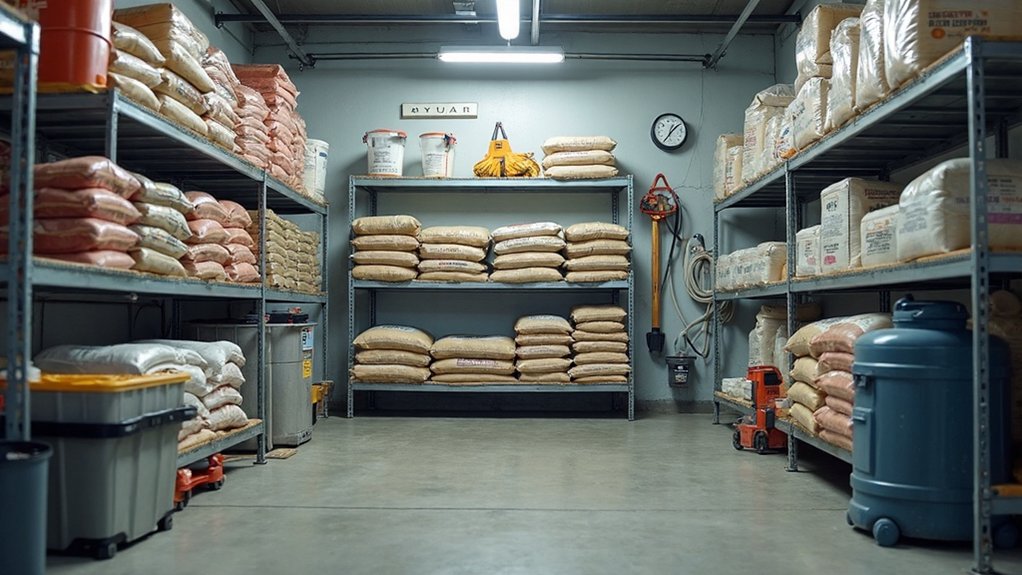
You’ve likely stored fertilizer in your garage or shed without giving it much thought, but improper handling could put your family and property at serious risk. From chemical burns and respiratory hazards to potential fires and groundwater contamination, the stakes are higher than most homeowners realize. The good news? You can easily avoid these dangers with a few simple safety practices that’ll protect both your investment and your peace of mind.
Key Takeaways
- Store fertilizers in original labeled containers in a secure, well-ventilated area away from heat sources and high-traffic zones.
- Wear required personal protective equipment including chemical-resistant gloves, safety goggles, and respirators when handling fertilizers.
- Always add fertilizer to water rather than water to fertilizer to prevent dangerous splashing and chemical reactions.
- Keep oxidizers and flammable materials in separate storage areas with fire extinguishers positioned for quick access.
- Rinse empty containers three times and contact local authorities for proper disposal of unused fertilizer products.
Reading and Understanding Product Labels and Safety Data Sheets
Before you handle any fertilizer, you must thoroughly read and understand the product label and safety data sheet (SDS) that accompanies it. These documents contain critical information for safe handling of fertilizers in your home and garden.
Product labels provide essential details about application rates, mixing instructions, and basic safety precautions. Don’t skip this step—improper use can damage plants or pose health risks.
Safety data sheets offer exhaustive hazard information, required personal protective equipment, and emergency procedures. They’re your go-to resource for understanding potential dangers and proper storage requirements.
When you’re uncertain about any aspect of fertilizer use, contact the manufacturer directly. Stay informed about product updates and changes to handling requirements. This proactive approach guarantees you’re protecting yourself, your family, and your property.
Personal Protective Equipment Requirements for Chemical Handling
After reviewing the product label and SDS, you’ll know exactly what personal protective equipment you need for safe chemical handling. Personal Protective Equipment includes chemical-resistant gloves, safety goggles, and respirators when working with fertilizers, pesticides, or herbicides. Guarantee your PPE fits properly and remains in good condition to provide adequate protection from chemical exposure.
Replace or maintain equipment as needed to ensure continued effectiveness against chemical hazards. After use, properly remove and dispose of contaminated PPE to prevent chemical spread. Your Personal Protective Equipment must be stored in a clean, dry location away from chemicals to maintain its protective properties. Always consult the product’s safety data sheet for specific PPE recommendations based on each chemical’s unique hazards and risks.
Proper Storage Location and Container Management
Selecting the right storage location forms the foundation of safe fertilizer management. You’ll want to store fertilizers in a secure, well-ventilated area that’s away from heat sources, ignition sources, and high-traffic zones. Always use original, properly labeled containers rather than repurposing food or beverage containers, which can lead to dangerous mix-ups.
Inspect your stored containers regularly for damage or leaks, addressing problems immediately. Keep an accurate inventory and follow the first-in, first-out principle to prevent product deterioration over time. Don’t forget to provide secondary containment like dikes or trays beneath your storage area. This captures any spills or leaks, preventing environmental contamination and making cleanup easier if accidents occur.
Mixing and Dilution Best Practices
When you mix up fertilizer solutions, precision becomes your best ally for both safety and effectiveness. Follow product label instructions carefully to achieve proper dilution ratios. Always add fertilizer to water rather than pouring water into the fertilizer—this prevents dangerous splashing and chemical releases.
Consider your water quality and water sources when mixing, as impurities can affect fertilizer performance. Work in well-ventilated areas or use mechanical mixing systems to minimize exposure to fumes. Keep different chemical products separate by using dedicated equipment and containers for each type.
After mixing, thoroughly clean and rinse all equipment to prevent residue buildup that could contaminate future batches. This careful approach protects both you and your plants while ensuring ideal fertilizer effectiveness.
Fire Prevention and Suppression Systems
Since fertilizers can create significant fire hazards in storage environments, you’ll need thorough fire prevention and suppression systems to protect your facility and personnel. Install a fire detection and alarm system that’ll alert you immediately to potential fires. Keep oxidizers and flammable materials in separate storage areas to minimize fire risks. Position fire extinguishers throughout your storage area for quick access during small fires. Your electrical lighting must provide clear visibility so you can identify fire hazards easily. Contact your local fire department annually to report your current fertilizer inventory—they’ll need this information for emergency response planning. These systems work together to create multiple layers of protection against fire incidents in your storage facility.
Secondary Containment and Spill Prevention
While fire prevention protects against combustion hazards, you’ll also need robust secondary containment systems to manage spills and leaks that can contaminate soil and groundwater. Install a curbed concrete pad or berm around your storage area with capacity for at least 110% of your largest container’s volume. This secondary containment prevents fertilizer from escaping into the environment during accidents.
Create an impermeable floor using sealed concrete or protective liners to stop seepage. Regular inspections are vital—check for cracks, holes, or structural damage that could compromise your system’s effectiveness. Keep absorbent materials like sand or vermiculite readily available for immediate spill cleanup within the containment area. Proper spill prevention protects both your property and surrounding ecosystems from harmful contamination.
Inventory Control and Regular Inspections
Beyond physical containment measures, you’ll need systematic inventory control and regular inspections to maintain safe fertilizer storage practices. Create and maintain an up-to-date inventory of all fertilizers, pesticides, and herbicides on your property. Document every purchase, usage amount, and disposal to track what you’re storing and where it’s located.
Schedule regular inspections of your storage areas to identify potential problems before they become hazardous. Look for container damage, leaks, or deterioration that could compromise product integrity. Always store products in their original labeled containers within locked, secure areas.
When products expire or you no longer need them, don’t let them accumulate. Dispose of unwanted chemicals according to local hazardous waste regulations to prevent environmental contamination and maintain organized storage.
Emergency Response Planning and Procedures
Even with careful storage practices, fertilizer spills and accidents can occur, making a detailed emergency response plan essential for protecting both people and the environment. You’ll need to develop clear procedures for containing and cleaning up spills in your fertilizer storage area. Train everyone who handles these materials on proper emergency protocols and guarantee they know how to use cleanup supplies effectively.
Keep emergency contact information readily accessible, including fire department, environmental agencies, and product manufacturers. Stock your storing fertilizers location with appropriate spill cleanup materials like absorbent substances, shovels, and sealable disposal containers. Regular inspections of your storage area and equipment help identify potential issues before they become emergencies, supporting ongoing environmental protection efforts through proactive maintenance and preparedness.
Safe Disposal of Containers and Unused Products
After you’ve properly stored and handled your fertilizers, you’ll eventually face the challenge of disposing of empty containers and unused products safely. Proper disposal of containers protects the environment and follows local regulations. Never burn or dump these materials, as they can contaminate soil and water sources.
Here’s how to properly dispose of fertilizer materials:
- Rinse empty fertilizer containers three times and apply the rinsate to your lawn or garden
- Store partially-used products in original containers with tightly sealed lids until disposal
- Contact your local waste management authority about hazardous waste collection events
- Follow all local regulations when disposing of unused fertilizer products
Your local waste management authority can provide specific guidance on disposal methods available in your area, ensuring you handle these materials responsibly.
Temperature Control and Ventilation Requirements
Proper storage conditions require careful attention to temperature and airflow in your fertilizer storage area. You’ll need to maintain temperatures below 32°C (90°F) to prevent fertilizer degradation and safety hazards. Install proper ventilation systems to prevent dangerous ammonia buildup and other toxic fumes that can accumulate in enclosed spaces.
Choose insulated storage facilities that help regulate both temperature and humidity levels throughout the year. Keep your fertilizers away from heat sources like furnaces, boilers, or direct sunlight exposure. This is especially critical for storage of Ammonium Nitrate, which becomes unstable at higher temperatures.
Ensure adequate airflow by installing exhaust fans or vents that allow continuous air circulation. Monitor your storage area regularly, checking that ventilation systems function properly and temperature remains within safe limits.
Frequently Asked Questions
What Are the Precautions for Storage of Fertilizers?
You’ll need proper ventilation requirements in your storage area, choose a secure storage location away from heat sources, and implement moisture control measures. Keep containers sealed, use secondary containment, and maintain inventory rotation for safety.
Is It Safe to Store Fertilizer in the House?
Creating a “convenient corner” for fertilizer indoors isn’t wise. You’ll face basement storage risks from stored fertilizer volatility, plus pet access concerns. Don’t store fertilizer inside—you’re better off using detached sheds for safer handling.
What Are the Safety Precautions When Using Fertilizer?
You’ll need proper application techniques to avoid overuse, consider environmental impact considerations like water contamination, and recognize potential health hazards. Always wear protective gear, read labels carefully, and apply during calm weather conditions.
How to Safely Handle Fertilizer?
Like handling a sleeping giant, you’ll master proper application techniques through careful mixing and spreading. Embrace nutrient conservation strategies and sustainable farming practices by wearing PPE, reading labels, and storing fertilizers properly.
Conclusion
You’re now armed with the knowledge to handle fertilizers like a pro. Don’t let safety slip through the cracks—always wear protective equipment, store products in original containers, and maintain proper ventilation. Keep your inventory organized, inspect regularly, and have an emergency plan ready. When it’s time to dispose of unused materials, contact your local waste authorities. Remember, proper handling today prevents costly headaches tomorrow.