
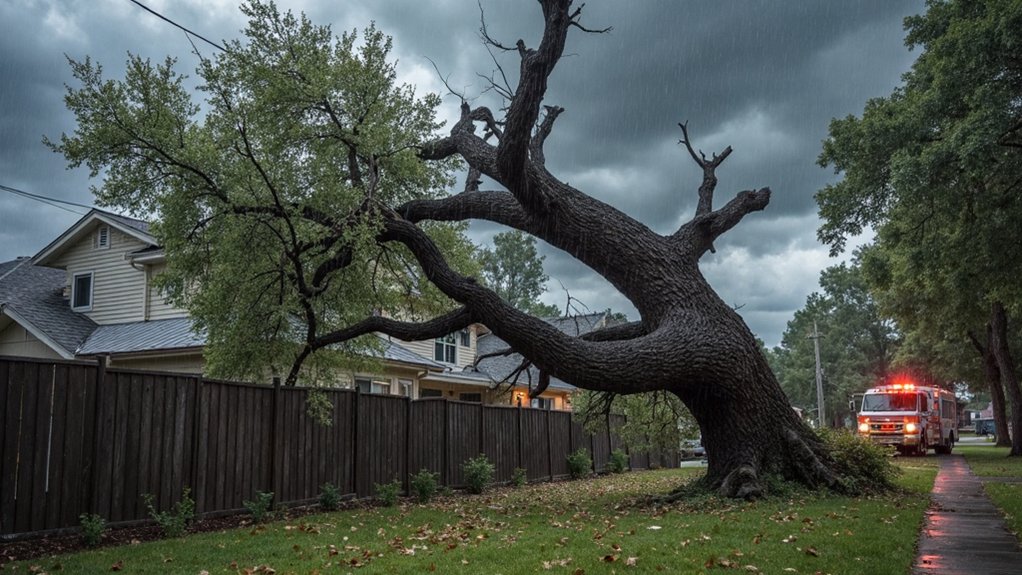
While storms bring invigorating rain and cool breezes, they can also turn your beautiful trees into dangerous hazards overnight. You might wake up to find towering oaks leaning precariously toward your home or massive branches blocking your driveway. These situations demand immediate action, but knowing what steps to take—and which ones to avoid—can mean the difference between a quick resolution and a costly disaster that puts your family’s safety at risk.
Key Takeaways
- Immediately establish a safety perimeter around damaged trees and avoid walking under compromised branches or leaning trees.
- Contact utility companies if trees or branches are touching power lines before attempting any cleanup efforts.
- Document all storm damage with photographs for insurance claims and call certified arborists for professional assessment.
- Never attempt DIY removal of large damaged trees due to serious injury risks and potential property damage.
- Professional arborists use specialized equipment and safety protocols to safely remove hazardous trees and minimize ongoing risks.
Recognizing Emergency Signs That Require Immediate Tree Service
When severe weather strikes your property, you’ll need to quickly assess whether your trees pose an immediate threat to people or structures. A hazardous tree displaying sudden leaning or tilting indicates serious root damage or trunk weakness requiring emergency tree service. Watch for uprooted soil around tree bases, signaling severe stress that could lead to complete failure. Large branches that are cracked, hanging, or broken create immediate safety concerns, especially if they’re positioned over walkways or buildings.
Warning signs of a tree emergency include any tree that partially fell during the storm or fallen branches touching power lines. Don’t approach trees near electrical lines – contact utility companies immediately. Recognizing these critical indicators helps you determine when professional intervention is necessary to prevent property damage and protect lives.
Safety Steps to Take Before Professional Help Arrives
Once you’ve identified emergency tree conditions on your property, several immediate actions can protect your family and minimize damage while waiting for professional tree services. First, establish a safety perimeter around hazardous trees or fallen branches. Keep children and pets away from these areas. If power lines are involved, contact your utility company immediately—never attempt storm damage cleanup near electrical hazards yourself.
Document the damage with photographs for insurance purposes, but maintain a safe distance. Turn off electricity to affected areas if water damage is present. Avoid walking under compromised trees, even if they appear stable. If you’re facing an emergency situation requiring immediate attention, don’t hesitate—Call us or contact qualified arborists who can safely assess and address dangerous tree conditions on your property.
Why Professional Tree Removal Is Essential Over DIY Attempts
While storm damage might tempt you to grab a chainsaw and tackle tree removal yourself, this approach puts you at serious risk of injury and costly property damage. Emergency Tree Services require specialized equipment and expertise that only Professional Tree removal companies possess. When a damaged tree poses an immediate threat, certified arborists can safely remove hazardous trees using proper techniques and safety protocols.
Attempting DIY removal often leads to legal liability issues and environmental damage. Professional arborists understand how to handle every situation while following industry regulations. Their specialized tools and training help prevent further structural damage to your property and surrounding areas. Rather than risking personal injury or expensive mistakes, trust professionals who can efficiently manage storm-damaged trees with the expertise your emergency situation demands.
How Emergency Tree Services Safely Handle Storm Damage
Emergency tree service teams arrive equipped with specialized tools and extensive training to tackle storm damage that would overwhelm typical homeowners. These Services deploy cranes, chainsaws, and stump grinders to safely remove trees that threaten your property. Certified arborists first assess each situation, determining the safest approach for removing fallen trees without causing additional damage.
Professional emergency tree removal crews prioritize strict safety protocols, protecting you, your family, and surrounding structures during operations. Their efficient Cleanup process minimizes ongoing risks while securing your property quickly. You’ll Need this expertise when dealing with unstable or partially fallen trees that pose serious hazards.
These teams also document everything thoroughly, providing detailed photos and billing information. This all-encompassing approach helps expedite insurance claims, making affordable tree removal services more accessible when storm damage strikes your property.
Proactive Tree Care to Prevent Future Storm Damage
Why wait for the next storm to reveal your trees’ weaknesses when you can address potential hazards now? Proactive tree care considerably reduces storm damage risks. You should trim trees regularly, removing weak limbs before high winds and heavy rain transform them into dangerous projectiles. Professional arborists identify structural problems you might miss, providing expert care tailored to each tree’s specific needs.
Regular pruning strengthens your trees’ overall structure, allowing them to better withstand potential storm conditions. Dead branches, overgrown canopies, and damaged bark create vulnerabilities that proper maintenance eliminates. When you invest in preventive tree care, you’ll enhance your property’s safety while protecting your landscape investment.
Quality tree services prioritize customer satisfaction by developing customized maintenance schedules that keep your trees healthy year-round.
Understanding Emergency Tree Service Costs and Insurance Coverage
After a storm wreaks havoc on your property, you’ll quickly discover that emergency tree services come with significant costs that vary dramatically based on several key factors.
Emergency tree service costs depend on tree size, with small trees under 30 feet costing $300-$800, while large trees over 60 feet range from $2,000-$5,000. Storm-damaged trees blocking driveways or threatening to damage roofs require immediate attention, especially when dealing with a hazardous limb.
Here’s what affects your emergency tree care expenses:
- Tree size and complexity of removal from your property
- Proximity to structures requiring specialized equipment for tree trimming
- Accessibility issues during tree emergencies
- Safety measures needed for hazardous situations
Your homeowners insurance typically covers removal when storms cause structural damage, but won’t pay for preventative tree care or neglect-related issues.
Choosing the Right Emergency Tree Service Provider
When storm damage strikes and you need immediate tree removal, selecting a qualified emergency tree service provider can mean the difference between professional results and costly disasters. Make sure the company you choose carries proper insurance and certification credentials. Request a free estimate from multiple providers to compare pricing and services. Reputable Tree Services in St. Louis area will arrive with the right equipment to handle emergencies safely and efficiently.
Look for companies experienced in helping homeowners and businesses during crisis situations. They should prioritize jobs that protect your home from further damage. Check online reviews and ask for references from previous emergency calls. A reliable provider will respond quickly, assess risks properly, and complete removals without causing additional property damage.
Frequently Asked Questions
Does Insurance Cover Tree Removal From Storm Damage?
Yes, your homeowner’s policy typically covers storm-damaged tree removal through the claims process flow. However, you’ll face deductible requirements and coverage limits. An adjuster evaluation determines compensation after their storm damage assessment following catastrophe response protocols.
How Much Does Tree Removal Cost After a Storm?
When storms leave financial wounds, you’ll face average tree removal costs of $1,500-$7,000. Professional tree assessment, emergency tree trimming, and stump grinding expenses vary by size, while certified arborist consultations guarantee proper storm damage inspection.
How to Treat Tree Damage From Storm?
You’ll need professional arborist assessment for hazardous tree identification, proper tree pruning of damaged limbs, tree stabilization techniques for leaning trees, debris removal strategies, and emergency tree care to guarantee effective tree risk mitigation.
Does Insurance Cover Tree Removal After Storm Reddit?
Stormy situations spark serious questions! Your homeowners insurance policies typically cover fallen branch disposal and emergency tree trimming only when trees damage structures. You’ll need arborist assessment services to document damage for post storm cleanup services coverage.
Conclusion
When nature decides to redesign your landscape unexpectedly, you’ll find that proper preparation and professional partnerships make all the difference. Don’t let your property become a casualty of Mother Nature’s tantrums. You’ve learned the warning signs, safety protocols, and value of expert intervention. Now you’re equipped to weather any storm’s aftermath gracefully. Remember, investing in preventive care and reliable emergency services isn’t just smart planning—it’s protecting what matters most to you.