
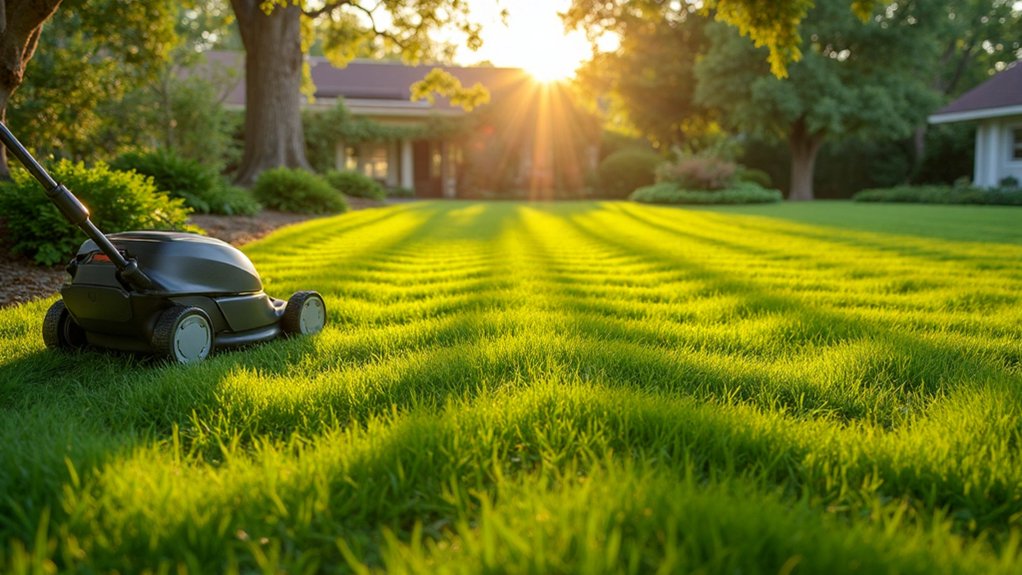
You’re probably mowing your lawn all wrong, and it’s costing you more than just time. Most homeowners unknowingly damage their grass, waste water, and harm the environment with outdated mowing habits that actually work against nature’s design. The good news? A few simple adjustments to your routine can transform your yard into a self-sustaining ecosystem that requires less maintenance, saves money, and supports local wildlife—but only if you know which conventional wisdom to ignore.
Key Takeaways
- Maintain mower blade height at 3-4 inches to promote deeper roots and natural weed suppression.
- Keep mower blades sharp for clean cuts that prevent disease and reduce fuel consumption.
- Leave grass clippings on lawn to provide natural fertilizer and retain soil moisture.
- Mow less frequently, cutting only one-third of grass height to strengthen root systems.
- Choose sustainable equipment like electric, solar-powered, or manual mowers to eliminate emissions.
Set Your Mower Blade Height for Optimal Grass Health
Most homeowners make the mistake of cutting their grass too short, believing it’ll reduce mowing frequency. However, this approach damages your lawn’s health and sustainability. Set your mower blade to 3-4 inches for ideal results. This taller height allows grass to shade the soil, preventing weed germination while encouraging deeper root development. You’ll notice your lawn becomes healthier and more resilient to environmental stress.
Longer grass also reduces moisture evaporation from the soil, keeping your lawn hydrated during dry periods. When you maintain proper mowing height, you’re promoting better soil health through natural processes. Remember, taller grass means stronger roots, which translates to less water dependency and reduced need for chemical interventions. This sustainable lawn care practice creates lasting benefits for both your yard and the environment.
Sharpen Mower Blades Regularly for Clean Cuts
While proper mowing height sets the foundation for lawn health, you’ll undermine these benefits if your mower blades are dull. Sharp blades create clean cuts that heal faster, helping your Healthy Lawn retain water and maintain ideal soil moisture levels. This efficient healing process means you’ll Conserve Water since grass won’t lose excessive moisture through ragged tears.
Dull blades tear grass instead of cutting cleanly, creating brown, damaged tips that invite disease and stress. Sharp blades require less power to operate, reducing fuel consumption and your Eco-Friendly Lawn care’s environmental impact. You’ll also achieve that aesthetically pleasing, even cut that promotes healthier environment conditions.
Regular Lawn Mowing with properly sharpened blades is a simple, cost-effective practice that maintains your lawn’s health while minimizing ecological harm.
Leave Grass Clippings to Naturally Fertilize Your Lawn
After you’ve achieved those clean cuts with sharp blades, you can maximize your lawn’s health by leaving grass clippings right where they fall. These lawn clippings act as a natural slow-release fertilizer, providing up to 25% of your lawn’s annual nitrogen requirements. As they decompose, grass clippings release essential nutrients like phosphorus and potassium back into the soil, reducing your need for synthetic fertilizers by 30-50%. This practice offers multiple benefits beyond nutrition. The clippings enhance moisture retention, keeping your lawn hydrated longer between waterings. They also suppress weed growth naturally, creating fewer maintenance headaches. By letting these clippings mulch into your lawn, you’re creating an eco-friendly cycle that promotes healthy grass growth while reducing waste and chemical dependency.
Mow Less Frequently to Strengthen Your Grass
By extending the time between mowing sessions, you’ll actually help your grass develop stronger root systems and improved drought tolerance. Most homeowners mow too frequently, weakening their lawn’s natural defenses against dry spells. A sustainable lawn thrives when you cut no more than one-third of the grass height at each session, typically once per week during growing season.
This approach creates a healthier lawn that requires less water, reducing your dependence on irrigation systems and lowering your water bill substantially. Early morning mowing with sharp mower blades guarantees clean cuts that promote stronger growth. Less frequent cutting allows grass to photosynthesize more effectively, storing energy for water conservation during stress periods. You’ll discover that patient mowing practices create resilient turf that naturally withstands environmental challenges.
Choose the Right Mowing Time to Reduce Water Loss
Strategic timing amplifies the benefits of your reduced mowing schedule by protecting your lawn’s precious moisture reserves. When you mow during cooler periods, you’ll reduce evaporation and help your grass retain more water naturally. This approach encourages deeper root growth while supporting sustainable mowing practices that attract beneficial insects to your yard.
Optimal mowing times that help keep your lawn healthier include:
- Early morning or evening when temperatures are cooler and humidity is higher
- After morning dew to prevent grass clippings from drying out immediately
- Avoiding midday heat when your grass type is most vulnerable to stress
- Before rainfall so you can water directly into the soil afterward
- When grass is slightly damp but not completely wet to minimize damage
This timing requires less water overall for lawn maintenance.
Select Sustainable Mower Options for Lower Environmental Impact
Three sustainable mower options can considerably reduce your lawn care’s environmental footprint while delivering the same quality results as traditional gas-powered models. Manual mowers produce zero emissions while providing excellent exercise, though they require more physical effort. Electric models eliminate on-site emissions, operate quietly, and need less maintenance than gas versions, minimizing environmental disruption to beneficial insects. Solar-powered mowers offer complete energy independence and truly emissions-free operation, reducing reliance on chemical-based fuel sources.
While sustainable mowers cost more upfront than traditional models, they deliver long-term savings through reduced fuel and maintenance expenses. By eliminating direct emissions and fossil fuel consumption, these eco-friendly options substantially reduce your lawn care’s environmental impact. Rights Reserved for manufacturers continue expanding these technologies, making sustainable mowing increasingly accessible for environmentally conscious homeowners.
Maintain Your Equipment for Maximum Efficiency
Proper maintenance transforms any lawn mower into a more efficient, longer-lasting machine that’ll serve your eco-friendly goals for years. Proper maintenance practices directly contribute to a healthier planet by reducing emissions and extending equipment lifespan.
Essential maintenance steps include:
- Sharp blade maintenance – Make sure blades stay sharp for clean cuts that promote healthy grass growth, reducing the risk of disease
- Tire and alignment care – Properly inflate tires and check alignments to minimize energy consumption
- Regular engine tune-ups – Perform oil changes and tune-ups on watering schedules based maintenance intervals to keep engines efficient
- Smart fuel practices – Use appropriate fuel types and quantities, avoiding wasteful overfilling
- Proper storage – Store equipment correctly during off-seasons instead of bagging neglected maintenance, schedule morning to reduce deterioration
Frequently Asked Questions
What Is the 1/3 Rule in Lawn Mowing?
The 1/3 rule means you shouldn’t cut more than one-third of grass blade height per mowing. This proper mowing height practice works for both cool season and warm season grass types, promoting healthier lawns.
How to Have an Environmentally Friendly Lawn?
You’ll create an environmentally friendly lawn through native plant selection, organic fertilizer usage, rainwater harvesting, mulching lawn clippings, aerating soil regularly, using manual mowers, reducing water consumption, planting drought-resistant grass, and encouraging beneficial insects.
What Is an Eco-Friendly Lawn Mower?
Like choosing a gentle breeze over a roaring storm, you’ll find eco-friendly options include battery powered mowers, manual reel mowers, cordless electric mowers, and robotic mowers that eliminate emissions while maintaining your lawn sustainably.
What Are the Best Practices for Mowing the Lawn?
You’ll want proper mowing height at 7-9cm, maintain sharp mower blades, follow a regular mowing schedule, and use mulching lawn clippings. Leave grass clippings for soil health importance and natural fertilizer application benefits.
Conclusion
You’ve planted the seeds of sustainable lawn care knowledge, and now it’s time to reap what you sow. By following these eco-friendly practices, you’re not just maintaining grass—you’re cultivating a greener future. Your lawn will flourish like Eden while you reduce your environmental footprint. Remember, Rome wasn’t built in a day, so be patient as your yard transforms. Every small change you make creates ripples of positive environmental impact.