
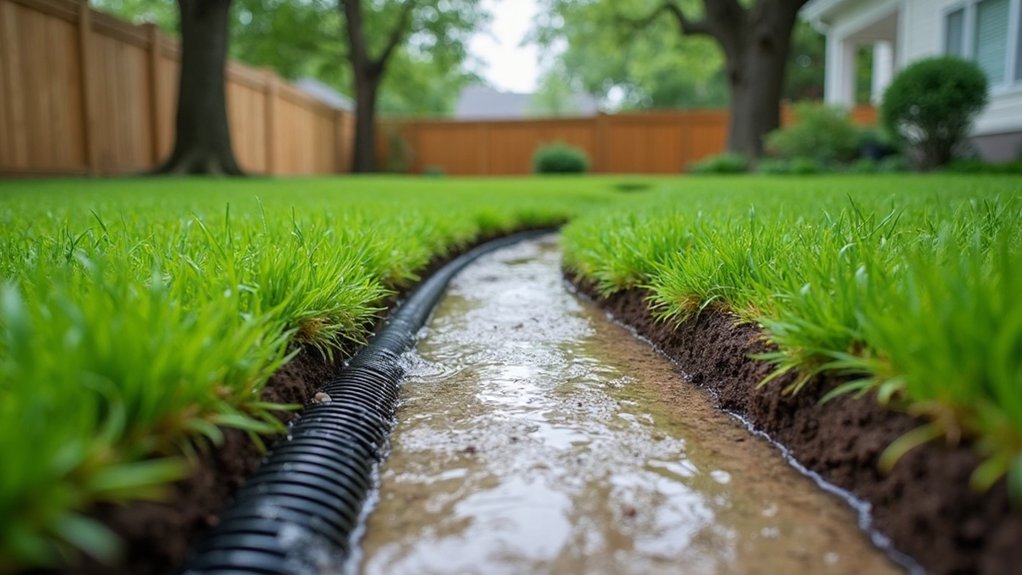
While a gentle rain nourishes your garden, standing water becomes your property’s silent destroyer. You’ve probably noticed those persistent puddles that linger days after a storm, slowly suffocating your grass and creating the perfect breeding ground for mosquitoes. These aren’t just minor inconveniences—they’re warning signs of drainage problems that can lead to foundation damage and costly repairs. Understanding the root causes and implementing the right solutions will transform your waterlogged yard into the healthy landscape you’ve been wanting.
Key Takeaways
- Identify poor drainage causes like clay soil, compacted ground, improper grading, and clogged gutters before implementing solutions.
- Install French drains for subsurface water issues or catch basins and channel drains for surface water management.
- Improve soil drainage through core aeration, topdressing with compost-sand mixture, and addressing underlying soil problems first.
- Consider natural alternatives like dry wells and creek beds alongside mechanical solutions such as sump pumps.
- Maintain drainage systems by inspecting for clogs, testing components seasonally, and monitoring yard performance after storms.
Why Standing Water Damages Your Lawn and Property
When water pools in your yard after rainfall, it creates a cascade of problems that extend far beyond unsightly puddles. Standing water suffocates your lawn’s root system, triggering diseases like root rot that kill grass and plants. Your soil becomes waterlogged, leading to compaction that blocks essential air and water movement. This creates a vicious cycle where your drainage system can’t function properly.
The causes of standing water stem from poor proper grading and inadequate drainage infrastructure. Persistent puddles become mosquito breeding grounds while nutrient runoff pollutes local waterways. Most seriously, unresolved yard drainage issues threaten your home’s foundation. Water damage to structures can cost thousands in repairs. Your lawn, soil health, and property value all suffer when you don’t address standing water problems promptly through effective drainage solutions.
Common Causes of Poor Yard Drainage
Before you can solve your drainage problems, you’ll need to identify what’s causing water to accumulate in your yard. Several factors contribute to poor drainage and standing water issues.
Clay soil creates the most common problem, as it doesn’t absorb water quickly, leading to water pooling near your foundation and creating soggy areas. Low spots and low-lying areas naturally collect runoff, forming persistent problem areas where water won’t drain properly.
Compacted soil from heavy foot traffic or machinery prevents proper water absorption. Grading issues where your yard slopes toward your house instead of away create additional challenges. Clogged gutters and downspouts can overwhelm specific areas, while underground utility lines or septic systems may redirect water flow, creating unexpected wet zones in your poor lawn.
Essential Tools and Materials for Drainage Projects
Once you’ve identified the root cause of your drainage issues, you’ll need the right tools and materials to tackle the job effectively. A shovel and mattock are indispensable drainage tools for digging trenches and excavating problem areas. You’ll also want a water level tool to guarantee proper slope and drainage direction throughout your project.
For drainage materials, catch basins serve as collection points for excess water, while 4-inch corrugated pipes channel water away from your property. Gravel provides essential filtration and prevents pipe blockage, and hardware cloth keeps debris out of your system.
Remember that proper selection of these items depends on your specific drainage needs and budget. Costs and availability vary by location and supplier, so research local options before starting your project.
Start With Soil Testing and Aeration
Although you might be tempted to jump straight into installing drainage systems, successful yard drainage begins with understanding what’s happening beneath the surface. A thorough soil test reveals your soil’s pH, nutrient levels, and organic matter content—all essential factors affecting water infiltration. This analysis helps identify specific soil characteristics like compaction and nutrient imbalances that contribute to drainage problems.
Start your long-term drainage plan with core aeration, which creates channels for improved water and air movement through compacted soil. Follow up with topdressing using a compost-sand mixture to enhance soil structure and boost organic matter levels. These foundational steps address underlying soil problems rather than just surface symptoms, creating lasting improvements in your yard’s drainage capacity before you consider more intensive solutions.
French Drain Installation for Problem Areas
When soil improvements aren’t enough to handle persistent wet spots or foundation water issues, French drains offer a proven solution that tackles subsurface water problems at their source. You’ll create a gravel-filled trench with a perforated pipe that redirects water away from problem areas. Install your French drain with a consistent gradient of 1-2% slope to guarantee proper drainage flow. Position the outlet 2-4 inches lower than the entry point to maintain effective water movement. Cover the gravel with landscape fabric to prevent soil and roots from clogging the system. Custom drainage solutions can target specific issues like soggy lawn areas or foundation water accumulation, making French drains versatile for various yard drainage challenges.
Surface Drainage Solutions: Catch Basins and Channel Drains
While French drains handle subsurface water movement, catch basins and channel drains tackle surface water problems before they overwhelm your yard or damage structures. These surface-level drains excel at intercepting water flow during heavy rainfall or irrigation.
You’ll install catch basins as underground containers in low-lying areas where water naturally collects. They capture large volumes and direct them through piping to proper drainage locations. Channel drains, also called trench drains, work differently—you’ll position them at surface level along driveways, patios, or pool decks for immediate water collection.
Both systems prevent pooling by redirecting water away from problem areas. You’ll often combine these drainage solutions with French drains or dry wells for a comprehensive drainage plan. Regular maintenance guarantees effective water runoff management year-round.
Alternative Drainage Methods: Dry Wells and Creek Beds
Beyond engineered drainage systems, you can harness natural water management principles with dry wells and creek beds. Dry wells function as underground storage tanks that slowly release water into surrounding soil, effectively managing stormwater runoff while preventing basement flooding. These systems can store hundreds of gallons, making them powerful tools for water dispersal.
Dry creek beds offer decorative channels that direct water away from problem areas while enhancing your landscape design. You’ll customize these features with various rock sizes and gravel to complement your aesthetic preferences. Both solutions provide environmentally friendly alternatives to traditional drainage, combining practical water management with exceptional visual appeal. They’re perfect when you want effective drainage that seamlessly integrates with your outdoor space.
Professional Vs DIY Installation Considerations
Most yard drainage projects present a critical decision: tackle the installation yourself or hire a professional contractor. Professional drainage services bring expertise in evaluating your property, designing effective drainage solutions, and obtaining necessary permits. They’ll identify the best drainage solutions for your specific landscape drainage challenges and provide warranties with ongoing maintenance support.
DIY installation costs less upfront but risks improper implementation that won’t prevent water accumulation or resolve pooling water issues. Simple projects like basic French drains might suit experienced homeowners, while complex drainage issues require professional installation expertise.
Consider your skill level, local regulations, and project complexity when choosing. Professional contractors guarantee proper drainage through correct design and installation, while DIY approaches may overlook critical factors affecting long-term performance.
Maintenance Tips for Long-Term Drainage Success
Once you’ve installed your drainage system, consistent maintenance becomes the foundation for preventing costly repairs and ensuring lasting effectiveness. You’ll need to inspect and clear debris from catch basins, drain pipe connections, and outlet areas regularly to prevent clogs that disrupt water flow. For french drains specifically, check that gravel isn’t compacted and water moves freely through the system.
Annual lawn aeration improves soil permeability, reducing water buildup that creates yard drainage issues. Apply thin compost layers periodically to enhance drainage capacity. If you have a sump pump or dry well, test these components before heavy rain seasons.
Monitor your system after storms, addressing any pooling immediately. Avoid over-watering, as excessive irrigation undermines your lawn drainage problem solutions and creates waterlogged conditions.
Frequently Asked Questions
How to Fix Standing Water in an Outside Drain?
Start with drain inspection to identify blockages, then consider drainage pipe installation or grading adjustments. You’ll need underground drainage solutions like French drain system installation or yard swale creation for effective surface water diversion.
How to Fix a Yard That Holds Water?
You’ll fix water-holding yards by improving grading slopes, installing French drains, addressing soil compaction through aeration, building swales, constructing rain gardens, installing dry wells, using permeable pavers, and planting water-tolerant plants for better drainage.
How Much Does It Cost to Fix Drainage Issues in a Yard?
Don’t let costs rain on your parade! Yard drainage system installation ranges from $500-$8,000 depending on complexity. French drain installation, yard grading estimates, and underground drainage system pricing vary by project size and professional requirements.
How to Divert Standing Water Away From a House?
You’ll divert standing water by installing French drains, extending downspouts, creating surface drainage swales, and improving soil grading. Consider adding rain gardens, dry creek beds, or drainage ditches for effective landscape grading solutions.
Conclusion
You’ll either invest time now fixing drainage issues, or you’ll spend thousands later repairing foundation damage. While standing water seems like a minor inconvenience, it’s actually destroying your property’s value daily. Don’t wait until mosquitoes swarm your yard or basement floods. Take action today with proper drainage solutions. Your future self will thank you when neighbors deal with costly water damage, but you’re enjoying a healthy, dry landscape that protects your investment.